Playwrights are the foundation of drama. Before the spotlight glimmers and an actor takes the stage, a writer needs to put pen to paper. If theatre is already your bread and butter, you will most certainly recognise many of these British playwrights as the backbone of the industry. But if you don’t, here’s your starter for 10. From the timeless appeal of Shakespeare’s classics to Sarah Kane’s gut-wrenching poetry, here’s the crème de la crème of British playwriting.
William Shakespeare (1564–1616)
The Bard of Avon will come up again and again throughout an actor’s life. He’s often hailed as the greatest playwright in the English language, and his works remain central to the global cultural landscape. Many contemporary writers cite his plays as an influence, and his characters continue to be fundamental to the development of professional actors. His works explore the human condition with empathy and wit, creating universal stories that miraculously remain urgent – politically, socially, and emotionally. From cruel rulers such as Richard III to naive lovers like Romeo and Juliet, his characters sit on a broad spectrum while the thematic scope of his plays is vast. His mastery of language also remains unmatched.
Noël Coward (1899–1973)
One of the most extravagant British playwrights of the 20th century, Noël Coward’s influence continues to be felt across multiple mediums. He was also a composer, director, actor, and singer, but, as a playwright, he wrote straight plays, revues, and even musicals. Some of his most famous stage plays are Private Lives (1930), Blithe Spirit (1941), and Hay Fever (1925), while his most famous screenplay is Brief Encounter (1945), an adaptation of his own play Still Life. His writing is marked by witticisms and lyrical banter, often addressing unconventional relationships between characters and upper-class decadence. Happily, revivals are frequent.
Harold Pinter (1930–2008)
Well known for his idiosyncratic pauses and silences, Pinter is the Nobel Prize–winning playwright who defined a whole generation of writers. From The Birthday Party (1958) and The Homecoming (1964) to No Man’s Land (1974) and Betrayal (1978), his style is steeped in naturalism. His characters are evasive and ambiguous, and it’s often impossible to define them as villains or victims. Pinter was a master of painting mundane scenarios in which tension between his characters could gently simmer before boiling over. His works famously force the audience to read between the lines for subtext.
Tom Stoppard (1937–2025)
The most overtly political playwright on our list so far, Tom Stoppard tackled themes of censorship, political resistance, and human rights. From Rosencrantz and Guildenstern Are Dead (1966) to Leopoldstadt (2020), he often asked his audiences to engage with his works on an intellectual level, challenging them with non-linearity and philosophy before smoothing out the creases with an exquisite dose of comic flair.
Caryl Churchill (b. 1938)
Caryl Churchill is a master of non-naturalism. Her plays blend prose and poetry to create unconventional turns of phrase, using language as a conveyor of surrealism. Reading her plays will unlock a new way of thinking about a story. She breaks many established theatrical conventions by using a nonlinear approach to storytelling, jumping around timelines and opening many avenues for reflection. Her characters may interrupt one another and go off on tangents that may seem off topic at first glance, but everything comes together in exceptional moments of denouement. Her most revolutionary plays include Top Girls (1982), Far Away (2000), A Number (2002), and Love and Information (2012).
David Hare (b. 1947)
A writer for stage and screen, Hare became interested in theatre when he was studying at Cambridge University. Morally ambiguous, often satirical, and generally incisive, his plays are characterised by personal relationships that suffer the strain of the world. He won’t offer easy answers to the questions he poses, but he will proactively look for collaborative intellectual engagement from his audience. Some of his most famous works include The Absence of War (1993), Skylight (1995), and The Judas Kiss (1998).
Sarah Kane (1971–1999)
One of the most tragic figures of British playwriting, Kane died by suicide after a lifelong battle with depression when she was just 28 years old. She left behind only five plays, but those plays – which include Blasted (1995), Cleansed (1998), and 4.48 Psychosis (1999) – have redefined the way we talk about violence, both mental and physical, onstage. Her psychological state seeped into everything she wrote, which was mostly stories about sex, desire, torture, and pain. Her stylistic choices are intense and evocative, often geared toward surprise and shock. She is one of the most important female playwrights of the 20th century.
James Graham (b. 1982)
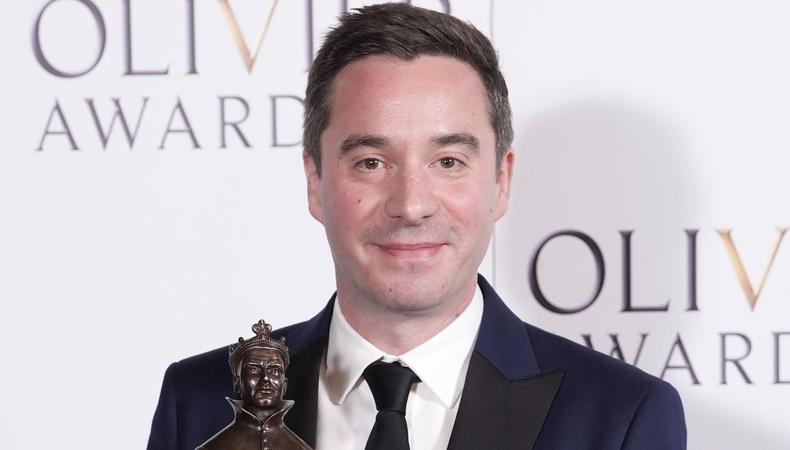
Graham found his footing in fringe theatre before making it big in the West End, where he immediately delivered pointedly political works admired as much for their accessibility as their scope. He’s well known for his state-of-the-nation plays, including This House (2012) and Ink (2017), and he garnered Olivier Awards for Dear England (2023) and Punch (2024). His USP is sociopolitically engaged theatre, but his pieces never lack a human side. The strength of his writing style is a healthy mix of personal and universal to breach the fourth wall and pull the audience in, raising the stakes to create feeling. He’s a playwright who never misses his target.
debbie tucker green (date of birth unknown)
Hailed as a dramatic innovator and one of the most politically involved contemporary playwrights, tucker green is a unique voice in British theatre. Although less renowned than Caryl Churchill, she’s arguably on the same spectrum. Her writing style is defined by overlapping dialogue and repetition, while her plays are intimate and intense, frequently covering themes of racism, sexism, and complicated relationships. She’s famous for her direct political approach to systemic injustice and societal distress, addressing the ruling classes directly with precise invectives against their power. Some of her most famous works include dirty butterfly (2003), truth and reconciliation (2011), andear for eye (2018).