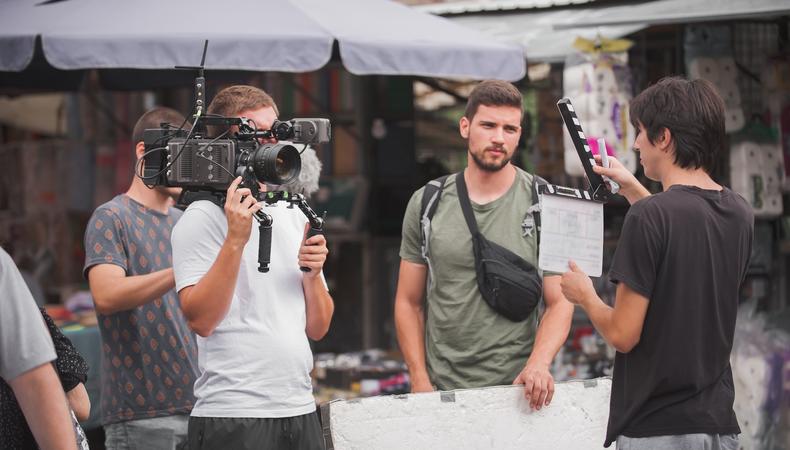
From small-budget student films to big-budget Netflix hits like Bridgerton, every TV and film production has one thing in common: a daily call sheet. This document, shared with the entire cast and crew, contains all the necessary information for the day on set.
Whether you’re a day player or a lead, it’s important to understand the role of a call sheet and how to read one.
JUMP TO
A filming call sheet is a single document containing all the relevant information the cast and crew need for the day’s shoot.
Award-winning director Sarah Grant (Candy), who has been making films for over 10 years, explains: “A call sheet is basically a detailed plan for a day of filming. It lays out what scenes are being shot, in what order, and it lets everyone know where they need to be and when.”
Call sheets are generally created by the first or second assistant director (AD), based on the shoot schedule and shot list for the production.
On smaller productions that shoot for only a few days, the first AD will make call sheets ahead of time for every day of the shoot. If anything changes during a shoot day — such as delays to filming due to weather — the first AD will make any necessary changes to the subsequent day’s shoot and send out a revised call sheet the night before.
On large-scale shoots, such as television shows and feature films, the call sheets are made on a day-to-day basis, depending on the progress of each shoot day. According to Grant, on larger shoots “the second AD usually stays in the production office, where they manage the call sheets based on updates about the shooting process throughout the day.”

Anatoliy Karlyuk/Shutterstock
The call sheet is a practical way to ensure everyone on set has the information they need and, as Grant says, “makes sure everyone is singing from the same hymn sheet”. It contains all of the information that both cast and crew need to be aware of on set for each filming day, and it helps the shoot to run as smoothly as possible.
Whilst the format of a call sheet varies based on the personal design tastes of whoever is in charge of creating it, the call sheet itself will always contain the same essential information. It’s divided into three sections:
The top of the call sheet
This section should always include:
- Name of the production
- Shoot date
- Unit call (the time that the majority of the crew needs to be on location)
- Unit base, location, and any relevant parking information
- Names and pronouns of the ‘above the line’ people (anyone involved in the creative development of a film or TV show, such as the executive producer or director)
- Names, pronouns, and contact details of the main production unit (such as the producer, production manager, director, and ADs)
- Meal times (breakfast, lunch, and dinner)
- Forecasted weather
- Time of sunrise and sunset
- Any additional notes for the set (for example, bringing reusable water bottles or rules on smoking/vaping)
The middle of the call sheet
The middle of the call sheet is an important section because it’s where you’ll find:
- The schedule for the day, including a breakdown of which scenes will be filmed, where, at what time, and which cast members will be needed. It may also include notes such as whether it’s an open or closed set (meaning only specific people who are key to the scene or who have been given access are allowed on set).
- Actor names, character names, and their individual pickup times. If you are being collected by a bus or driver to take you to set, the details will be noted here. It also contains call times (when you need to be on location); hair and makeup call times; costume call times; and on-set time (when you need to be on-set to shoot).
Experienced first AD Alex Mil recommends “triple-checking your individual pick-up time and call times so that you know you’ll be in the right place at the right time”.
The bottom of the call sheet
This part of the call sheet contains:
- Crew requirements and contact details
- Health and safety information (including the nearest hospital and appointed first-aider)
- Advance schedule for the next day (this is the planned order that scenes will be shot, but bear in mind it could change depending on how the current day’s shoot goes)
This probably sounds like a lot, but the call sheet is usually designed so that it’s relatively simple to read.
Grant advises actors to remember they don’t need to memorise the whole thing. “Take note of what scenes are being covered on the day so you are prepared, learn your info [call times], and cast your eye briefly over the rest.”
She says that production companies are getting better at accommodating cast and crew with specific access needs. These people may benefit from a “reduced call sheet” which is “individualised and sent to the person with only the information they need for the day, presenting the information in an easy-to-read format”. So if you are disabled, neurodivergent, or have any other access requirements that mean you would benefit from a reduced call sheet, do ask for one.
The template call sheet below gives you an idea of how the information could be presented:
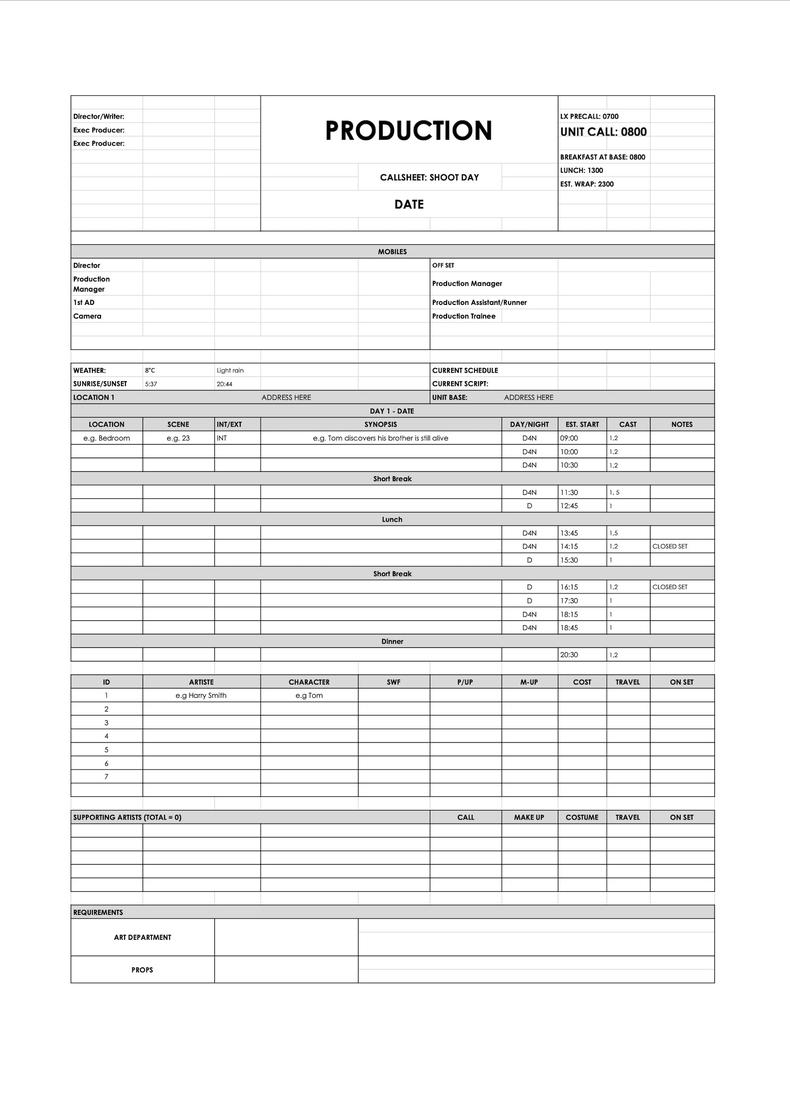
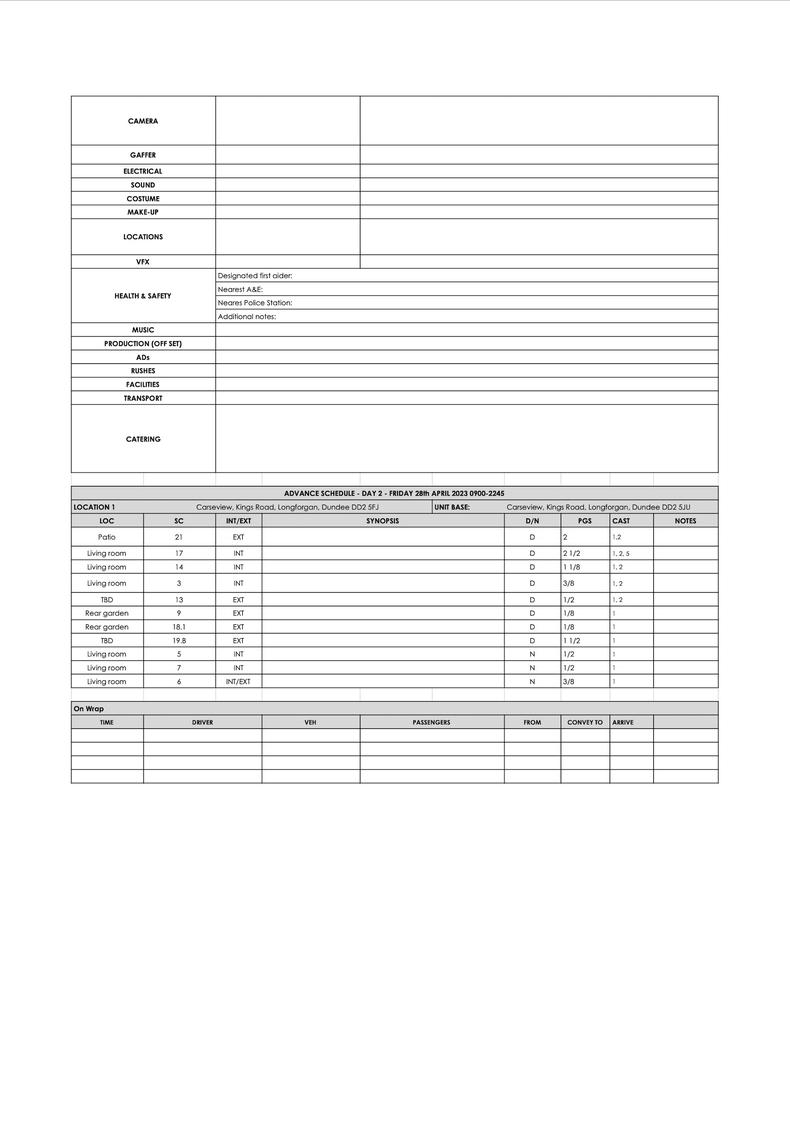 Call sheet template courtesy of Sarah Grant