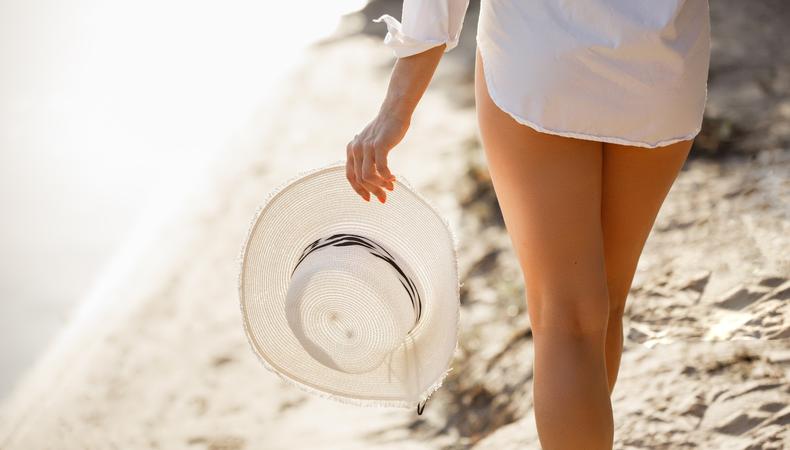
Have you ever been told you have legs for days? Or always thought of your lower limbs as your best feature? Well, you could be ready to strut into a career as a leg model.
Leg modelling is a niche category that falls under a branch of modelling that highlights specific body parts. From advertising high-end fashion, beauty, and hosiery brands to promoting fitness or health products, you could play a pivotal role in campaigns that focus on lower body aesthetics.
Keen to get moving? Here are nine steps to begin your journey.
1. Learn the industry
Before you begin searching model casting calls, it's important to grasp what leg modelling entails, and what you’re signing up to promote. Leg models are hired for a variety of industries and products, including:
- Fashion: Hosiery, tights, stockings, legwear, and shoes.
- Fitness and sports products: Athletic gear like running shoes, sports apparel, or fitness equipment.
- Beauty and skincare: Body lotions and hair removal cream.
- Luxury: A gorgeous mini skirt, for example.
2. Assess your legs
Traditionally, agencies look for specific qualities in leg models, such as smooth, blemish-free skin with no tattoos or irregularities.
However, the industry is increasingly open to diversity. Chloe Barker, director of parts modelling agency Hired Hands Models, says, “There’s absolutely a market now for models with all kinds of visual differences, like vitiligo or tattoos or scarring. It’s definitely not a barrier – sometimes it’s a positive, and tattoos and scarring can often be covered with makeup or in postproduction.”
Typically, female leg models are over 5’7”, while male leg models are 5’11” or taller, and, naturally, you have long limbs.
According to Barker, the most crucial aspect is your shoe size: “Leg modelling isn't just legs; it’s feet as well.” Female models with UK sizes 7 or 4 and men with size 8 are more likely to be booked for regular e-commerce work, whereas other shoe sizes may only be up for less regular jobs like campaigns. And having nice feet will increase your chances of being a successful leg model.”
3. Take care of your legs
To succeed as a leg model, maintain the look of your legs. “Whether you're shooting as a curve model or regular ecommerce, it's important to keep yourself toned,” says Barker.
A balanced fitness routine can help you achieve and maintain the toned, fit look that’s typically required for the job. “Popular things that our talent do are yoga, Pilates, running, and some weight-training,” Barker adds.
Keeping your skin smooth, even-toned, and hydrated is key. Regular exfoliation, moisturising, and hair removal will help nourish a healthy appearance.
In some cases, the job can couple with foot modelling (with ankle jewellery, for instance), so having well-groomed feet is also essential. This includes clean, manicured toenails and smooth, moisturised skin.
4. Create a portfolio
A photographic modelling portfolio is visual proof of your ability and look. It should include five to six photos showcasing your upper and lower legs, as well as a headshot and a full-length image.
Barker recommends adding photos of your feet, too, ideally without nail varnish – some from above and some from the side, showing your arches.
If you want to go to casting calls right away, pay for a professional photo shoot for your portfolio. Experienced photographers will know how to accentuate your legs’ best features and help you create a portfolio that will impress.
Alternatively, ask someone to take photos of you on a camera phone. Just make sure they’re against a clean background, are in focus, and use natural light.
5. Sign with a modelling agency
A contract with a modelling agency (in Australia or the UK) can give your career a leg up. Agencies not only have a wealth of contacts – including photographers, casting directors, and brands – but they can also help negotiate contracts and pay.
You can approach agencies, like Hired Hands Models, that specialise in parts modelling. Some regular modelling agencies have dedicated divisions for body parts models too.
When applying, read the submission guidelines carefully; most specify whether they’re currently seeking new talent, or when they’ll likely next open their books.
6. Prepare for castings
Whether you sign with an agency or strike out independently, hopefully the day will come when you’re getting invited to castings. These meets are like job interviews where brand representatives, photographers, and fashion casting directors assess if your legs fit their vision for a campaign.
Dress appropriately by wearing something that showcases your legs. Wear – or bring with you – a skirt, shorts, or hot pants. For women, it’s worth taking a pair of heels as well as flats, especially if you’re unsure what footwear the shoot requires.
Be punctual, polite, and professional. Carry your portfolio and any additional materials the casting director may have requested.
Ensure your legs are in their best condition. This might mean a last-minute shave, extra moisturising, or touch-up on your tan.
7. Put in the legwork to build a network
Networking is crucial. Keep an eye out for events as well as castings, and build relationships with photographers, stylists, and other models – you never know where your next job may come from.
Social media platforms like Instagram are also a powerful tool for models. A profile that highlights your leg modelling shots can catch the attention of brands or agencies who are scouting for new talent. Post high-quality photos of your legs, tag relevant brands, and use hashtags to increase visibility.
8. Stay on the front foot
Modelling is competitive. Having a good reputation can lead to repeat work and referrals, so maintain a professional attitude, follow up with clients after jobs, and perform your best at every shoot. Be a reliable collaborator and communicate regularly with your agency so you stay front of mind.
9. Remain on top of your finances
It’s important to understand how modelling contracts and payments work. If you’re with an agency, they will typically handle the contractual side and take a fee, between 20% and 30% of your earnings.
If you’re a freelancer, you will negotiate terms yourself. Always clarify usage rights (where and how your images will be used), ensure fair compensation (check with Equity in the UK and SDA in Australia), and get agreements in writing ahead of the shoot day.