Are you and your little aspiring star ready to dive into the world of child modelling? There are several important steps to follow when it comes to starting out in this exciting, highly competitive industry, starting with the biggest question: Is modelling right for your child? But there’s no getting past the bottom-line question: How much money will my kid make as a child model?
Let’s crunch the numbers.
JUMP TO
- What does child modelling involve?
- How much do child models make in Australia?
- How much do child models make per shoot?
- What affects how much a child model earns?
- What are the highest-paying jobs for child models?
- Understanding usage rights and royalties
- Do child models in Australia need their own bank account?
- How much do casting agents cost for child models?
- Top tips for parents of child models
- The bottom line
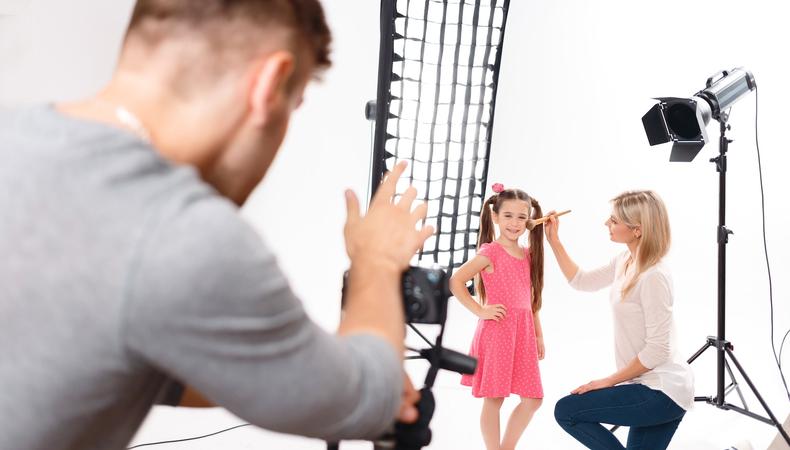
Child modelling covers a wide range of work, from catalogues and magazine shoots to online campaigns, television commercials, and billboards. Modelling jobs for kids can range from a couple of hours in a photography studio to full-day shoots on set. It’s a world in which patience, confidence, and a positive attitude count just as much as having the right look. Parents should also be prepared for travel, waiting around on set, and working around school hours.
According to leading Australian children’s talent agency Bubblegum Casting (whose extensive client list includes Target, Myer, Kmart, David Jones, Vegemite, Huggies, and Heinz), child models in Australia can earn upwards of AU$20,000 a year.
Earnings vary significantly, however, depending on the frequency and types of modelling work your child books. Some children model occasionally for pocket money, while others may work regularly enough to build solid savings for their future.
Payments vary from job to job, starting at $100 and ranging up to several thousand. Your child’s earnings will also depend on their experience and how in demand they are, as well as factors such as the client’s budget, the type of work, and the location of the job.
In addition to their initial paycheck, models can also earn royalties if their image or commercial is reused. If an ad runs for longer than originally agreed or is picked up by another market, for example, your child may receive additional payments.
JGA/Shutterstock
Several factors may influence how much a child model can earn, including:
- Experience and confidence: Children who’ve worked on camera before or have a strong portfolio often command higher rates.
- Type of job: National TV ads or billboard campaigns pay more than catalogue or e-commerce shoots.
- Usage rights: Where and for how long your child’s image will be used determines the price. A one-off post on social media, for example, pays less than a 12-month national campaign.
- Location: Larger markets like Sydney and Melbourne typically offer higher pay rates.
- Agency and client: Established agencies with big-brand clients often negotiate better pay and protections.
Note: The rules and standards around child labour differ from state to state. You can check Safe Work Australia or Screen Safe Australia for general pay guidance and child performer standards.
Television commercials, billboard advertisements, and magazine shoots often offer the largest earnings for child models. Some companies will pay up to $200 an hour for shoots like this, and children can earn up to $10,000 for one job – especially for high-profile, long-running national campaigns.
When your child models for a campaign, the client buys usage rights – the right to use your child’s image in specific places and for a set time. An agreement may be “digital use only for six months,” for example.
If a brand decides to reuse your child’s photo for a different campaign or extend it beyond the original agreement, they’ll usually pay extra. Those additional payments are called royalties, and they’re one of the key ways top child models earn more from ongoing campaigns.
Yes. According to law, all child models in Australia must be paid in their own name. Therefore, it’s crucial to set up a bank account for your child. You will also need to register a tax file number (TFN) for your child to pay taxes on their income, which is generally around 20% of all earnings (although, as with adults, there is a threshold of AU$18,200 before they start paying tax).
It’s also wise to keep a record of all earnings, commissions, and expenses. It helps when filing taxes and tracking your child’s savings.
Tanuwashvets/Shutterstock
Signing up with a reputable talent agency is a crucial part of building your child’s modelling career. Agencies will typically charge a commission rate of 10% to 20% on earnings for each job. Most agencies will also charge a one-off or annual up-front fee, which may include a professional photo shoot for your child’s portfolio. The fees may differ depending on whether you provide your own portfolio or how involved you’d like the agency to be, and they can range from AU$250 to AU$795.
- Keep your child’s well-being front and centre. If they’re losing interest or feeling overwhelmed, it’s OK to take a break.
- Be cautious of any agency that guarantees work or charges very high up-front fees.
- Read contracts carefully and ask questions before signing.
- Keep copies of payslips, contracts, and permits.
- Remember: The goal is to make it a positive, confidence-building experience for your child.
Not every child model will earn thousands of dollars, but the experience can be a fun and rewarding way to build confidence, learn professionalism, and maybe even save for the future. With the right guidance, a trusted agency, and a focus on your child’s happiness, you can help them shine in Australia’s modelling industry.