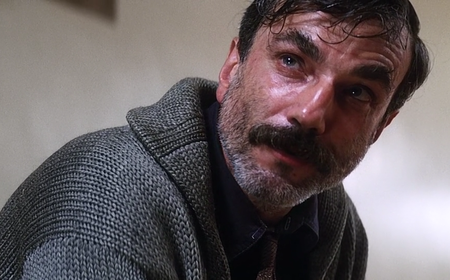
While talented professionals make it look easy, a lot goes into acting realistically. It’s how Cush Jumbo managed to be just as convincing on the London stage as a viperous Lady Macbeth as she was as a troubled Hamlet, and how James Norton was just as fragile in Ivo van Hove’s stage version of A Little Life as he was chilling as the coercive Tommy in Happy Valley.
Acting realistically takes confidence, commitment, and craft. After all, convincing an audience you’re someone else is quite a skill. Innate talent plays a part, but realistic acting also takes a whole lot of preparation and presence.
Not all roles call for completely naturalistic acting, but whatever the style of the piece, your performance should always be realistic enough for an audience to suspend their disbelief. Take Joel Grey as the Master of Ceremonies in Cabaret: It was an over-the-top performance, but enthralling and entertaining enough to win him an Oscar.
Here are some tips for nailing a realistic acting performance.
JUMP TO
There are a few different theories and techniques that actors use to help them prepare and perform a part realistically. Among the most well-known is the Stanislavksy method, developed by Russian practitioner Konstantin Stanislavsky in the early 20th century. He believed in naturalistic performances that were as realistic as possible, and his method is still used by actors today.
His techniques connect the actor to the emotions and experiences they’re portraying. For example, “magic if” involves imagining what you would do if you were in the character’s shoes, while “emotional memory” uses the actor’s experience to recall a memory that produces an emotion similar to what their character needs to feel.
These are great ways to link your own thoughts and feelings to the character’s actions and words, and really experience the emotions that motivate them.
Some professionals take this to the next level with Method acting, absorbing their character’s physicality or personality into their personal life to prepare for a part. The method has produced famously realistic performances, like Daniel Day-Lewis as Christy Brown in My Left Foot, and Hilary Swank as Brandon Teena in Boys Don’t Cry. It’s an extreme approach that relies on the patience of the rest of the cast (not to mention your family and friends!), and it can take its toll psychologically.
Luckily, living as the character isn’t the only way to act realistically – good old-fashioned pretending can be just as effective. As drama coach Harry Bell told Backstage, “It sounds simplistic, but just imagine it’s real. So often we can overthink a performance and forget to react truthfully to the scenario we find ourselves in.”
Acting truthfully means understanding what your character is trying to achieve with each decision, action, and line, instead of just going through the motions. Studying the script and researching your character’s world are the key to answering those questions, and there’s no shortcut.
“It really is about the hard work doing background study and research, as well as the physical work you need to do,” actor and director Assad Zaman told Backstage.
Read the whole script and jot down what you know about the character. These are called the given circumstances. It can be helpful to fill in the gaps by imagining the rest of their life story or inventing specific details about them, like their favourite drink, to help you believe they’re real. “If you believe it yourself, the audience will believe it too,” stressed casting director Tom Medcalf.
Before you start rehearsing, work out what your character wants from the whole play, each scene, and different moments within scenes: Are they trying to persuade someone to believe a lie? Are they hoping someone will forgive them? These are called objectives, and they’ll help you imagine how your character would act in real life if they were trying to achieve the same things.
Finally, read each line and think about whether your character is saying what they really mean. Are they keeping a secret or trying to impress someone by acting inauthentically? The unspoken truth behind the line is called the subtext, and understanding it is a great way to find realistic depth.
Realistically embodying another person means letting go of your own physical habits. Think of it like turning yourself into a blank canvas so you can take on new characteristics. The Alexander Technique helps actors do this, but basic warmup and relaxation exercises are also effective.
Try loosening everything up by dancing around to a tune that suits your character, stretch out, and roll your spine up and down a few times so your posture is neutral. Vocal warmups, like massaging your face, loosening your jaw, and sounding out consonants and vowels, will help you take on the voice of your character.
Realistic acting normally calls for a subtle physical performance (presuming you are playing a human). It’s all about mirroring real life, so study how people who are similar to your character move and talk. Base the physical and vocal choices you make on your research and character development. If the audience understands why the character moves and speaks the way they do, they’re more likely to believe your performance.
You’ve studied your script and prepared yourself physically – now you’re ready to perform. It’s time to trust that your lines have gone in and the preparation has done the trick. As Zaman said, “When you get to the moment of performance, try to be present in that moment. Listen to what the person or people you’re interacting with are saying, and respond truthfully to what comes your way.”
Being present means being relaxed, engaged with other actors, and most importantly, ready to play.
“My background is in improv, so a golden rule for me is ‘don’t block’ and remain open to ideas during a scene,” Bell said. “Outside of improv, I believe that by maintaining that sense of openness, and being willing to be taken to places you might not expect, an actor can be more receptive to their own character, the actors around them, and ultimately tap into a more honest and engaging performance.”
Sanford Meisner, a disciple of Stanislavsky, introduced a technique known as repetition that can help with this.
Even if you’re performing the same part night after night, or shot after shot, really thinking your character’s thoughts will make your performance appear spontaneous.
It’s easy to tell when an actor isn’t really listening or thinking, especially on camera where everything is magnified. “As long as you’re truthful in the eyes, that’s what matters,” Medcalf advised.
Playing another person realistically is all about them, not you.
“Leave your ego at the door. Actually put your ego in the bin. There’s no space for anything that doesn’t serve the role,” Rosie Beard, managing director of Crooked Tree Theatre Company, told Backstage.
The less you think about yourself and the more you focus on the moment, the better. Self-consciousness makes it harder to be present and robs you of the freedom to play. If you’re thinking about how you look or what the audience is thinking, you can’t be fully present in the character’s world – which, let’s face it, is the most interesting place to be.
You don’t need years of classical training to act realistically. Imagination, preparation, focus, and a willingness to play will help you craft a convincing performance that you believe in as much as your audience does. Dig deep and research thoroughly, and you’ll have audiences on their feet in no time.