
What do Ben Kingsley, Sarah Lancashire, and Nathalie Emmanuel have in common? Apart from enviable careers in front of the camera, they all started out in British soap operas. Getting cast in a soap is a well-established route to acting success, and the UK has some of the biggest and best in the world.
Over 4 million people tune into Coronation Street each week, closely followed by Emmerdale and EastEnders, both of which track over 3 million. It’s easy to see why they get so many viewers. From Coronation Street’s horrific tram crash and EastEnders’ classic “You’re not my mother! Yes I am!” moment to the terrifying number of serial killers who have lived in the fictional village of Hollyoaks, there’s no question the Brits do soaps well. What’s more, actors who play season regulars can enjoy far longer careers on the shows than in most other areas of the industry.
If you’re new to the industry and have your sights set on becoming a soap star, you’re probably wondering how and when opportunities to audition arise. Here’s everything you need to know.
JUMP TO
A soap opera is a drama series that features interconnected storylines that run and run. Soaps typically have big ensemble casts so they can tell lots of stories about the place in which they’re set, which means there are a lot of episodes to film. ITV’s Coronation Street and Emmerdale run half-hour episodes every weekday. Episodes of the BBC’s EastEnders are a similar length and run Monday to Thursday, while the BBC’s long-running radio soap The Archers is on six times a week, with each episode at just 13 minutes. That’s a lot of work for a lot of actors and supporting artists!
Soap casting departments are busy, and they’re always on the lookout for new talent. They often cast relative unknowns, making it easier for audiences to familiarise them with their character in the soap, and they often find talent through drama schools and regional agents. Becoming a recurring character can make an actor. Just ask Bill Roache, who has portrayed Ken Barlow on Coronation Street since 1960. More realistically, getting hired as a supporting artist or extra may be a good introduction to the genre, especially if you’re still finding your feet as a professional actor. Bill Tarmey, Kellie Bright, and Alan Halsall all began their soap careers as extras.
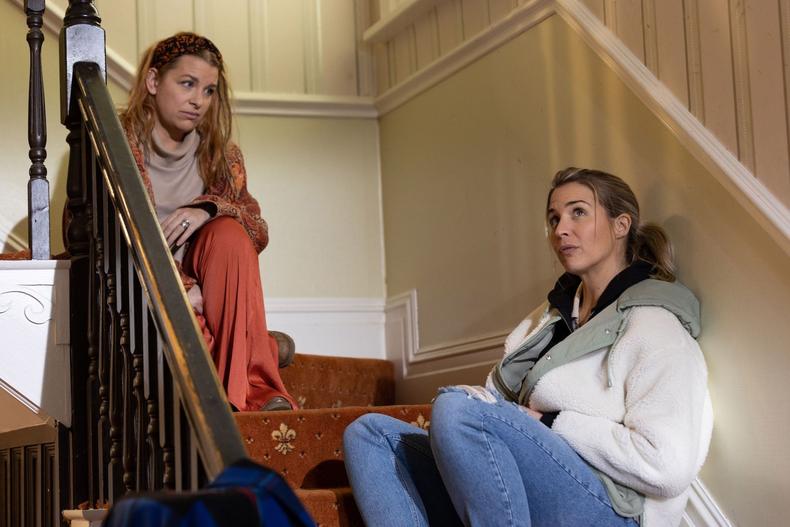
“HollyOaks” Courtesy E4
It seems obvious, but a good first step to being cast on a soap is watching it. Knowing your Rovers Return (Coronation Street) from your Queen Vic (EastEnders) or your Dingles (Emmerdale) may give you the edge in an audition, and it’s always good to look like a genuine fan of the show you want to be on!
There are six main soap operas broadcast in the UK.
Coronation Street (ITV)
Set in the fictional Manchester suburb of Weatherfield, Coronation Street – or Corrie, as it’s affectionately known – is officially the world’s longest-running TV soap opera, and it regularly gets around 3.7 million viewers per episode.
Famous alumni: Stephen Graham, Suranne Jones, Ben Kingsley, Joanna Lumley, and Michelle Keegan
Filming location: MediaCityUK, Salford
Emmerdale (ITV)
The UK’s second most popular soap is set in a northern farming community in the Yorkshire Dales and gets over 3 million viewers per episode.
Famous alumni: Jenna Coleman, Amy Nuttall, Nesta Cooper
Filming location: Leeds
EastEnders (BBC 1)
The gritty, urban soap, centred on the working-class community of Albert Square in east London, gets over 3 million viewers per episode.
Famous alumni: Ben Hardy, Regé-Jean Page, Anita Dobson
Filming location: BBC Elstree, Borehamwood
Hollyoaks (E4)
Aimed at a younger audience, Hollyoaks is fast-paced and racy in tone. Broadcast on E4 and, more recently, YouTube, the show is set in a suburb of Chester in the northwest of England. Viewing figures sit at 500,000.
Famous alumni: Ricky Whittle, Nathalie Emmanuel, Warren Brown
Filming location: Liverpool
Pobol y Cwm (S4C/BBC Wales)
First aired in 1974, this Welsh-language soap focuses on the inhabitants of Cymderi, a fictional agricultural village. Its three weekly episodes receive around 30,000 viewers.
Famous alumni: Iwan Rheon, Ioan Gruffudd, Michael Sheen
Filming location: Cardiff
The Archers (BBC Radio 4)
BBC Radio 4’s farming soap is the world’s longest-running soap opera. It launched in 1951 to educate postwar farmers about modern agricultural techniques, but has since turned far more soapy. Impressively, despite the shifting media landscape, it still receives 4.7 million listeners a week.
Famous alumni: Felicity Jones, Tamsin Greig, Sam Heughan
Production location: Birmingham
Most UK soaps are based in regional working-class communities, so it’s no surprise that producers prize authenticity. EastEnders aims to cast actors with genuine London or Essex accents, and your Manchester accent better be on point if you’re auditioning for Corrie. If you’ve got your heart set on Pobol y Cwm, remember that you have to speak Welsh!
Soap actors also have to be resilient and hardworking, because filming schedules can be relentless. Jake Wood, who plays Max Branning on EastEnders, told the Disruptive Entrepreneur that it wasn’t unusual for actors to work Saturdays and cast members are expected to learn 30 pages of script a day – sometimes at short notice. “I don’t think you could survive there if you weren’t able to work at that kind of level,” he said. “It’s like cramming for exams constantly.”

Credit: Nicoleta Ionescu/Shutterstock
Most soaps are cast via the traditional route, with acting agents putting their clients up for castings.
One of Corrie’s casting directors, Joanne Moss, told Warren Press about their usual process. “When we have a new character, we invite submissions from agents, giving them a breakdown of the character: what that person is going to be like, what kind of storylines they are going to have, who they will be related to, or have a relationship with,” she says. “The agents will suggest people, and we will look at those people and decide which should be brought in for an audition. We could audition up to 20 people. We will then put them on tape, look through the tape afterward, and narrow it down to maybe five of them. These will be called back, and we will put them onto the set they will appear in, along with the character they are going to be playing against, and do a screen test in front of the crew, the producer, the director, etc. We will then watch those scenes back, seeing if there is a connection, a chemistry between them.”
Of course, it’s probably tough to get as far as shouting, “Get out of my pub!” at the top of your lungs and then not getting the part, but getting on any casting director’s radar is always good news. EastEnders star Lacey Turner famously cried her eyes out after not getting the role of Mickey Miller’s sister on the soap, but was soon called back to play the role of Stacey, a character they created for her after seeing her audition.
Don’t panic if you haven’t got an agent; there are other ways in. Soap casting teams are proactive and hungry for new talent. It’s worth registering on a casting platform (or several!) and keeping an eye out for casting opportunities. It’s also worth following the soaps on social media for info and callouts.
Hollyoaks casting director Peter Hunt identified places where he looks for talent. “I find quite a lot of actors at part-time evening workshops and other workshops throughout the country,” he says. “I go to pub theatre and watch showreels and clips that people send me.”
Soap casting directors love authenticity, which can be tricky to come by. EastEnders casting executive Julia Crampsie told The Stage how hard it is to source white working-class actors for the soap, urging CDs to “get out into the community.” The soap has well-established relationships with London drama school hothouses such as Italia Conti and Sylvia Young, through which it often casts young people directly.
The casting team behind Coronation Street also like to get out and about for new talent. Actor Liam Bairstow, who became soap’s first actor with Down syndrome in 2015, told the Bradford Telegraph and Argus that he was spotted in a workshop run by ITV. The show also offers a bursary for budding local acting talent from disadvantaged backgrounds to train at drama school.
The soap has strong roots in the Manchester acting community. Corrie stars Suranne Jones, Antony Cotton, and Kym Marsh were all discovered at the Oldham Theatre Workshop.
If you’ve got an audition for a soap coming up, you may be looking for tips or tricks to help you once you walk into the audition room.
Emmanuel told Backstage her top audition tip. “Auditioning is psychological, so take a moment to compose yourself.… The best way to not be nervous is to be super prepared.”
Emmanuel says she tries to be off-book so she can relax into her performance. “I’ll look up the character breakdown and see how I can apply that to the scene, and I come up with ideas and variations on that and make subtle choices, and that’s what I go into the audition with.”
Actor Himesh Patel’s breakout TV role was as Tamwar Masood on EastEnders. He gave BBC Radio 1 his take on the audition process. “They’re looking for an interpretation of the character, so play around with the role,” he says. “Sometimes the casting directors and producers get something they didn’t expect and end up developing the character further.”
“In an audition, I’ll often try to guide an actor to perform the scene in a different way to see how easily they can be directed,” EastEnders director Richard Lynn told the BBC. “This is very important.” Hollyoaks director Adrian Bean, in an interview with Mandy, said personality is crucial. “The director is looking to see if you are someone they want to work with,” he said. “So be confident, friendly, and, most of all, be yourself.”