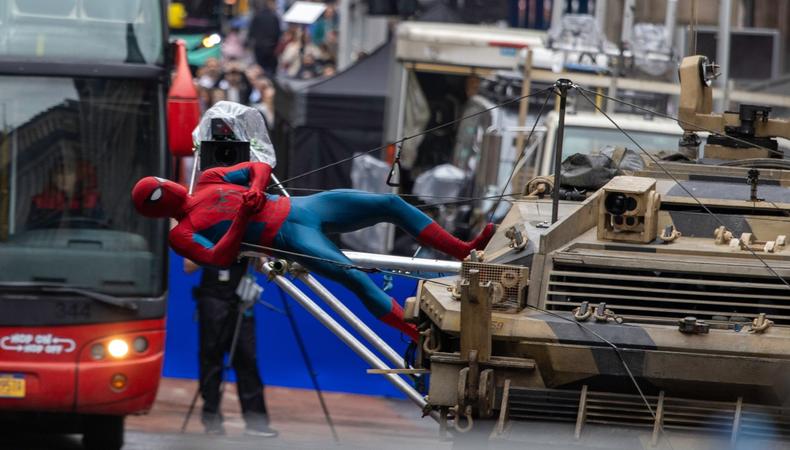
Ever fancied jumping out of a moving car, flying from a building, or smashing through a window? Maybe a career as a stunt double could be for you. If you’re an adrenaline junkie, you may be wondering how to turn that passion into your profession. It takes a little bit more than just being made of steel. The good news is: This decade alone has seen a growing appreciation within the industry for the skill involved in stunt performance.
“Stunt performers are becoming better acknowledged for their contribution to the industry, which is only right,” stunt performer Bobby Holland Hanton told the Guardian. “We put our lives at risk for the magic of the cinema.”
Stunt performers need a combination of physical skills, acting ability, discipline, and an understanding of safety on a film set. In the UK, there is also a recognised professional route through the British Stunt Register (BSR), which sets standards for training and experience.
Starting out can feel overwhelming, so here’s a breakdown of everything you need to know about becoming a stunt double.
JUMP TO
Let’s start with the basics: What actually is a stunt double? Also known as a stuntman, stuntwoman, stunt artist, or stunt performer, a stunt double stands in for actors when a potentially hazardous action takes place on set. It could involve a fire, car crash, falling down the stairs, a fight sequence, or something specialised like abseiling.
“Stunt work isn’t always James Bond,” stunt performer Brian Robinson told the British Action Academy. Nor is the job just about doing something dangerous. Stunt performers work closely with stunt coordinators, directors, actors, and other crew members to make an action sequence look convincing. Everything is very closely choreographed, and safety is paramount.
Being a stunt double also means replicating the actor you’re replacing. You may need to match their physicality, mannerisms, and even their looks! The job begins long before anyone hits record on the camera. “Weeks before a movie kicks off, the stunt team starts rehearsals and development,” Holland Hanton says.
The roles of body double and stunt double are often confused in conversation, but they have wildly different responsibilities. A body double replaces an actor for particular shots where their face isn’t visible or where specific physical characteristics are required, such as in a scene involving nudity. Body doubles are also used when a principal actor needs to appear as two or more characters in a scene, such as in the 1998 film The Parent Trap, in which Lindsay Lohan had a body double in Erin Mackey. Due to child labour laws, which have strict requirements for how long kids and teens can work on a film set on any one day, they’re often hired to support child actors, as Flick Miles was for Emma Watson on the Harry Potter films.
A stunt double, meanwhile, is specifically trained to perform technically demanding action. That’s why it requires specific training.
Being a stunt double isn’t the kind of thing you can just walk into (get it?). Perhaps you already have experience in martial arts, diving, motorsports, gymnastics, or another physically demanding skill. Stunt performers often have a foundation in one of those backgrounds. Nikita Mitchell, for instance, initially trained as a dancer. “We think of dancers as pretty and delicate, but it’s gruelling, physical work that takes precision and endurance,” she told the Guardian. “In many ways, the exact same grit and determination is required in stunt work.”
If you’re starting from zero, choose disciplines that you can commit to training consistently. The BSR’s application requirements cover several skill areas, including fighting, falling, riding and driving, agility and strength, and water-based skills. It took stunt double Rick English four years of training before he was accepted. Since then, he has appeared in over 100 films.
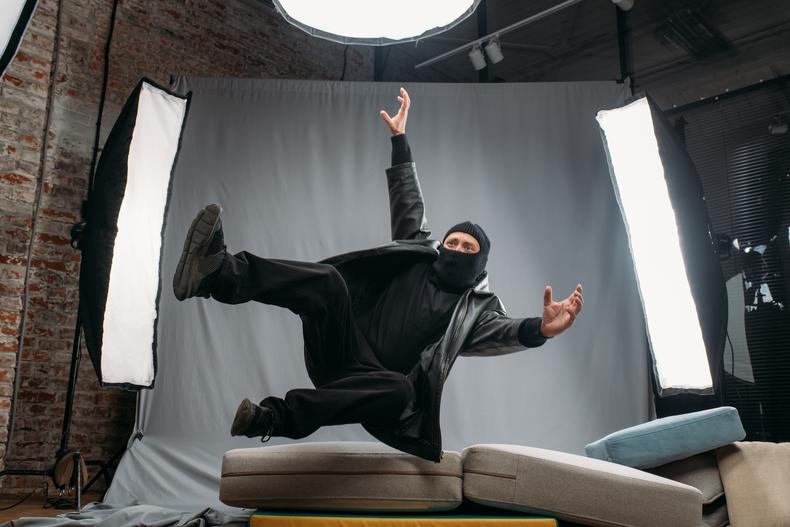
Credit: Grusho Anna/Shutterstock
Generally, yes. But the physical requirements vary enormously depending on the work you want to do. A stunt performer specialising in horse riding needs a different physical skill set from someone who specialises in car chases.
Your body is a professional tool, though, so look after it. Stunt work can also result in injury. David Holmes, for example, who played Daniel Radcliffe’s stunt double in seven Harry Potter films, broke his neck while filming, leaving him paralysed. “I was filming a scene where Harry fights a snake and I remember hitting the wall and my chest folding into my nose. I was fully conscious for the whole thing. I knew I had broken my neck,” he recalled in an interview with the BBC. “After the accident, I lost a decade of my life, but I never held on to hate and blame. I owned the fact that I chose a dangerous profession.”
Founded in 1973, the British Stunt Register was established to set performance and safety standards for stunt performers, actors, and crew. The organisation provides a structured route into the profession.
BSR membership should be regarded as a major part of your career plan if you dream of becoming a stunt performer. But note that it can be a long process to get accepted. Applicants need to demonstrate their existing abilities and experience before they can progress through the register. The core requirement is competency in six qualifying skills across designated skill groups.
The groups, according to Movement Management, are:
- Fighting (including martial arts, with a mandatory requirement for at least one martial art)
- Falling (including precision landing techniques)
- Riding and driving (motorcycles, cars, horses, and other vehicles)
- Strength and agility (gymnastics, parkour, climbing, and similar disciplines)
- Water (swimming, diving, water safety)
- Miscellaneous (other disciplines that demonstrate relevant skills)
It’s also worth getting experience on film and television sets. Working as an extra, a supporting artist, or a walk-on performer can help you understand how a professional set operates.
Becoming a stunt double doesn’t have to be the end goal. For many performers, it’s the beginning of a long career within the action department. You could become a stunt coordinator, who is responsible for designing and directing stunt sequences, as Wade Eastwood did.
“[The transition] was easy, because I like managing teams, bringing people together, and choreographing the action. As a performer, I never pitched up and just did my job. I was always about, ‘Wow, what if I did this? What if I did that?’ I always wanted to create and do more,” Eastwood said in an interview. “There are actors and actresses who have never done certain things before I work with them. I take them out of their old box and put them into a new box. I completely change the way they think about action and the way they move. They really need to trust you in order to do that, and the results are always positive.”
You could also use it as a launchpad to become an actor; you may even have a head start since you’ll already have on-set experience. Stunt performing, however, is also a profession in its own right. “I really love my job,” English told the BBC. “You do end up with the occasional injury, but for me the bruises are temporary and the finished product is on film forever.”