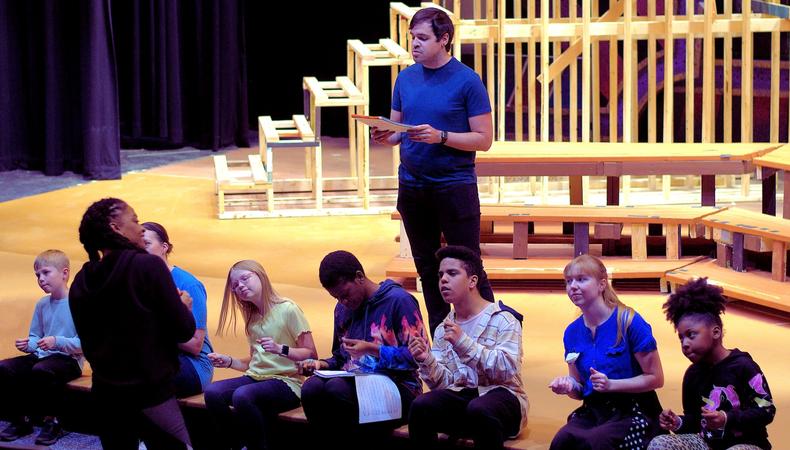
“It is only relatively recently in terms of theatre history, and only in certain Western cultural contexts, that there is this distinction between community theatre, or theatre made in and with communities, and professional theatre,” says Steph Kehoe a lecturer at Victoria College of Arts and Design. “The essence of theatre and of most performance traditions globally is, in fact, the sharing of stories and experiences in, with, and by communities.”
Even so, “community theatre” is a term widely used to describe a particular subgenre of theatre. Here’s a deep dive into what it means.
JUMP TO
- What is community theatre?
- Community theatre: Is it amateur?
- How to find community theatres and groups
- How to audition for community theatre roles
- Can unionised actors take part in community theatre in Australia?
- Do community theatre actors get paid?
- The benefits of participating in community theatre
Community theatre is distinguishable from other types of theatre in that it is connected to and contributes meaningfully to a community. It may provide social commentary on issues prevalent in a community, contribute to the social or financial capital of a community, or simply bring the arts to both those creating it and those watching it.
Often staged by nonprofit companies, the productions can be made by professional theatre-makers or amateur groups – and sometimes a partnership between them.
Community theatre groups range from small outfits performing in tiny spaces to large, well-established companies with their own local venue and full-time crew of professional staff, such as Melbourne-based Footscray Community Arts Centre and Women’s Circus.
Grassroots organisations are often looking for talent, so there are ample opportunities to get involved – both on and off stage – and gain solid experience in theatre-making skills that can translate to working on bigger, more established theatre projects or even on screen. Just look at Hugh Jackman. He’s now a world-famous triple-threat performer, but he started out in the Willoughby Musical Society’s community theatre production of Paint Your Wagon in 1989.
“Community theatre is sometimes – a little pejoratively – called ‘amateur theatre,’ which refers to theatre that nonprofessionals make in and for their local communities,” Kehoe says. Yet many community theatre groups “have been around a long time – sometimes longer than many professional companies – so some people who perform in these sorts of works once or twice a year end up having been in a lot of productions. They have both experience and a lot of skill.”
“These groups tend to be self-funded and cover their costs through ticket sales,” Kehoe says. “Which is not so different from how most emerging professional companies and artists have to survive in Australia.”
Community theatre is sometimes produced in collaboration with a local professional company. “The intersection of professional artists making work in collaboration with communities is a beautiful and exciting space of practice – the best of both worlds,” Kehoe says.
Local theatres can support community theatre productions by providing an established, well-known venue space. Sydney’s Zenith Theatre, for example, stages community-based performances by groups such as North Shore Theatre Company.
“On these projects, the professional artists would be paid. There is funding at local, state, and national levels for this sort of work,” Kehoe says. ”The community participants wouldn’t be paid, but … sometimes their incidental personal costs are covered.” Travel to and from rehearsals, for example, may be paid for.
Research local community theatres and groups by asking drama school teachers, fellow actors, and theatre-makers you know for recommendations. Also look online to see what’s available in your area. Even a simple Google search will bring up suggestions you may not otherwise come across.
Auditions for community theatre groups are sometimes advertised on casting sites. Stage Whispers has a comprehensive listing of community theatres and shows across Australia.
Facebook is also great for finding spaces where theatre-making communities share advice, resources, connections, and opportunities. Try Theatre Australia, Australian Actors Community Group, Auditions Australia, Sydney Musical Theatre, and Melbourne IndependenTHEATRE.
Ray Geiger/Shutterstock
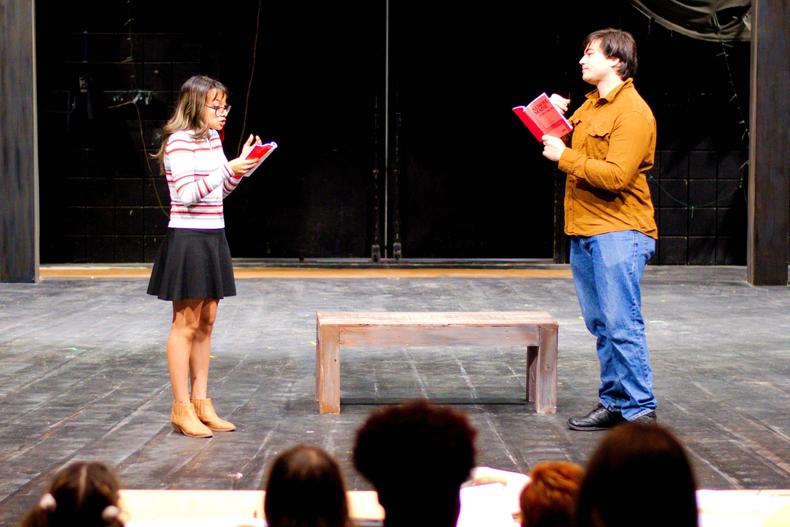
Once you’ve found a local theatre, check its website and social media platforms for any information regarding auditions. If it has a mailing list, sign up to find out about opportunities as soon as they’re announced.
If the theatre hasn’t posted any audition notices recently, reach out by email or phone to introduce yourself and state your interest in auditioning for future productions.
Community theatres are often looking for people to help out behind the scenes. Even if performance roles have been filled on upcoming productions, you may be able to offer relevant skills in costume design, lighting, set design, stage management, marketing, or front-of-house roles. It can be a great way to get theatre experience and make yourself known to the company before the next round of auditions.
Before you audition
Before attending an audition, find out everything you can about the production and theatre to determine whether the type of theatre they make and the community they serve is the right fit for you. Reach out to the theatre to strike up initial dialogue with them.
Most importantly, double-check rehearsal and show dates to ensure you can commit the time and energy needed.
Preparing for an audition
Read the audition information carefully so you know exactly what’s required. You’ll likely audition for either a play or a musical, so you may have to prepare a monologue or song (and sometimes both for a musical). Prepare something that will be relevant to the production. A Shakespearean monologue works well if you’re auditioning for a Shakespeare play, but you should pick a contemporary monologue and musical theatre song that aligns with the play if the company is casting a rock musical.
Read the play to ensure you understand the story, context, and character. Learn your lines and practice thoroughly.
Attending the audition
Arrive on time, present yourself confidently, be open to playing, be yourself, and relax. Dress appropriately. Keep it simple by choosing comfortable, nondistracting clothes (solid, neutral colours are a great option) that you can move in easily, and opt for natural-looking hair and makeup unless advised otherwise.
Try not to be nervous. Even if you don’t land a part, auditioning is a valuable experience that provides insight into the reality of professional acting.
Members of MEAA, Australia’s largest union for creative professionals, are generally encouraged not to take part in nonunion productions, including community theatre. If you are a union actor who wishes to take part in a community theatre production, you will need to apply for a Special Appearance Agreement with your union.
Community theatre typically does not pay actors, says Helen McIntosh, president of Melbourne-based Peridot Theatre. Organisations apply and bid for funding, but it’s not always won – and there is minimal government support.
“All of the work is done by volunteers. No one, including the actors, receives payment for their services,” McIntosh says. “There is a team behind [stage] that manages the company; promotes; sells tickets; pays the bills; funds the productions; sources sets, props, and costumes; and is there every night in the bio box and front of house – all totally voluntary.”
It’s a similar situation for Beaumaris Theatre, another one of Melbourne’s community theatres. “The only people who are paid are the musicians (should the show running have an orchestra), and that is paid for by ticket sales,” says Lynda French, the theatre’s secretary and public officer. “We have a core group of volunteer members who work incredibly hard to bring shows together. Our goal is to offer the theatre to all and we welcome anyone who has an interest.”
Although their actors typically aren’t paid, most community theatres are flexible with times. They often meet on evenings and weekends to allow participants to be part of a production without disrupting their work commitments.
Community theatre productions can have a vast influence on their participants. “For young people in training, these groups can provide a chance to test the waters and develop skills and confidence before auditioning for vocational training or maintaining their skills whilst looking for professional opportunities,” Kehoe says.
Many people enjoy community theatre as a fun, creative way to socialise with like-minded locals, but it also plays a vital role in nurturing emerging talent. A number of professional performers started out in community theatre, including Guy Pearce. He began performing in local theatre productions in Geelong, outside of Melbourne, and he has spoken in support of the city’s longest-running amateur theatre, GSODA.
Although it doesn’t come with a qualification or offer the level of training you’d receive at drama school, community acting can be a springboard for honing the skills needed to transition into professional acting.
The close-knit, collaborative performance style fostered in community theatre groups can provide a supportive space for your journey into acting. It’s a chance to develop skills and make connections with seasoned mentors and other emerging performers.
Beyond your own gains, it’s a way to give back to the community through the shared joy of live performance and creative expression. “These sorts of groups seem to do a lot of good in building communities and friendships, and allowing people who may not use their creative skills explicitly in their professional capacities to draw on and further develop these skills,” Kehoe says.
Andrew Blackman, the artistic director of Complete Works, a professional touring company, agrees. “They act as a hub that brings people together – a place that enhances engagement and allows for creative expression and expansion of social networks,” he says.