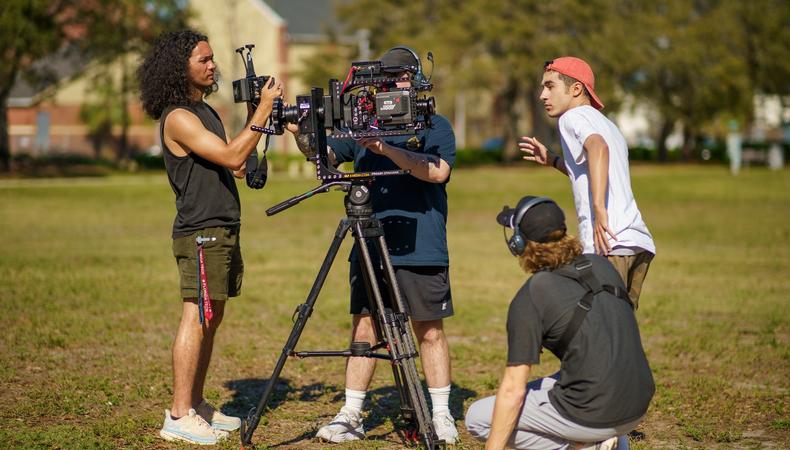
For many aspiring filmmakers, making a short film is the best place to kick off a career. Getting funding for any filmmaking project is a challenge in the UK, especially as an emerging talent, but short films are easier for several reasons. Not only is the scale of the project more manageable than a feature, but they can also be made on a shoestring or with smaller pots of specialist funding. What’s more, a short film can function as a calling card when you’re trying to make a name for yourself.
Many short films are satisfying contained artworks, but they can also work as a teaser or the basis for a longer project. Philip Barantini’s 2019 movie Boiling Point began as a 21-minute short before being made into a BAFTA-nominated feature film. And YouTube is increasingly becoming a launchpad for short films with big potential: Curry Barker's 2023 short, The Chair, got millions of views on YouTube – enough attention that producers came calling, asking him to adapt it into a feature film. He suggested a different project instead: Obsession, the super-low-budget indie horror movie that went on to become a dizzying hit and gross over $500 million (£369 million) worldwide.
“Thanks to the internet, the road to becoming a filmmaker looks different from before, with the festival circuit no longer serving as the only place one can get recognised and cultivate an audience,” Isabel Bekele writes for Dazed.
The filmmaking process can be broken down into three main stages: preproduction, production, and postproduction. In this guide, we’ll cover the basics of each stage.
JUMP TO

Credit: Pixel-Shot/Shutterstock
Script
“I am always staggered about how much can be achieved within a limited time frame in a great short film,” Justine Hart of The Script Factory writes for the BBC. “Whilst any ordinary situation can turn unexpectedly poignant, if you are struggling with where to start, it’s worth considering setting your story around a pivotal life event that comes ready-charged with high stakes and expectations.”
She also advises having a clear, simple concept for your short – sage advice, whether you choose to write the script by yourself, co-write it with another scriptwriter, or hire a scriptwriter to turn your concept into a screenplay. Remember: No one’s first draft is a shootable script. Be prepared to work on many drafts, seek advice and feedback from people with experience in the industry, and then rewrite, redraft, and rework your script extensively.
Storyboard
A storyboard provides a visual depiction of each shot within your film, including your ideas for shot composition, actor blocking, and direction of movement within the scene. It also includes details about camera angles, key sound effects, and lighting choices. Think of it like a big comic book strip of simple sketches that acts as a handy guide for what the final film will look like. The storyboard keeps everyone on the same page, providing advance guidance for the setup and what equipment will be needed.
Budget
Funding a short film is never easy; competition is fierce and preparation is key. If you can’t self-finance it, then you’ll need to apply to funding bodies or short film competitions (which often charge an entry fee), or launch a crowdfunding campaign on platforms such as Go Fund Me, Kickstarter, or Crowdfunder. The sums needed to make a short film will vary wildly depending on the specifics of the shoot, but in the UK short film grants typically range from £3,000 to £25,000, which may be helpful to keep in mind as you start to build your budget.
Here’s a list of potential industry funding opportunities and competitions. Many have specific funding application windows (and figures quoted may rise); keep checking back to find out when they’ll reopen.
- Genera Films Funding: various funding strands, all offering up to £5,000
- Kodak First Flights Short Film Fund: up to £7,000
- Large Format Short Films Competition: £5,000
- Slick Films Fund: £3,000 for a first-time filmmaker with a £10,000 grand prize
- The Women in Film and Television Short Film Fund: £25,000 in funding plus £25,000 for kit rentals; open only to women and nonbinary filmmakers
- BFI Network England Short Film Funding: £5,000 to £25,000; open only to filmmakers in England
- Northern Ireland Screen Short Film Call: up to £6,000 for individuals and £12,500 to £22,500 for companies; open only to filmmakers in Northern Ireland
- Little Pictures: up to £6,000; open only to first-time filmmakers in Scotland
- Take Three: from £3,000 development grants to £90,000 production grants, across three different schemes based on experience levels; open only to filmmakers in Scotland
- Beacons Short Film Funding: up to £25,000; open only to filmmakers in Wales
Schedule
Once you’ve worked up a realistic budget, you’ll need to set a shooting schedule. How long the shoot takes will depend on the complexity of the material, the number of shots and locations, the equipment you’re filming with, and the film’s length. For a first short film, aim for under 15 minutes. That could take as little as one day for a low-tech, low-budget shoot in a single location with a small cast or up to a week for more complex shoots.
It’s wise to always plan more time per scene than you’ll likely need in case of unexpected delays. If nothing else, you’ll be grateful for the breathing space.
Hire
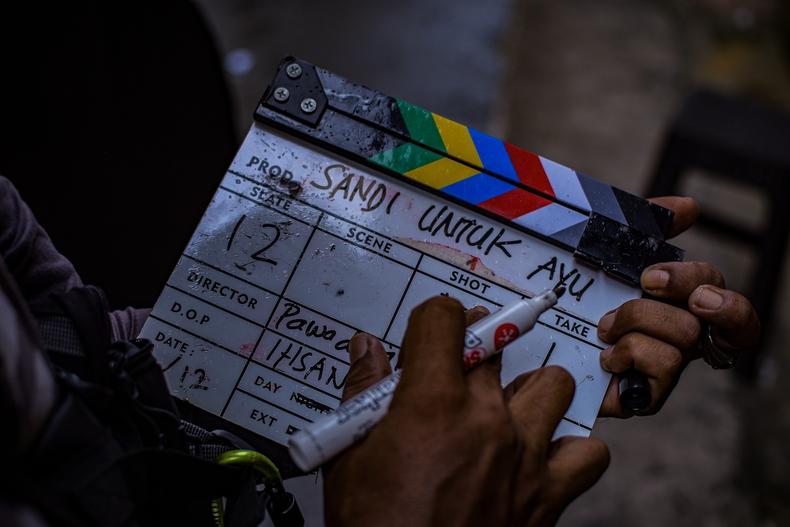
The next step is to hire your crew. You’ll need a director and producer – if you aren’t in those roles yourself – plus a director of photography (DP), first assistant camera (AC), and a sound recordist. If your budget allows, consider employing a first assistant director (AD), gaffer, grip, production designer, makeup artist, script supervisor, and location manager. You’ll also need to find your cast. In addition to searching jobs boards, you could consider approaching friends, local community theatre groups, or students.
A shared spirit and sense of commitment is probably worth more than a shiny CV when working on a short. Emerging filmmaker Joe Warner recommends trying to build relationships with other people who also believe in the story you’re trying to tell. “You’ll be surprised to find how many talented and experienced people want to make short films for the love of them,” he says. But remember: If you’re on a shoestring or expecting people to work hard for a small fee, exposure, or just the love of the project, be realistic and up front about the fees and how much work it will entail.
Credit: Rizwal hadi/Shutterstock
Share the production bible
That includes the final script, storyboard, shot list, location information, contact details for all cast and crew, and any additional notes from your heads of department. Make sure everyone has a copy and is on the same page.
Make it a comfortable shoot
Even if it’s your first film, it’s on you to lead the project with confidence, professionalism, and care. You should be first and last on set. Pay attention to the working conditions: Feed your cast and crew decent food and make sure you’re well stocked on water, healthy snacks, and hot drinks. You’re shooting in the UK, so you need to think about the weather and how you’ll keep everyone warm and dry in winter and cool in summer, with places to rest and recharge.
Keep your head
Things will go wrong. That’s almost guaranteed on any film of any scale. You can’t control everything, but you can control how you react. Try to stay calm, be patient, and roll with the punches. Things that seem disastrous at first may even have unexpected silver linings. This is when hiring a great crew will really pay dividends. You’re likely surrounded by experts who may have a lot more experience than you. Be humble, and ask for help when needed; the solution may be easier than you fear.
Plus, making sure your set is a respectful and collaborative place to work will make the shoot more pleasant for everyone, encourage people to work hard for you, and win you a good word-of-mouth reputation, which is vital in this industry.
Film behind the scenes
These days, promoting your film is half the battle. Being able to tell the journey of your film from idea to screen, and give people a peek at what your creative process was like, can become vital content for sharing on social media platforms from YouTube to Instagram to TikTok. It can be unpolished and candid footage caught on a phone camera – just don’t miss the chance to capture those unscripted moments.
Credit: DC Studio/Shutterstock
Edit
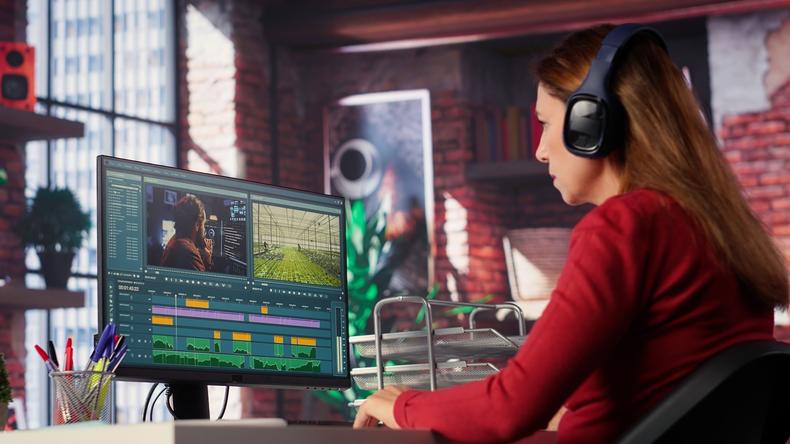
Many films are made in the edit. So much of the tone, atmosphere, and pacing, even on a short, will ultimately be dictated by the edit. “Editing is where filmmaking truly comes to life,” William Boyd writes for the Met Film School. “Often described as the invisible art, editing shapes a film’s rhythm, emotion, and narrative flow.” If you don’t already have the skill set, you can teach yourself with tutorials (YouTube is a great resource) or hire a professional. And, once again, it’s never a bad idea to get fresh outside eyes and ask for feedback.
Grade and score
Working with a colourist and a sound editor in postproduction can be essential to get your short to feel right. Colour grading – enhancing or altering the colour of your footage – can alter the style and mood of the material, while we all know how a soundtrack can nudge our emotions in a certain direction. You can license existing music, but a bespoke score will be better tailored to your needs, can elevate your short, and may even be cheaper than licensing music.
“Using well-known hit songs will be expensive,” composer Kim Halliday writes for Raindance Film Festival. “It’s always better to have a piece of music written specifically for your scene. The music should bump when our hero goes bump, and the music can lead and direct the audience toward a mood or piece of action.”
Promote
You’ve made your film! Now begins the challenge of getting eyes on it. As an emerging filmmaker, the most realistic approach for getting your film shown is to enter short film festivals. But you can also try to build your own audience online. Make sure you have a professional-looking but distinctive and grabby trailer, and an equally eye-catching set of digital assets and clips for sharing on social media.
YouTube is increasingly being taken seriously as a launchpad for new, exciting filmmakers, Warner says – and an essential part of building a following there is offering more than just a movie. “You need to build an audience – so get filming your process, behind the scenes, and build a following that will then be your tailored audience to share your [finished] work with,” he says.
It’s another big job to take on for an aspiring filmmaker, but, in a world that can feel like it has a lot of barriers to entry, sharing your own content is at least “something tangible emerging filmmakers can actually [do],” Warner says.