Is there any artform more quintessentially British than the pantomime? The bawdy seasonal entertainment is a cornerstone of our culture: an event that brings together family members of all ages for a raucously entertaining take on a fairytale story. But pantomime is not just a bit of fun – these bankable shows are often what keep theatres open the rest of the year. And they can also be vital to an actor’s career, providing a solid chunk of paid work every Christmastime. It may only be a tradition that makes sense on the British Isles, but it can be a very helpful – and very enjoyable – seasonal staple for actors working in the UK.
JUMP TO
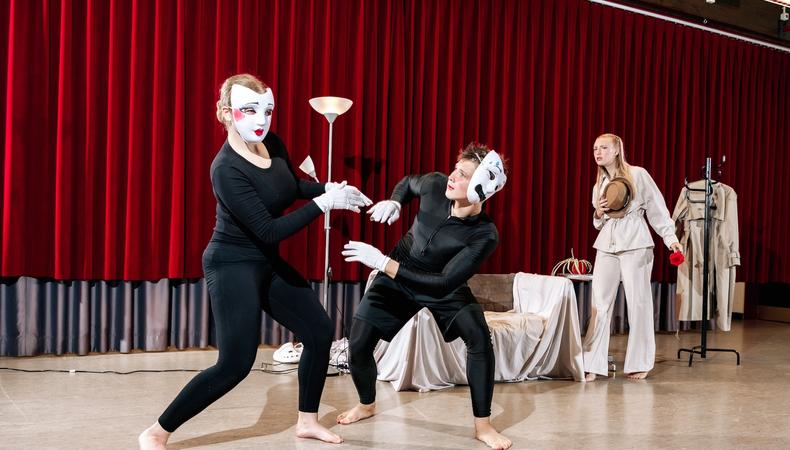
Pantomime now feels as British as a cup of tea, but its roots are very old – and they stretch across Europe. It grew out of 16th century commedia dell’arte, a theatrical tradition that developed in public spaces in Italy and featured a recognisable selection of masked or heavily made-up stock characters (think of clowns such as Pierrot or Harlequin). Such characters began to appear in British plays by the early 18th century, delivering slapstick comedy set to music.
By the Victorian era, pantomime had established itself as a thing to watch at Christmas – and fairy tales began to be used as a base script. Influenced by music hall, pantomime became more like a variety show and shed the commedia dell’arte archetypes. Cross-dressing came into the frame, with the principal boy played by a woman in tights and the pantomime dame played by a man in a dress.
The Victorians also introduced an element of social commentary and satire: Topical nods were woven into the script, as they still are today. It’s an element that helps make sure pantomimes always feel current – there will likely be plenty of groansome old jokes or creaky puns, but there should also always be a few big laughs at the expense of disgraced politicians and public figures! In that way, pantomime forms a useful public service: It gives ordinary people an annual moment to come together to laugh at those in power.
Director, playwright, and panto regular Jude Christian believes pantomime can be a subtly political force. “There’s a political thing that theatre can do as a kind of Trojan horse,” which can be particularly potent with panto, given it’s watched by such a broad audience, she told Exeunt magazine. “If you’re saying, ‘Hey, there’s fun and glitter and pop songs’ – and what we’re actually doing is insisting on common humanity in a very divided time or, say, unquestioningly putting forward the notion that LGBTQ+ people can enjoy romantic fairy-tale love stories as much as everyone else, then you can say shamelessly political things when everybody thinks that they’re just having a dance party.”
Credit: Go My Media/Shutterstock
Pantomime is still a mish-mash of an artform. At its base is a classic story, based on a standard selection of fairy tales and folk tales. Among the most common are Cinderella, Sleeping Beauty, Peter Pan, Puss in Boots, Mother Goose, Dick Whittington, Aladdin, Jack and the Beanstalk, Snow White, and Robin Hood. A writer will usually give them their own twist and insert some topical material. There will also be song and dance sequences, featuring well-loved classic hits and the latest chart-toppers, with the audience expected to join in with the singing.
That’s not the only audience interaction. Kids will often be brought onstage; a dame will often identify a “stooge” (usually a man who she picks on or flirts aggressively with); and the whole audience is expected to shout out certain phrases, such as “It’s behind you!” and “Oh, no it isn’t” or “Oh, yes it is” to help out the good characters. Loudly booing the villain is also encouraged. Other set pieces include the “slop scene” – a slapstick sequence that features gunge or water and a lot of falling over.
The significant stock characters in today’s pantomime include the dame, who is usually played by an older man dressed up as a woman, and their sidekick, who is a cheeky comic figure – often a younger man – who talks to the boys and girls in the audience. The love interests are the principal boy (say, Peter Pan or Aladdin), who is traditionally played by a young woman, and a principal girl (such as Wendy or Princess Jasmine). Many shows cast a man in the male lead and present a heterosexual love story, but the classic stories prove extremely flexible; it’s not unusual to find a pantomime with a deliberate queer narrative twist these days.
Every pantomime also needs a villain – a baddie who the audience boo. They’re often offset by a benevolent magical being, such as a fairy or a fairy godmother, who helps the principals overcome the villain. And as if all that wasn’t silly enough, many pantos also feature an animal – usually a cow, horse, or camel – traditionally played by two people in a slightly baggy four-legged costume.
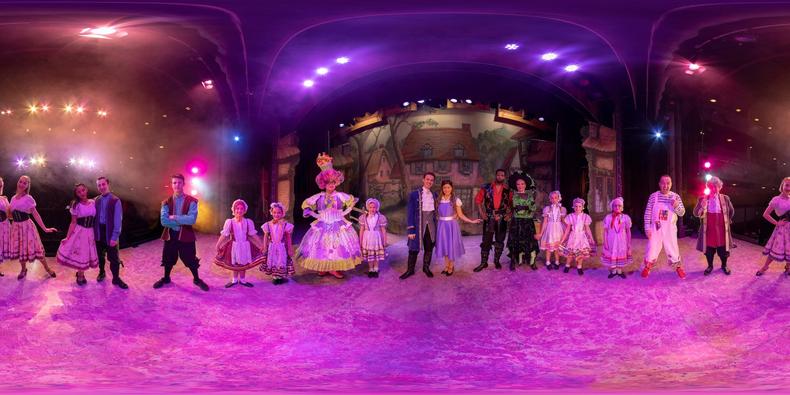
The pantomime also has a distinct visual aesthetic, with very colourful sets usually made out of brightly painted flats. Costumes are also usually gaudy and glittery, with the dame appearing in an escalating series of ever-more-absurd and high-concept frocks and wigs.
Pantomime is a balancing act, says Alan McHugh, who has been writing, acting, and directing pantomimes since 1993 and regularly appears as the dame at His Majesty’s Theatre in Aberdeen. There are so many elements that all need to fit into the template, but a good production should never lose sight of the plot. “One of the main things for me is holding onto the story – or it just becomes a variety show,” McHugh says.
Almost every town and city in the UK will have a pantomime, and they typically run from November to the end of January. It’s a great seasonal opportunity for reliable work for aspiring actors. Many high-profile pantomimes cast celebrities in the lead roles, but casts can be large and have roles available for up-and-coming actors too. Many local and regional productions may have a preference for actors in their area. Once you get cast in a panto, you could be on to a good thing. Some theatres like to cultivate familiarity between the cast and the audience, which means you may get asked back year on year.
That has certainly been the case for Adam Keast, who is now creative associate as well as the dame for Liverpool Everyman’s pantomime, having performed in the role for 24 years. He points out how beneficial it is to have a regular gig in the city where he lives. “My first for the Everyman was just a few months after my son was born, so living locally has meant I’ve not had to be too far away at Christmas,” he says. Doing panto has led to other acting gigs, too, but he’s reluctant to take jobs over the winter period that would take him away from the Everyman’s panto. “This show is incredibly important to me, and I have never hesitated to sign up.”
Many pantomimes are staged by specialist companies such as Crossroads, Jordan Productions, Little Wolf Entertainment, Evolution Productions, and Paul Holman Associates, which stage multiple shows a year. That could also lead to future employment opportunities once you’re known to their casting teams. “There are lots of ways to get into a pantomime,” says actress Bethany Unwin, adding that “the casting timeline happens way earlier than people think.” You’ll need to be looking for opportunities in spring. Check out listings on jobs boards, and look out for call-outs in your local theatres. But, as Unwin explains, you can also get in touch directly with pantomime companies via their websites by sending in your CV, headshot, showreel, and a cover letter. She also recommends following the companies on social media to catch call-outs there.
Acting in a pantomime requires certain skills. Interacting effortlessly and confidently with the audience is a must, as is a quick wit and the ability to ad-lib or go off-script without entirely losing control. Panto dames, in particular, can almost be like standup comedians in their ability to respond to the room and work the crowd, but anyone sharing a stage with them should be prepared for the show to be slightly different every night.
So much of performing in a pantomime is “about the audience reaction,” McHugh says. “I’m in the fortunate position as dame to be involved in so much of that. The beauty of it is making it look like chaos, but it’s chaos that’s rehearsed to within an inch of its life.”
You don’t need to have musical theatre triple-threat skills to perform in a pantomime, but an ability to hold a tune and learn a dance routine is essential. Some pantos even require the cast to be able to play instruments onstage, as with Liverpool Everyman’s annual Rock ’n’ Roll Panto. “Acting, singing, playing a musical instrument, dancing – you have to wear all these hats and often at the same time,” Keast says.
It’s important for a panto performer not to take themselves too seriously – you need to be willing to get gunged, laughed at, or boo-hissed – but Keast says a good panto actor should still take sincerely the circumstances in which their character finds themselves. “A brilliant director used the phrase ‘big truths’ – i.e., no matter how ridiculous the situation, if you look like you believe in it, the audience will too. That’s particularly true for panto.”