
If you’re an aspiring actor or a film industry freshie stepping onto professional sets for the first time, a clear understanding of who is calling the shots can make a real difference in how confidently you navigate the industry – especially when it comes to the dynamic of producer vs. director.
Both roles are powerful and both shape the final film – but in very different ways. Knowing what each role involves and how those responsibilities overlap will help you understand how decisions are made, who to approach with questions, and how creative and practical power is shared on set.
Here’s a clear breakdown of the difference between producer and director, and why it matters for your career in film.
JUMP TO
- The big picture: producer vs. director
- What does a film director do?
- What does a film producer do?
- 5 types of producers (and what they actually do)
- The difference between a producer and director, in practice
- Director vs. producer: Who has the final say?
- Can one person be both director and producer?
- The bottom line
At the top level, the fundamental difference between producers and directors is this: Producers are responsible for the business side of making the film happen and directors are responsible for making the film work creatively.
That distinction isn’t always obvious on set, especially because producers can be deeply involved in creative decisions and directors often influence logistics. But understanding the core difference between directing and producing helps actors read the room more accurately.
Credit: Gorodenkoff/Shutterstock
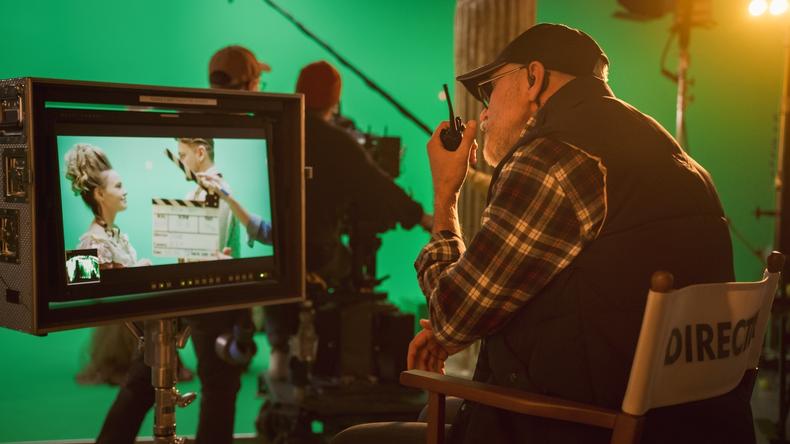
If the producer is focused on the project’s survival, the director is focused on its soul. Directors have a wide range of responsibilities.
Interpreting the script
The director develops the creative vision of the film, decides how the story is told visually and emotionally, and sets the tone, pacing, and style. Their interpretation guides every department – from cinematography to costume to performance.
Working with actors
The director is actors’ primary creative partner. They cast the actors (often alongside producers); block scenes and rehearse performances; give notes on character, emotion, and intention; and further shape performances in the edit. Directors are responsible for performances working within the overall story.
Leading the set creatively
Directors don’t work in isolation; they collaborate closely with assistant directors, associate directors, cinematographers (chiefly, the director of photography), production designers, editors, colourists, and sound and music teams. They make decisions about shots, camera movement, rhythm, and visual storytelling, all while working within the limits set by the producer’s budget and schedule.

Credit: fizkes/Shutterstock
A film producer oversees the project from the initial idea through to the release. They are involved long before a cast and even the director are brought on board, and often long after filming wraps. In many cases, producers are the ones who decide whether a project exists at all, and they handle a little bit of everything.
Development and financing
Producers typically find the initial idea for the story and develop the script with a scriptwriter or team of writers; secure funding and investors; attach key creatives, including the director; and set the overall budget and schedule.
Hiring and logistics
Producers also hire department heads; oversee contracts and legal matters; manage locations, insurance, and permits; and ensure that the production stays on time and on budget. If something threatens to derail the shoot – whether it’s weather, money, or scheduling – it’s the producer’s job to solve it.
Creative oversight
Producers aren’t usually directing performances, but they often give notes on the script and edits; help shape the tone, pacing, and audience appeal; and work to balance creative ambition with practical limits.
On set, producers may drop in to oversee the filming of key scenes, handle high-level decisions, and deal with issues that could impact the schedule or budget.
Tip for actors: Producers are rarely your point of contact for developing your performance, but they are often involved in casting decisions and the overall project direction.
Not all producers do the same job. Film and TV projects often involve multiple producer titles, each with different levels of responsibility and influence. Here’s a quick breakdown of the most common ones you’ll encounter on set.
Executive producer (EP)
The executive producer is usually focused on the big picture. They may help secure funding, attach key talent, or represent a studio, broadcaster, or investor. EPs typically aren’t involved in day-to-day production or performance decisions, but they often have significant creative or financial authority.
Line producer
If the producer is the strategist, the line producer is the tactician. Line producers manage the budget and schedule on a daily basis, overseeing how money is actually spent during the shoot. They work closely with assistant directors and department heads to keep production running smoothly and on time.
Co-producer
A co-producer supports the lead producer and may oversee specific aspects of the production, such as postproduction, locations, or particular story elements. Their responsibilities vary widely depending on the project and scale of the production.
Associate producer (AP)
Associate producers are often involved in coordination and communication. They may handle scheduling, liaise between departments, assist with casting logistics, or support postproduction. On smaller projects, an AP may wear many hats.
TV producer
In television, the term “producer” often refers to someone deeply involved in story and creative development. TV producers may work closely with writers, directors, and actors, and on some shows they also function as showrunners, overseeing both creative direction and production management across episodes.
The job descriptions can sound neat on paper, but the difference between producer and director often shifts depending on their individual personalities or work ethics, as well as the scale of the production.
On independent films: Producers may be hands-on creatively, and directors may help with scheduling or casting logistics. Their roles often overlap out of necessity.
On studio films: Producers focus heavily on budget, studio expectations, and delivery, while directors concentrate almost entirely on creative execution. Decision-making can involve multiple producers and executives, which is why the difference between directing and producing isn’t about authority so much as responsibility.
This is one of the most common questions actors ask, and the answer is: It depends.
On indie films, directors often have more creative freedom. On studio projects, producers (and studios) usually have final approval. And in television, showrunners (often writer-producers) often hold the most power.
When the producer-director relationship is working well, the dynamic becomes collaborative rather than hierarchical.
Tip for actors: In general, it’s best to treat both roles with respect. But unless you’re told otherwise, direct questions about your performance or the creative vision to the director. For queries about your contract, scheduling issues, or long-term project direction, go to the producer or production office.
Increasingly, the role of director and producer has some crossover. Some of Australia’s most successful filmmakers wear both hats as director-producers, such as Baz Luhrmann, who not only directed but also produced major films including Australia (2008), The Great Gatsby (2013), and Elvis (2022). Acclaimed Aussie director George Miller also served as a producer on his most famous films, including Babe (1995) and the Mad Max franchise, through his company, Kennedy Miller Mitchell.
Many film projects also feature writer-directors (famous examples are Quentin Tarantino, Wes Anderson, and the Coen Brothers) and actor-producers. Of the latter, Margot Robbie is a strong example. The Aussie star co-founded LuckyChap Entertainment with her husband, Tom Ackerly, in 2014, and together they have produced several projects, including the hit films I, Tonya (2017), Promising Young Woman (2020), Barbie (2023), and Saltburn (2023).
In the cases of hyphenate titles, the roles blur but the core responsibilities remain. Even when one person wears both hats, they’re switching between creative leadership and practical oversight.
When it comes to producers and directors, neither role is above the other; they’re interdependent. Producers make the project possible and directors make the project meaningful.
For aspiring actors, understanding that distinction gives you insight into how sets function, where decisions come from, and how to collaborate more effectively at every stage of your career.
The more fluent you are in the language of the industry, the more confidently you can step into it.