One of the joys of a career in acting is the opportunity to play a variety of characters. But it doesn’t take an expert to spot that some are more far-fetched than others.
The term “character actor” refers to the parts that are far removed from the actor playing them. Character parts bring depth and colour to lots of well-known films, plays, and TV shows. What would the Pirates of the Caribbean films be without Johnny Depp’s Jack Sparrow? Or Withnail and I without Withnail himself?
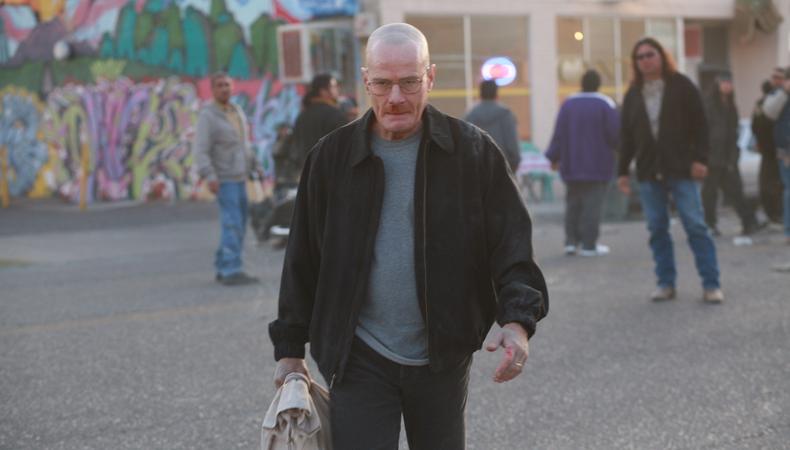
Some of the most successful actors have made their names from memorable character performances. Bryan Cranston was fairly well-known for his role in Malcolm in the Middle, but it was his transformation into the complex Walter White in Breaking Bad that put him firmly among the acting greats. Millie Bobby Brown had played a few minor roles before her breakout appearance as Eleven in Stranger Things turned her into a household name.
So, what’s different about character acting, and is it possible to make a career from it alone?
JUMP TO
“Character actor” or “character actress” applies to a specific kind of performance of distinctive, eccentric, or “larger than life” characters. Think Martin Short as the flamboyant Franck in the 1991 film Father of the Bride or Whoopi Goldberg as Oda Mae Brown in 1990’s Ghost. A wide range of characters could be classed as “character parts.”
They might be misfits with unusual personalities, villains and antagonists, or sidekicks to the lead, providing comic relief in the case of someone like Malvolio in Twelfth Night, or terror and chaos in the case of Othello’s Iago. Offbeat historical figures can make good character parts too. For example, Paul Bettany plays an idiosyncratic Geoffrey Chaucer in A Knight’s Tale, the 2001 film inspired by one of Chaucer’s own books. In the 2006 film The Prestige, David Bowie brings drama as quirky inventor and physicist Nikola Tesla.
Lead characters normally drive the narrative of a story, so they tend to get more screen or stage time. They’re relatable to the audience and not too far removed from the actor playing them, or even from the people we meet in everyday life. Character parts, on the other hand, have more extreme personalities and traits, which add intrigue and enrich the plot. They might get less air time, but they’re a great chance for an actor to have a big impact with a really memorable performance.
Christoph Waltz’s career had mostly been in European film and television, before his character performance as SS Colonel Hans Landa in Quentin Tarantino's film Inglourious Basterds catapulted him to Hollywood stardom.
Character parts are often supporting roles, but they don’t have to be. Tom Hardy gave a stellar character performance as the lead in the 2008 film, Bronson, and Charlize Theron led the action as serial killer Aileen Wuornos in the 2003 film Monster. Whether central to the plot or only appearing briefly, these parts can give actors even more to get their teeth into than leading roles.
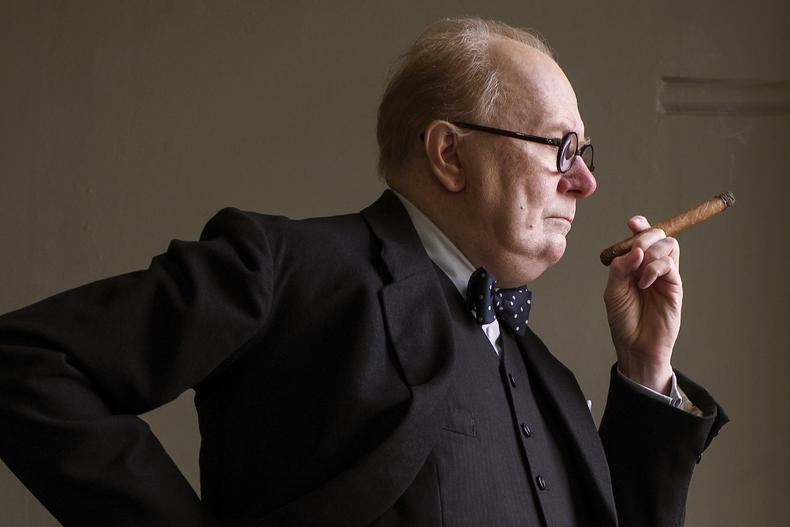
Gary Oldman in “Darkest Hour” Credit: Jack English / Focus Features
At the core of character acting is a significant physical transformation. Actors might alter their walk and posture, or adopt a tic to convey the mannerisms of a character. For instance, Heath Ledger habitually licks his lips as the Joker in The Dark Knight, and Dustin Hoffman rocks back and forth while repeating phrases to believably portray Raymond Babbitt’s neurodiversity in Rain Man. Details like these are a great way to make unusual characters convincingly familiar to the audience.
Some actors go to extreme lengths to transform physically for a character part. Christian Bale completely altered his physique to help him transform into Patrick Bateman in American Psycho, adopting a strict diet and fitness regime to achieve a lean, sculpted body.
Projects with bigger budgets can use makeup, hair, prosthetics, and costumes to make transformations even more dramatic. Gary Oldman was almost unrecognisable as Winston Churchill in Darkest Hour, with the help of prosthetics that reshaped his nose, chin, and jowls.
Vocal transformation plays a big part in character performances, too. Ralph Fiennes gave Voldemort a hissing rasp in the Harry Potter films, lending his performance a menacing, reptilian quality – fitting for a character with a deep affinity for snakes. More subtle changes in cadence can be just as effective, like Tilda Swinton’s cold, level delivery as the White Witch in the 2005 film The Chronicles of Narnia: The Lion, the Witch, and the Wardrobe.
Some actors take a Method approach to preparing for a character role. The technique involves deeply immersing themselves in the part, sometimes even living as the character for extended periods, as Daniel Day Lewis famously does for nearly all his roles.
Method acting isn’t the only way to prepare for character parts, but the further the character is from the actor, the more time and practice they’ll need to make the performance convincing.
The short answer is absolutely. Famous actors like Helena Bonham Carter and Steve Buscemi have built entire careers on their ability to morph into unusual characters. As with any niche, some actors are better suited to it than others.
To be a successful character actor, you need:
- A strong mastery of physical and vocal performance
- Versatility
- An in-depth understanding of storytelling
- A willingness to invest psychologically and physically in a full transformation
Character actors are chameleons, with the ability to undergo significant transformations to convincingly play a wide range of far-fetched figures. They’re vital to rich and compelling narratives, bringing complexity to parts that could become one-dimensional caricatures. Meanwhile, the character parts offer exciting opportunities to challenge the imagination.
Become a character actor, and a career of possibilities could lie ahead.