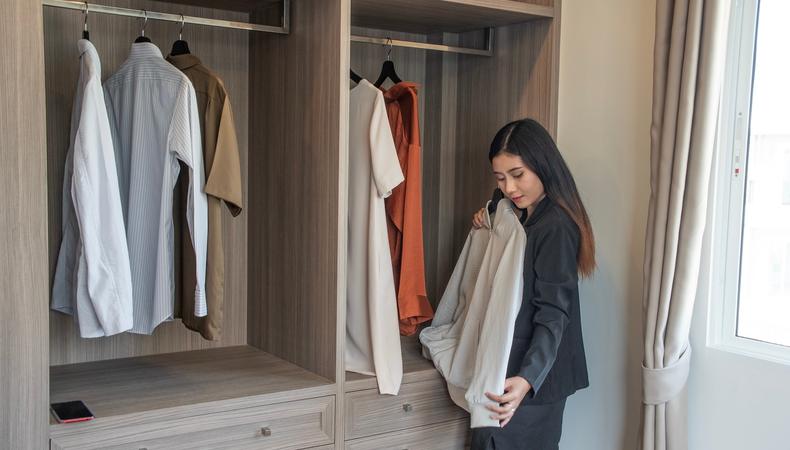
You’ve chosen your monologues and practised your lines a thousand times. But now you’re standing in front of your wardrobe, faced with one last big question: What do I wear to an acting audition?
It’s a dilemma all actors have to find an answer to, and, understandably, it can be quite stressful! In theory, your audition outfit is not something the panel should judge you on, but it needs to show that you understand the brief. What you wear can help you be memorable, especially when the panel may be auditioning hundreds of candidates, but it shouldn’t scream for attention or leave more of an impression than you do. So how do you balance wearing something neutral with standing out appropriately?
Here’s a look at the do’s and don’ts of casting audition outfits, to set you up for feeling as comfortable and confident as possible on the big day. After all, as the New York Film Academy says: “There’s nothing more obvious in an audition room than someone who is uncomfortable in what they are wearing.”
JUMP TO
The first important thing to note is that there is no one-size-fits-all casting audition outfit. What you wear should, most importantly, make you feel good. There will be slight differences, however, depending on the medium you’re auditioning for, be it an advert, TV show, play, or musical.
In a film or TV audition, you can be a tad creative with your outfit and channel the character slightly more. Stage auditions – especially musical theatre – usually ask you to prioritise wearing clothing you’ll be able to move freely in. Think of your audition outfit as something that will support you; it should aid your performance, not distract from it. “You want to lightly suggest the role, but be subtle,” says casting director Mel Mack. “For example, if you’re auditioning for a role and it says you’re a quirky character, you could wear a cardigan over a really cool band T-shirt.”
Practical go-tos
Think simple. For both theatre and film, if you’re auditioning for a general casting and not a specific character, opt for a plain, well-fitting outfit that doesn’t steal focus. Graphics and brand names can be particularly distracting. “Refrain from any accessories, stripes, patterns, and logos,” says a blog post from talent agency Caroyln’s. Think basic, solid colours and nothing too patterned. A neutral top and trousers are usually a safe bet for both stage and screen.
“The rule of thumb is that if a colour looks great on you and fits the character, then that’s the right colour for your audition wardrobe,” says acting coach Laura Mac.
Footwear matters too. “Your posture and movement are influenced by your footwear, so make sure your choice fits the role,” advises Acting Magazine. “If the character is polished, business-appropriate shoes or heels might be a good choice, while a casual character could be better suited to comfortable flats or sneakers.” Your footwear should not be a distraction. And if it’s a dance audition or there’s any dance involved, remember to bring appropriate dance shoes!

Pixel-Shot/Shutterstock
The part you’re auditioning for may have a clear costume, such as a witch in a children’s show. But be careful: Even if you’re auditioning for a police officer or a doctor, don’t self-tape or turn up to the audition in full uniform, because your vision of the character may not match that of the casting director. Wearing a shirt and smart trousers if you’re auditioning for a character in uniform, however, could help the casting panel see you in the role.
In other words: Channel the character, but don’t completely dress up as them.
“Make small, simple choices that are still noticeable,” says actor Lauren McCrostie. “Perhaps pick pastel tones and plait your hair if auditioning for a younger role or wear bold, primary coloured pieces if going up for a superhero part.”
For film and TV roles, you may want to push the character a little further than if you were auditioning for theatre, but take your cue from the casting call. “Much the same as a party invitation might specify black tie, some auditions have a dress code,” according to BBC Maestro. “There may be a note asking you to wear something specific for the character or advising you to bring clothes suitable for a dance audition.”
When dressing for a stage audition, functionality is key – particularly for musical theatre. Wear something flexible and breathable, such as leggings, a relaxed T-shirt and trainers. A leotard is generally recommended for dance auditions, particularly for traditional dance styles such as ballet.
Dance calls can be a high-sweat situation, so bring layers, deodorant, a bottle of water, and even a small towel to cool off. “I would advise a simple leotard, perhaps a camisole, to show off [your] neck and arms,” Niamh O’Flannagain, a dancer for Ballet Ireland, told Dance World. “Try to wear a leotard with a flattering high-cut leg line. Avoid black and go with a coloured leotard – nothing with a distracting pattern, but wearing a colour helps the audition panel spot and discuss you.”
The rules shift slightly for virtual casting auditions. Your top half matters most when you’re framed from the chest up. A solid colour with a neckline that suits your face is ideal. Avoid pure white, because it can look weird on camera, and skip stripes, which can pixelate.
“Keep in mind what colour your backdrop is and make sure you don’t match it exactly, otherwise you may end up looking like a floating head in your audition tapes,” Mac says. Don't wear a blue top, for example, if the wall behind you is blue!
Even though your bottom half probably won’t be on show, the TCU School of Music encourages auditioning actors to wear suitable trousers. “Don’t wear your pyjama pants,” says TCU music ambassador Kathryn Piña. “Dressing completely will not only make you feel more confident, but it’ll also put you in the right mindset.”
Generally, avoid these things:
- Bold patterns: Leopard print or neon may be your everyday style, but they are a big no for auditions.
- Logos and writing: They pull attention away from your performance and, if the logo signals a competing brand, may even disqualify you for commercials. “With brand commercials, you want to keep it very plain because you want the brand to be able to envision their brand on you,” says actor and influencer Bethany Unwin. “I avoid anything with any logos.”
- Noisy jewellery: Bracelets, necklaces, and long earrings can be distracting – especially in dance calls or self-tapes, in which the recording may pick up any jangling.
- Uncomfortable clothes: If it rides up, digs in, or makes you self-conscious, wear something else.
- Costumes: Unless explicitly asked, dress as yourself, not your character.
Getting dressed for an audition may initially seem overwhelming, but keeping things simple is key. The right casting audition outfit can make you feel like your best, most confident self, and, in turn, the casting team will find it easier to picture you in the role. Remember: If you’re unsure, you can always bring a change of clothes to the audition.