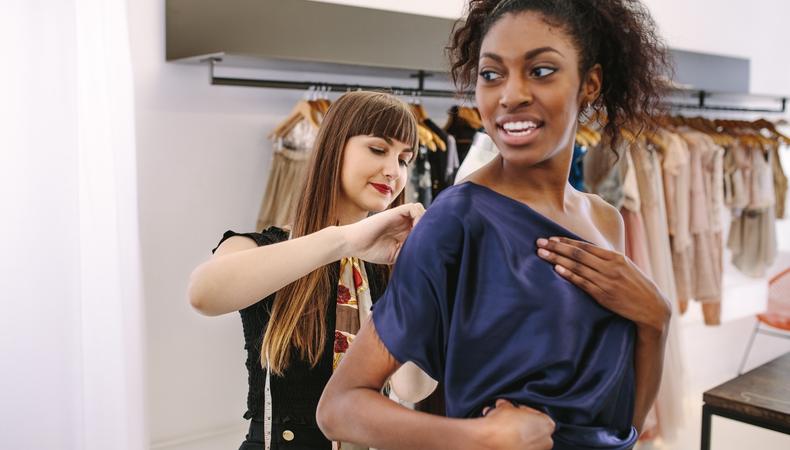
You may picture catwalks and high-fashion editorial campaigns when you think of modelling, but there’s more to it than that glossy veneer. Behind every garment on the rails is a less visible but essential person: the fitting model.
These models play a key role in the design and production process, helping brands see whether clothes fit and move well on real bodies. “Fit models are not like traditional models you might see on magazine covers or billboards,” according to UK Models, a support service for people in the modelling industry. “They are not chosen for their looks, but for their body measurements.”
Let’s take a closer look at what a fitting model is, what the job involves, and how to become a fitting model in the UK.
JUMP TO
Kaspars Grinvalds/Shutterstock
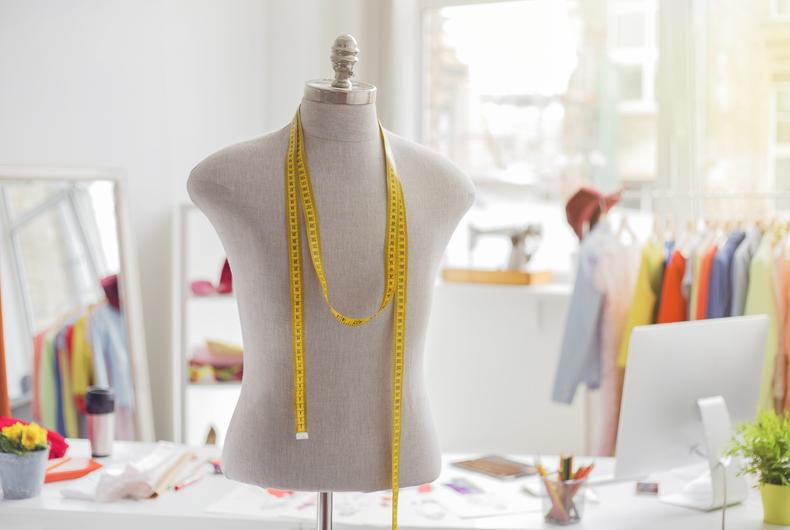
Fitting models are employed by fashion brands to test how clothing fits before it goes into mass production. Unlike editorial or runway models, fitting models don’t model for the public. Instead, they work with designers and pattern cutters in design rooms and studios to perfect the cut, shape, and sizing of garments.
“Because a fit model meets the specific needs for a particular company, there is no perfect size,” says Natasha Duswalt, owner of Peak Models & Talent in Valencia, California. Instead, they are chosen on an individual basis, as an exact representation of clothing sizes in a particular fashion range. “[They try] to gauge what size they sell the most of, get the fit perfect for that size, and then scale accordingly,” fitting model Claire Cannon told Fashionista.
“Most garments start out being designed on paper or a computer and eventually get transferred to a mannequin,” according to the blog My Model Reality. “But to see how a garment will fit and move on a real person, it needs to be fit to one.”
Brands typically choose fitting models whose body measurements match their sample size. According to Models Direct, however, “fit models encompass men, women, and children. There are a variety of categories that they will cover clothing for, [including] standard, petite, tall, big and tall, plus-size, maternity, sportswear, baby, junior, and plenty more new categories being added to keep on trend with consumer demands.”
Fitting models are essentially live mannequins. They try on clothes during the design and production process so a designer can assess how a piece of clothing fits, whether the shape is right, and how the fabric sits when the wearer moves. As a Fashionista article describes, “fit models change in and out of a slew of looks in quick succession as technical designers pin, prod, and ask questions, expecting highly specific feedback.”
The models are often key to spotting problems in a design. “The best in the business can detect if something feels a fraction of an inch off,” the Fashionista article continues.
Jacob Lund/Shutterstock
There’s no single set of measurements required to be a fitting model, because each brand has its own sample size profile. The UK agency IHM has models ranging from a size 4 to 30 in its fitting section.
There are, however, some requirements. The key to being a fitting model is patience. “Fit models should also have a good attitude and be able to take direction,” according to jobs site Nesta. “They should be able to stand for long periods of time and be comfortable in front of a camera.” Fit modelling suits those who “have excellent knowledge of fashion and current trends so [they] can translate useful and helpful feedback to designers,” Models Direct notes.
“It’s important that a model knows to stand straight and be as still as possible,” says designer Nanette Lepore. Keeping consistent body measurements is also key. Fitting model Megan Roup told Fashionista that she gets “measured weekly by my clients; the tolerance is within a quarter-inch. If you gain or lose weight, it’s not good either way.”
1. Record accurate measurements.
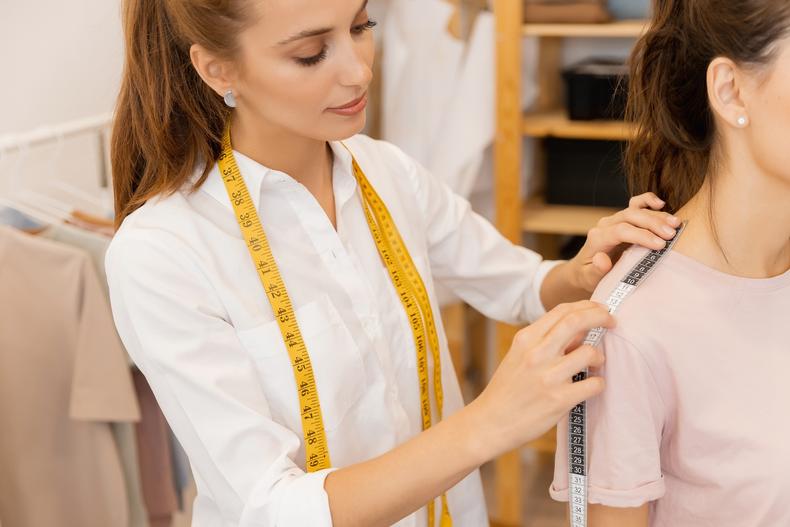
To succeed as a fitting model, you need precise and up-to-date measurements. The measurements typically include height, arm length, bust, under bust, waist, hip, and leg length.
If you can’t do the measurements yourself, get a friend to help or ask a tailor for professional measurements. The numbers will help you determine what niche you may fit into, such as petite, tall, or plus-size.
2. Create a strong modelling profile.
Invest time and energy into crafting modelling assets, including your portfolio and comp card, and create a profile on casting websites. Include your measurements, recent photos, and any relevant experience. Be sure to highlight specifically that you’re available for fitting model jobs.
With your modelling shots, you can send your portfolio to agents for consideration. Casting directors often browse casting sites when searching for models who meet specific size requirements. “Having strong modelling digitals is one way to stand out from the other applicants, so it’s important not to underestimate their power,” says photographer Brandon Andre.
3. Join a modelling agency.
Many fitting models work through specialist modelling agencies. Look for UK-based agencies that represent fitting models, such as:
Some have dedicated fitting departments or are fitting modelling agencies themselves, while others include fitting modelling as part of their commercial division. When applying, include your measurements and photos with a friendly email.
Be wary of agencies asking for large up-front fees. Reputable names in the business take only a cut of the fee their models are paid to work.
4. Attend open calls for fitting models.
Open calls are a valuable opportunity to get seen by casting directors and agencies looking for fitting models who match specific size and proportion requirements. The events are usually held by modelling agencies, fashion brands, or retailers, and they are often advertised on casting platforms.
Before attending, check if the open call is for your category (e.g., petite, curve, or tall). Come dressed in neutral clothing that shows off your figure, and don’t forget to bring your portfolio. “Do not overdo it when dressing for a casting,” says UK Models. “Keep it simple with clothing that fits well. The key is not to distract the directors from you as a person.”
Even if you’re not selected immediately, open calls are a great way to practice presenting yourself professionally and learn what designers are looking for.
New Africa/Shutterstock
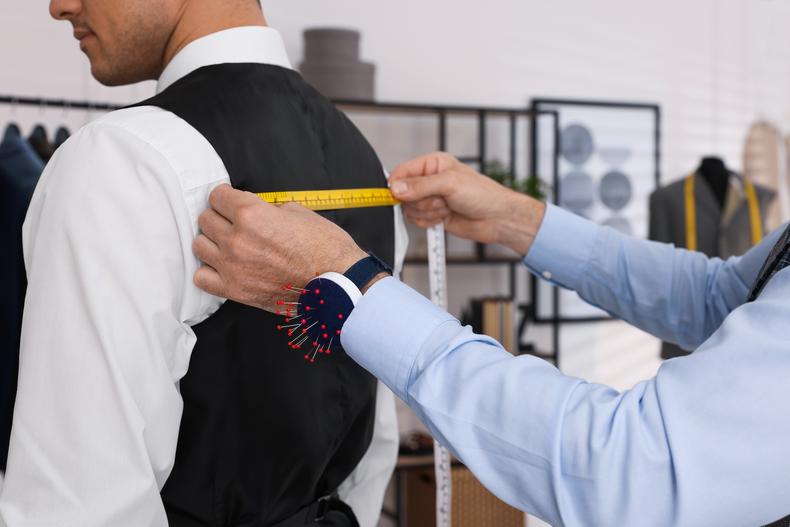
The short answer is yes! The fitting modelling industry relies on models of all body sizes. Because the role doesn’t rely on age or looks in the way traditional modelling does, fitting models often have long careers. What’s more, with jobs often short and spread out, you can do it alongside other work commitments.
If you’re interested, why not get your measurements taken and get started? You could be the reason the next viral dress looks good on just about anyone.