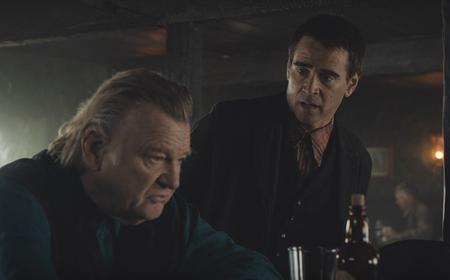
If you walk into a classroom at a British drama school, you might see a young actor going about their private morning routine in front of a rapt audience. Perhaps they reach for a hairbrush, pick their nose, or take a drink. Chances are, they’ve reached the module on Uta Hagen Technique, a common exercise that focuses on accurately recreating two minutes of their lives.
JUMP TO
Uta Hagen (1919–2004) was a German-born American actor who wowed critics with her Broadway debut in the role of Nina in Chekov’s The Seagull at just 18 years old. Despite her early success, she was constantly trying to improve her craft, and after meeting fellow actor and coach Herbert Berghof on the Broadway production of The Whole World Over by Konstantine Simonov in 1947, she joined him as an acting coach at his HB Studio in New York (and later became his wife).
There, over many years, she perfected her acting technique, which focuses on connecting deeply with the character’s circumstances and emotions to create realism and truth in performance. Among the well-known actors who were taught by her are Liza Minnelli, Whoopi Goldberg, and Jack Lemmon.
This guide will introduce Hagen's technique, covering her famous nine questions, the six steps, and some essential object exercises.
Hagen's approach to acting was heavily influenced by her own successful acting career and her training in the Stanislavsky system. When trying to find a way to be truthful on stage, she came up with an exercise that involved trying to accurately recreate two minutes from her daily routine. However, in the process of exploring this, she realised that no two days were the same, and that the way she went about these routine activities varied according to what she described in her 1973 book Respect for Acting as “particulars of the past, present and upcoming circumstances of a particular day”. In an attempt to define these factors, she came up with nine questions, also detailed in Respect for Acting. These were later refined into six steps in her second book, A Challenge for the Actor. Whether you choose to use the nine questions or the six steps, both approaches can help you find your character when preparing for a role.
Uta Hagen’s 9 Questions
1. Who am I?
- Consider the character's background, personality, and physical traits. Develop a detailed biography to understand who they are.
2. What time is it?
- What century, year, season, day. and minute is the action taking place?
3. Where am I?
- Which country, city, neighbourhood, house, room, and area of the room are you in?
4. What surrounds me?
- Detail the animate and inanimate objects.
5. What are the circumstances?
- Analyse the context of the scene and the overall story. This includes the time period, location, and significant events impacting the character.
6. What are my relationships?
- Examine the character’s relationships with other characters. Identify their feelings and attitudes towards these individuals. Also consider your character’s relationship to events mentioned in the play and to objects, such as props used on stage.
7. What do I want?
- Determine the character’s objectives and desires in each scene and throughout the play. What are they striving to achieve?
8. What is in my way?
- Identify the obstacles that stand in the character’s way. These can be external or internal barriers that hinder their goals.
9. What do I do to get what I want?
- Explore the actions the character takes to overcome obstacles and achieve their objectives. Consider both physical actions and emotional tactics.
Uta Hagen’s 6 Steps
1. Who am I?
- What is my present state of being?
- How do I perceive myself?
- What am I wearing?
2. What are the circumstances?
- What time is it? (The year, the season, the day. At what time does my selected life begin?)
- Where am I? (In what city, neighbourhood, building, and room do I find myself? Or in what landscape?)
- What surrounds me? (Think about the immediate landscape, the weather, the condition of the place, and the nature of the objects in it.)
- What are the immediate circumstances of any given scene? (What has just happened and what is happening? What do I expect or plan to happen next and later on?)
3. What are my relationships?
- How do I stand in relation to the circumstances, the place, the objects, and the other people related to my circumstances?
4. What do I want?
- What is my main objective? My immediate need or objective?
5. What is my obstacle?
- What is in the way of what I want? How do I overcome it?
6. What do I do to get what I want?
- How can I achieve my objective? How do I behave? What are my actions?
In addition to the detailed character analysis of her nine questions and six steps, Hagen developed a series of object exercises designed to help actors practise and apply her technique. These exercises focus on using everyday objects and scenarios to explore character behaviour and emotional truth.
The Basic Object Exercise (sometimes called Two Minutes of Daily Life)
Objective: To explore truthful interaction with an object.
Instructions:
- Choose a simple task involving an object, such as making a cup of tea or wrapping a gift.
- Perform the task as yourself, paying attention to every detail and action.
- Perform the task as the character, incorporating their specific circumstances, emotions, and physical state.
The Fourth Wall Exercise
Objective: To create a believable environment and maintain focus.
Instructions:
- Choose a location for your scene and imagine a detailed environment beyond the fourth wall (the imaginary wall between the actor and the audience).
- Interact with the imagined environment as the character. For example, if you are in a kitchen, imagine the stove, refrigerator, and sink.
- Perform a scene within the framework of your imaginary surroundings, reacting to the imagined environment as the character would.
The Re-Creation Exercise
Objective: To recreate a personal experience as the character.
Instructions:
- Recall a vivid personal memory involving an emotional experience.
- Recreate the memory as yourself, focusing on the details and emotions involved.
- Recreate the memory as the character, substituting their circumstances and emotions for your own.
The Three Entrances
Objective: To explore the character’s state before entering a scene.
Instructions:
- Choose a scene and identify three different entrances for the character (for example, coming home from work, arriving at a party, and entering a room after an argument).
- Determine the character’s emotional and physical state for each entrance.
- Practice entering the scene in character, maintaining the integrity of their state and adjusting your behaviour accordingly.
The Endowment Exercise
Objective: To imbue objects with significance and meaning.
Instructions:
- Choose an everyday object and imagine it holds a significant value for the character (for example, a locket from a loved one or a letter with important news).
- Interact with the object as the character, exploring their emotional response and physical interaction.
- Perform a scene incorporating the endowed object, allowing its significance to influence your behaviour and emotions.
If you practise Hagen’s exercises regularly, you will find you become acutely aware of how you naturally behave. Then you can take this relaxed and natural behaviour onto the stage or screen. As Hagen says in A Challenge for the Actor: “The more we know about ourselves, the more we can understand others.”