It can be tricky to get a firm footing in the modelling industry, especially at first. From start-up costs like building your portfolio to irregular bookings and dry spells, managing your finances can be something of a nightmare. That means it’s rare for a model to start out full-time.
It’s also an industry that favours young people. According to research by the Model Alliance “most [models] start working before age 16.” That means many models are still in full-time education, whether it’s at high school or university.
Some – like Anok Yai – are quickly catapulted to stardom and work full-time almost straight away. But that is the exception, rather than the rule.
If you’re weighing the pros and cons of becoming a part-time model and wondering whether the lifestyle is for you, read on to find out what a part-time modelling career actually looks like, how to set expectations, and ways to manage bookings around other commitments
JUMP TO
Part-time modelling is a well-trodden path. It lets you build a portfolio and learn how the industry works without giving up a reliable income before your modelling skills are in high demand.
Many well-known faces started this way. Cameron Russell initially worked part-time as a model, noting that it paid “way better than babysitting.” Precious Lee took on catalogue modelling jobs while she was still in college. Paloma Elsesser worked as a tour manager for the rapper Earl Sweatshirt before she got her big break.
The same goes for up-and-coming models. Many had other jobs when they were first scouted, or prioritised their education, making sure they only took modelling jobs during the holidays.
To model part-time, it helps to know what the work looks like. Commercial, e-commerce, and catalogue work suits part-timers best, because it’s booked more predictably and is less dependent on being available at a moment’s notice than high fashion. Typical jobs include:
- Online retail and catalogue shoots
- Lookbooks and brand campaigns
- Promotional and event work, often at weekends
- Stock and lifestyle photography
Most modelling shoots take place during weekday business hours, and short-notice calls are common – sometimes only a day or two ahead. If you’re hoping to make modelling your career focus, the best day jobs to have alongside it offer flexibility.
Hospitality shifts in the evenings and at weekends leave daytime free for castings. Fitness instruction often runs early morning or after work. Freelance work such as copywriting, design, and social media management can be done around bookings, even during downtime on set. Students have a natural advantage during holidays and reading weeks.
Be honest with yourself about the trade-off. Part-time models will have to turn down some jobs, which can mean a slower route to bigger campaigns. For many people, it’s a fair price for security.
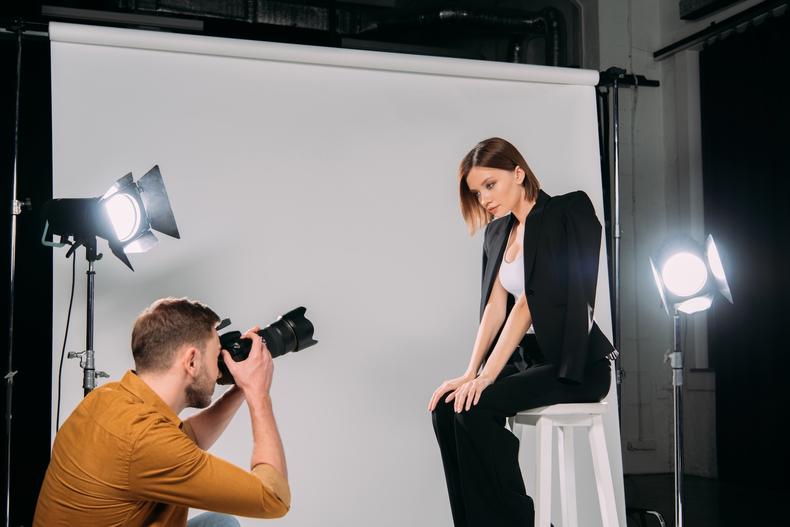
Credit: LightField Studios/Shutterstock
Whether you’re a freelance model or with an agency, treat your part-time modelling jobs like a small business. You need to be organised, responsible, and proactive in your search for modelling gigs.
To make a success of modelling as a side hustle, it’s worth being up front about your availability. Agencies would rather know for certain when they can book you than take on a model who may flake at the last minute – even if their reasons are valid. Tell your booker at the start that you work or study, and confirm jobs as your diary allows.
Another tactic is sharing your schedule with your agency. Send your booker a rolling few weeks of dates you can’t do, such as exams, fixed shifts, or key appointments. Agencies place “options” (provisional holds) on models, so a clear calendar stops them holding dates you can’t do. Greg McKeown, author of Essentialism, argues that making your priorities visible in advance stops other people attempting to fill time you don’t have to give.
Sometimes last-minute castings come through, and a booker may think you are ignoring them if you don’t answer right away. If your day job restricts phone use, you’ll need to tell your agency. You can let your booker know, for example, that you check requests first thing in the morning, at lunchtime, and after 5:30 p.m. That stops them assuming you’ve gone AWOL.
If you are really keen to make modelling your full-time job, don’t fall into the trap of overpromising. Saying yes to look keen, and then cancelling late, damages relationships faster than politely declining at the start.
Also check your employment contract. Some employers have rules on outside work or conflicts of interest, so make sure the contracts you take don’t clash with your main job.
Finally, remember the money side. In the UK, if your self-employed income is more than £1,000 in a tax year, you’ll generally need to register with HMRC.
There are two typical formats for modelling jobs that you can plan around if you become a part-time model.
A half-day runs about four or five hours, including an hour or so of hair, makeup, and wardrobe. A full day usually lasts eight to 10 hours, often with a call time between 7 a.m. and 9 a.m. It’s important to note that overruns are common. Here are four practical tips:
1. Leave a buffer. If a shoot is due to wrap at 1 p.m., don’t book a shift or assume you can attend a lecture at 2 p.m. Call sheets slip because of lighting, wardrobe, and client approvals, so build in at least two hours before any fixed commitment.
2. Keep a go-bag packed. Pack neutral underwear, basic skin care, a power bank, snacks, and comfortable shoes in advance. With next-day bookings, you won't be scrambling at 6 a.m.
3. Learn to say no, quickly and politely. Declining doesn’t harm your standing if you do it promptly. If an option conflicts with an exam or a crucial work commitment, release it straight away so the client can move to their second choice.
4. Watch the casting job boards. Keep eyes peeled for any part-time modelling jobs or student modelling jobs that fit in with your full-time work.