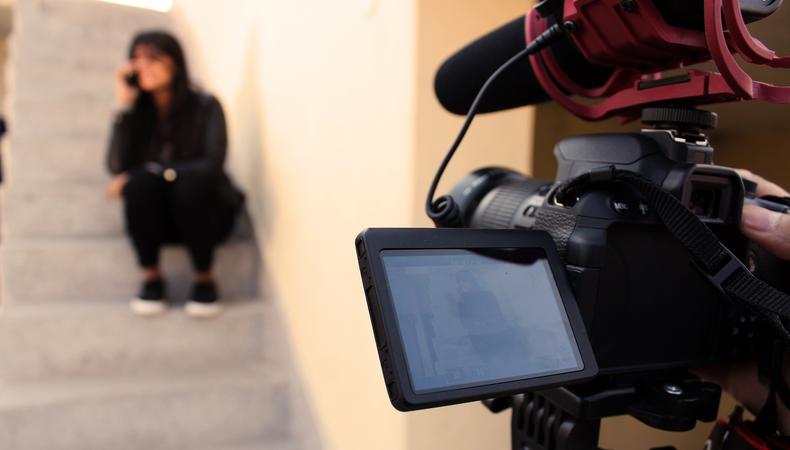
Making a short film is a fantastic way to cut your teeth as an emerging filmmaker. Short films allow you to experiment, take risks, and find your voice without the pressures of a mega-budget and studio executives.
A strong short film can function as a powerful calling card and introduction, opening the doors to more opportunities and success. Neill Blomkamp gave us “Alive in Joburg” before “District 9” earned him an Academy Award nomination. Jennifer Kent’s AACTA Award–winning film “The Babadook” first began as a short called “Monster.” Damien Chazelle’s superb “Whiplash” started life as an 18-minute scene and finished with three Oscars. Who’s to say you won’t be next?
The filmmaking process can be broken down into three main stages: preproduction, production, and postproduction. In this guide, we’ll cover the basics of each stage.
Preproduction
- Script: Most films start with a script. For some, this will have its genesis in an original idea; for others, the script will be sourced from elsewhere (the Black List being one such example). Those with an original concept may choose to pen the script themselves or hire a screenwriter friend. Prepare for several cycles of soliciting feedback and revising. As the saying goes: Write without fear; edit without mercy.
- Storyboard: A storyboard provides a visual depiction of each shot within your film, including your ideas for actor blocking as well as camera angles and movement. This information will inform your setup on the day and the equipment that will be necessary.
- Budget: Often the biggest pain point for indie filmmakers, budgeting for a short film will require some creativity. If you can’t self-finance your film, you’ll either need to start a crowdfunding campaign (via Kickstarter, Indiegogo, or the like) or find external funding from investors or government agencies. While the actual figure will vary wildly depending on the specifics of the shoot, in Oz, short film grants typically range from AUD 10,000–30,000. Keep this in mind as you’re building out your budget.
Further information on government funding can be found below:
Australia-wide: https://www.screenaustralia.gov.au/
ACT: https://www.screencanberra.com.au/
NSW: https://www.screen.nsw.gov.au/
NT: https://screenterritory.nt.gov.au/
QLD: https://screenqueensland.com.au/
SA: https://www.safilm.com.au/
TAS: https://www.screen.tas.gov.au/home
VIC: https://www.film.vic.gov.au/
WA: https://www.screenwest.com.au/
- Schedule: With an indicative budget in place, you’ll want to set a shooting schedule. Your storyboard will be an invaluable guide, but as a rule of thumb, allocate more time per scene than you expect. The worst-case scenario is that you’ll have the freedom to rehearse more with your actors or to shoot a couple of wildcard shots to have up your sleeve in the edit.
- Hire: Armed with your budget and schedule, you’re now ready to hire your crew. At a minimum, you’ll be looking to find a director, producer, director of photography (DP), first assistant camera (AC), and a sound recordist. If you’re able to stretch beyond this, investing in a first assistant director (AD), gaffer, grip, production designer, makeup artist, script supervisor, and/or location manager will pay dividends down the line. Always prioritise a good attitude over a good résumé. You’ll all be working very hard, very closely, and skill will ultimately pale in comparison to spirit.
(Bonus tip: If you aren’t able to hire a location manager, don’t be afraid to approach location owners yourself. You’d be surprised how many people will agree to lend their space in exchange for multiple positive Google or Yelp reviews from the cast and crew!)
- Cast: Traditionally, a casting director (CD) is hired to source actors for film projects. These folks are pros at what they do and will have access to a far wider range of actors. However, if your budget really doesn’t allow for this, you can take the DIY route. This may take the form of using online casting platforms such as StarNow or Backstage, holding open auditions locally, or reaching out to your personal network.
See Also: A Top Australian Casting Director on Discovering Fresh Talent
Production
- Share the production bible: This should include the final script, major references, storyboard, shot list, location information, contact details for all cast and crew, and any miscellaneous notes from your heads of department. Ensure everyone has a copy of the bible and is on the same page. Clarity is key.
- Set the tone: Be the first one on set to greet your cast and crew, and the last to leave to thank everyone for their work. Do all you can to uphold an enjoyable, supportive, and respectful vibe. People will often go that extra mile (or hour) if they feel valued and part of a unified team.
- Prioritise wellbeing: Feed your cast and crew good food and make sure you’re well-stocked with healthy snacks, water, and sun cream. Never underestimate how appreciated attention to these details will be. Be sure to set aside a safe holding area for your team to rest when they aren’t working, and offer to cover travel expenses when you can.
- Multitask: While the next shot is being set up, rehearse with your actors or check in with members of the crew. You can also use these in-between moments to capture behind-the-scenes images or videos which can later be used to promote your film. Hiring an on-set photographer is one option, but anyone available with a good-quality smartphone is enough.
- Improvise and solve problems: Unexpected situations will inevitably arise. If something isn’t working or can’t happen, don’t be afraid to stop and figure out the best way forward. Remember, you’ve surrounded yourself with a team of gifted individuals who bring their own creativity and previous experiences to the table. Be humble and ask for input when needed. According to filmmaker Liz W. Garcia, “Great directors hire great crew. Great directors know that it isn’t their job to know everyone else’s job better than they do. Ask the experts.”
Postproduction
- Edit: Filmmakers often joke that there are three films in every film: the one that was written, the one that was shot, and the one that was edited. The edit is a pivotal stage in the process. If you don’t already have the skill set, you can teach yourself with tutorials (YouTube is a great resource) or hire a professional. Don’t be afraid to experiment with different cuts and ask others for feedback. Give yourself time to set the film aside for a short while and return to it with fresh eyes.
- Grade and score: You might be tempted to save money by skimping on the film’s grade and score, but the expert advice is: Don’t. Indie director Sebastian Rea says: “Do everything in your power to pay for a picture editor and a sound editor/mixer.” In a similar vein, writer-director Jonah Feingold says: “Score, to me, is just as much part of the film’s DNA as the actors you cast. Even on an indie budget, I would encourage you to seek talented composers…. Original music is life, and you can do more than you think—even on a budget!” These investments will give your film a clear sense of mood and tone.
- Promote: You now have a finished film. Congratulations! All that’s left is to get it in front of your audience. Studio films have a distribution agent who pitches the film on behalf of the filmmakers, but when you’re just starting out, your best bet will be entering short film festivals and leveraging social media. Having a slick trailer and compelling poster will help you stand out from the crowd. This is also where any behind-the-scenes material you capture during the shoot will come into play, because it’s a rich supply of engaging content for your social feeds. Reaching out to bloggers and journalists whose audience overlaps with yours is another clever—and free!—way of drawing the crowd that your creation deserves.
While you chip away at your masterpiece, you might want to check out our list of film jobs currently hiring near you. Not only does every experience provide an opportunity to learn and hone your craft, but you may also meet the people who become your future long-term collaborators!
Check out StarNow's latest Australia castings!