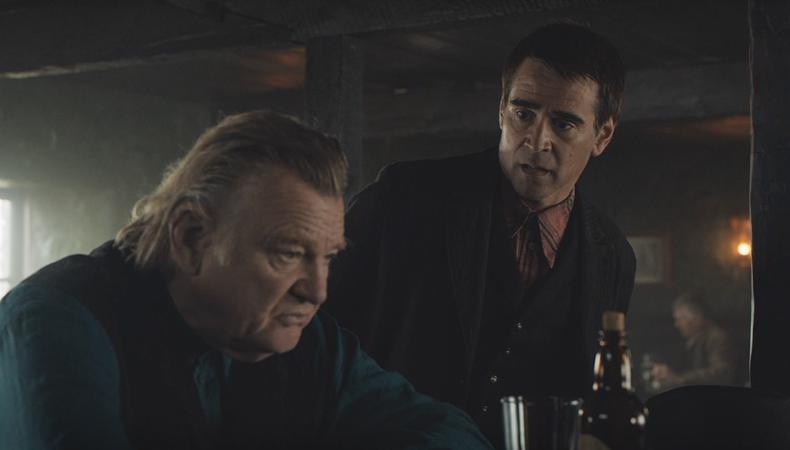
From Sally Rooney’s Normal People to Martin McDonagh’s The Banshees of Inisherin, there’s no short supply of compelling Irish stories on our screens and stages. While many productions will prioritise Irish talent, actors of any nationality who can master the inflections of the Emerald Isle are the next best thing.
Accents are often a part of character acting – and having a few under your belt can open up an array of roles. Performing in an accent can add depth to character, enhance believability, and demonstrate vocal versatility.
An Irish accent is considered one of the most useful to have if you’re a British actor. Of course, there are many regional variations of the Irish brogue: if you’re going to convincingly adopt an Irish accent, you’ll need to understand the nuances, geographical distinctions, and underlying musicality. Here are some tips.
JUMP TO
Ireland’s linguistic landscape is diverse. There isn’t a singular “Irish accent” but rather a collection of regional accents that belong to different parts of the island. Leading accent coach Paul Meier describes how “in Dublin the word ‘price’ is pronounced more like General American ‘prois’ using the vowel Americans use in ‘choice,’ while in Belfast it’s pronounced more like General American ‘prays’ using the vowel Americans use in the word ‘face.’”
Broadly, Irish accents fall into three categories:
- Dublin and East Coast: Often referred to as the “Dublin accent,” this urbane and mild accent is probably the most recognisable internationally. It ranges from the flat, neutral tones of middle-class Dubliners to the broader, more working-class inflection known as Local Dublin English.
- Cork, Kerry, and the South West: These accents are thick, melodic, and often described as singsong. The pitch tends to rise and fall more dramatically than in other regions.
- Northern Irish: Mostly found in the six counties of Northern Ireland, Northern Irish accents are more clipped, with strong and distinct vowel sounds. The rhythm here is staccato – more rapid fire – compared with the flowing tones of southern accents.
To begin, you’ll need to decide which Irish accent best fits your character or the types of roles you’re likely to audition for.
To convincingly speak in an Irish brogue, you’ll need to focus on altering vowel and consonant sounds. Here are some basic rules to follow:
1. Vowels are key
Irish accents often make vowel sounds longer. For example, the word “car” might sound like “cah-r” in a southern Irish accent.
Words like “at” and “can” are pronounced with a broader “a” than in standard English. You can try opening your mouth wider to emulate this.
Vowels are spoken with more musicality, so single vowels often become diphthongs (two vowel sounds). For instance, “go” might sound closer to “go-uh.”
2. Consonants are soft
The letter “t” is often softened or dropped entirely, especially in casual speech. For example, “butter” becomes “bu’-er.”
The “th” in words like “thing” or “that” is often replaced with a “t” or “d” sound (“ting” or “dat”).
3. Rhythm and intonation
Irish accents are famous for their musicality. The intonation also tends to rise at the end of sentences, even in statements.
For instance, “You’re going to town?” might sound like “You’re goin’ ta town?” with a lilting upward inflection.
4. Contractions and colloquialisms
Native speakers often use contractions (shortenings of two words into one) and slang or local phrases (colloquialisms) that, if you copy them, can lend authenticity to the accent you’re performing.
For example, “I am not going” becomes “I’m not goin’.”
“I’m only coddin’ ya!” means “I’m only joking.”
“Yoke” is Irish slang for something that you can’t remember the name of, similar to the word “thingamajig.” For example, “Give us that yoke there.”
Incorporating these into your dialogue will make your performance more convincing.
1. Listen to native speakers
Exposure is the first step: Listen to Irish speakers from various regions to understand the specific musicality and phrasing of their accents. If you don’t have Irish friends, relatives, or colleagues to listen to, try:
-
Irish radio stations: RTÉ Radio 1 or Today FM are a good start.
-
Films and TV shows: Watch Irish productions such as Brooklyn, The Commitments, or Father Ted.
-
Podcasts like The Blindboy Podcast or An Irishman Abroad: These provide authentic examples of Irish speech.
Be sure you know what variation of Irish accent you’re hearing and that it matches the one you want to learn.
2. Repeat what you hear
Practise repeating phrases and words as you hear them. Pause a show or podcast and try to repeat what was said with the same enunciations. Do this multiple times until you’re confident and comfortable with it. Pay attention to vowel shifts, dropped consonants, and rhythm. If you’re watching your source material, try copying the shape of the speakers’ mouths too – this often influences how a word sounds.
Try to write down how phrases are said in a way that makes sense to you. For example, to write “I’m going out for a pint” in an Irish accent, you might use “Oi’m goin’ out fer a point.”
3. Break down words
Identify words or phrases that typify the accent you’re learning. Break them into syllables and practise those until they feel natural, then run the words back together.
4. Use accent-coaching tools
Accent-coaching apps or online resources offer step-by-step guidance to help you sound like a local. Tools like YouTube tutorials can be invaluable, and there are even AI accent coaches out there now. Of course, you could also hire a real coach if you have the money.
5. Practice daily
Dedicate time to practising the accent. The more you speak in it, the more natural it’ll feel. Recite monologues, read aloud, and record yourself to track your progress, listening back to determine how convincing you sound.
Learning from celebrated Irish actors who have retained the Irish brogue can provide inspiration. Among them are: Colin Farrell, known for his authentic Dublin accent; Graham Norton, whose accent showcases the softer southern tones; and Nicola Coughlan, who is from the west of Ireland, but whose performance in hit TV series Derry Girls is a lesson in capturing the sharper Northern Irish intonation.
Poorly executed accents, meanwhile, offer a cautionary note on how not to speak. Tom Cruise in Far and Away, for example, is a lesson in the importance of avoiding stereotypes or exaggeration.
Exposure to an accent and study of it are the tried and tested ways to learn it. Doing so can only enhance your power as an actor, both to land roles and to perform them in a believable way. So crack on, and you’ll be sounding like a native before you know it.