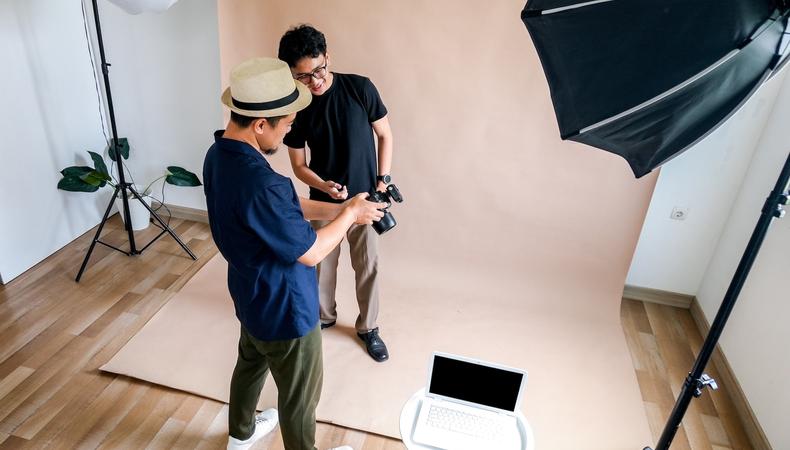
As a model, you can never be 100% sure how your image will be used. Famous faces from Rihanna to Emily Ratajkowski have found that without control, things can get messy.
That’s where model release forms come in. They may seem like a boring bit of admin, but that piece of paper helps to decide where your image ends up, how long it can be used, and whether you have any say over its future use.
Whether you’re booking a major advertising campaign or agreeing to appear on a photographer’s Instagram, you should know when to ask for a model release form and how to negotiate the best contract for you.
JUMP TO
A model release form – or talent release form, as it’s also known – is an agreement, often between a model and a photographer, that contains details on how the model’s image can be used.
It’s a type of contract that protects the rights of both the talent and the photographer. Your model release form restricts how your likeness can be used, such as length of time, location, and exclusivity.
As a model, it gives you the chance to negotiate your payment. The timeframe, the geography, and the number of platforms on which your image is used are all aspects for leverage.
A model release form typically includes:
- Names and contact details of both parties
- Description of the shoot, including date and location
- Grant of rights: exactly how and where images may be used, such as for advertising or social and whether it’s worldwide or regional
- Exclusivity: exclusive (one buyer only) or nonexclusive
- Duration and scope: perpetual or time-limited; specific region or worldwide
- Compensation terms: payment, TFP/trade, royalties, or a “no further compensation” clause
- Signatures and dates of both parties; a parent or guardian’s signature is required if the talent is under 18
Keep an eye out for vague wording such as “any media, in perpetuity, worldwide.” It can lead to overexposure, unwanted association with a brand, or images resurfacing in contexts you may have never agreed to.
Make sure you always read the terms carefully – particularly the usage, exclusivity, territory, digital manipulation rights, and any sublicensing to third parties – before you sign.
Credit: PeopleImages/Shutterstock
A talent release form or model release form is needed when images are intended for any kind of commercial use. If the photograph or video will be used to sell, advertise, or promote something, for example, a signed talent release form is standard practice, whether it’s a paid gig or not.
Expect to be given a model release form to sign if you do any work for advertising, product packaging, a brand’s social media, stock libraries, or brochures.
You don’t need a model release form for editorial use. Shoots where the images will be used as fine art or in documentaries, educational content, or journalistic contexts, for example, won’t need to sign a model or talent release form.
When you work through an agency as a model, the agency usually handles and signs the paperwork on your behalf through the booking contract. It’s good practice to have a discussion with your agency about it, even if they are an established name in the industry.
Some shoots aren’t obviously a commercial shoot. Situations in which you should ask for a model release form include:
- Test shoots and trade-for-print (TFP) collaborations
- Content going on a brand’s own social media, because it counts as commercial or marketing use
- Stock photography submissions
- Casual or just-for-fun content that could be repurposed commercially at a later date
A model release form is generally not needed for:
- Purely personal or nonpublished use
- Genuine street and documentary photography in which the subject isn’t the focus
- Public interest and newsworthy editorial content
No model release form: Should you ask?
If you haven’t been given a release form to sign, don’t assume you don’t need one. No model release form can mean that the image usage hasn’t been worked out before the shoot, which is a bigger risk for you, the talent.
As a model, best practice is to ask what the images are for, even on casual or social-content shoots, just to make sure.
There is no single global standard when it comes to model release forms and talent release forms. The underlying legal basis for needing a model release form varies by country.
If you work internationally or with overseas clients and agencies, you should be aware that the rules around image rights change.
In most common-law countries, there is no single “image right.” That refers to a person’s legal control over the commercial use of their likeness, including their name, image, voice, signature, and personal brand.
England and Wales, for example, have no stand-alone privacy or image-rights statute, but courts have developed protection for talent and models through the “misuse of private information,” alongside copyright law (the photographer usually owns copyright, not the subject).
In the UK and EU, data-protection laws give models some additional protection. Under the UK GDPR/Data Protection Act 2018 (and EU GDPR in Europe) an identifiable photo counts as personal data. That means anyone looking to publish the photo needs legal consent to use it, which is where a model release form comes in. They must also be transparent about retention, and they must respect withdrawal of consent.
In the EU, member states can add extra layers on top of GDPR. France, for instance, recognises droit à l’image, letting someone block publication of their photo – even in noncommercial contexts – if it causes harm to the subject, which is stricter than GDPR alone.
In Australia, the Privacy Act 1988 provides some protection for talent. It applies once an image is linked to identifying personal information, such as name and contact details. Individual state or territory laws can also affect audio and video recording consent. That means a model release form in Australia won’t be governed by GDPR, but it will have to comply with specific state laws.
The US recognises an explicit “right of publicity” in many states. It’s a property-like right over one’s own image and likeness, which grants models exclusive legal rights to control and profit from their photographs. What’s more, every state has different privacy laws, such as the CCPA and VCDPA, rather than one federal framework like GDPR in Europe.