Audiobook narration can be a profitable opportunity for voice actors to diversify their portfolio and income stream while tapping into a booming market.
Many audiobook readers work from their own home studios, which means with the right set up, you can take on jobs and collaborate with producers, authors, and narrators across the world – all without setting foot outdoors.
“Audiobook sales continue to grow worldwide,” says Sarah Bacaller, an audiobook producer from Melbourne who has narrated over 50 titles on Audible. “In terms of the Australian context, there are still many untapped opportunities, though concurrent audiobook release seems to be an increasingly standard option for books expected to sell well.”
“Findaway is probably the primary option for audiobook distribution for rights holders who don't have a relationship with aggregators or direct distribution,” says Bacaller, who is also co-director of audiobook production company Voices of Today and recently set up Thrive Audio, which creates audiobooks specifically for young people. “We still don't have access to the ACX (Audible) platform in Australia.”
JUMP TO
Being an expert narrator is about more than reading words nicely or having a love of books. You’re a storyteller in charge of bringing a narrative to life.
In addition to possessing a great voice, you need to practise and work hard to develop a distinctive narration style that stands out in a crowded market.
“Audiobook narration is definitely a business,” says Australia-based actor Dragonia. “You may find yourself as a sole business operator in your journey of audiobook narrating. Discipline and commitment is paramount. Despite what TikTok influencer experts claim, audiobook narration is not a get-rich-easy nor a get-rich-quick scheme.”
“On top of acting, you’ll need to learn basic audio editing and maybe even audio producing, how to set up a website, buy a domain, create downloadable samples, get an ABN, and learn about taxes and running a business,” Dragonia says.
If you’re new to audio narration, practise by having a go at narrating some text for fun. Record and play it, trying passages with different vocal patterns and accents, and in the voice of different characters.
Listen and learn from existing narrators, study different techniques (you’ll find a wealth of online tutorials on platforms such as YouTube), and consider voiceover classes to develop skills in different narration styles.
One rewarding way to get into narration is volunteering to read for the blind. Look for local community organisations that run such services. Also look out for collectives and organisations that offer development opportunities, such as Script Roulette Podcast (run in association with Arts Centre Melbourne).
Don’t forget to network and stay updated on the audiobook industry. Connect with other voice actors through online communities and organisations such as the Audio Publishers Association. Social media platforms are also good for following and connecting with narrators, authors, publishers, and producers.
“Working directly with an author of an audiobook is the way to go, especially given that many writers today are choosing the indie path,” Dragonia says. “This requires connecting directly with authors or at least producers of the audiobooks, and that requires discipline and commitment because you might not be rewarded with quick responses – if at all.”
DC Studio/Shutterstock
When you feel confident, record a demo reel to showcase your work and apply for gigs. Upload it to your website and any profiles you have on casting sites like StarNow, Mandy, and Backstage.
You could record a demo in a studio with a skilled sound engineer and producer. It will ensure a high technical quality, but it may be costly. Another option is to record your own demo. Keep it under 90 seconds long, with no more than 15 seconds spent on each snippet. Many audiobook narrators work from home, so it will be advantageous for gaining job leads if you know how to do it already.
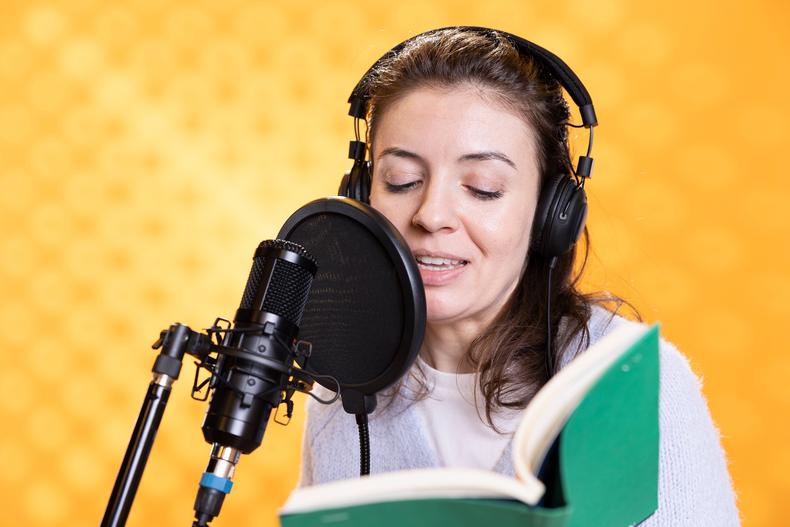
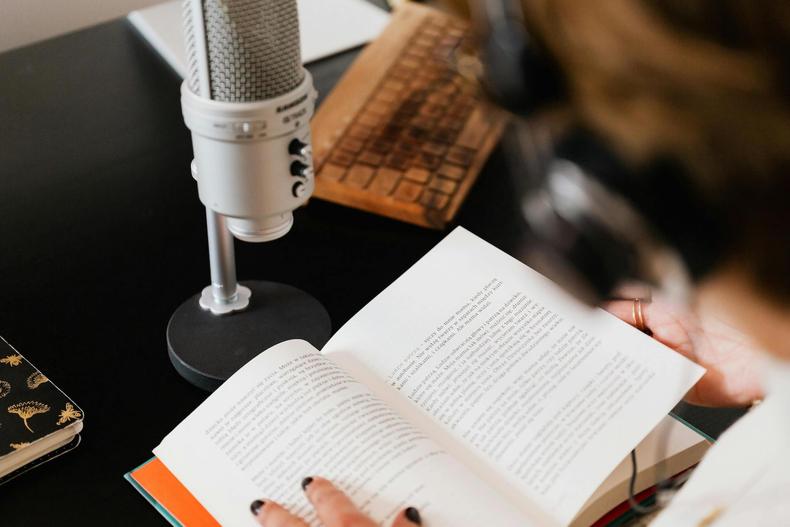
You don’t need to build an actual recording studio (many beginners use a closet), but set up a quiet, sound-proofed area; invest in quality equipment; and, as Bacaller highlights, have working knowledge of audio software to record and edit content that sounds clean and seamless.
“For narrators working independently in their home booths, it’s also important to gain practical skills in audio recording, editing, and production, which can be a steep learning curve but is certainly doable for those willing to learn,” Bacaller says. “A sound-absorbent booth and a quality microphone are foundational to success.”
To setu p your own home studio, you'll need:
- A decent microphone, ideally desktop-mounted or freestanding
- Noise-cancelling headphones that plug in
- A pop filter (a screen or shield to provide noise protection)
- A computer to manage workload
- Audio recording and editing software
- A physical screen reader, such as a tablet screen or teleprompter
- An audio interface (hardware that connects a computer to audio equipment)
“It’s important for narrators to be self-motivated, organised, and, of course, to engage professionally,” Bacaller says. “Reliability is a must.”
Most audiobooks are recorded from home studios, which can take several hours. Even more time is spent listening back to ensure sound levels are consistent and your microphone technique is flawless.
Recording breaks are typically spent resting the voice or connecting with others, such as the producer or engineer. You’ll likely need to do pickups to redo audio if, for example, there was background noise on the recording or your producer wants you to go back and repeat a line.
“Many narrators and voice actors work independently from their home studios, unless they have been contracted by one of the major audiobook publishers – in which case, they’ll work in their studios,” Bacaller says. “Some work directly with authors; others work with producers or publishers.”
Kaboompics.com/Pexels
Salary depends on factors such as experience level, profile, and strength of portfolio. Many professional audiobook narrators have an agent to help them find work and negotiate pay.
Some audiobook narrators get paid per hour of finished audio. If you’re recording it yourself, you need to factor in time spent preparing, recording, and editing audio, as well as other expenses if you’re renting a recording studio.
Some publishers may have you work in their studio with a director or producer and a sound engineer, in which case you’ll be paid by the hour.
Just starting out? Expect to earn less than established talent. To get those all-important initial credits, focus on gaining experience through freelance websites such as Fiverr and Upwork. Once you develop a strong portfolio, you can apply and audition for bigger studios and publishing companies.
Pay can vary greatly in Australia. On average, narrators earn around $250 per hour of finished audio. Beginners can expect to earn between $20 and $33 per hour, while the highest-paid narrators can command up to $500 for each hour of recorded audio. Those rates also require time spent preparing, recording, and editing audio for no extra money.
Whatever stage you’re at, know how to manage your time wisely so you’re working efficiently and getting paid fairly.
“Ultimately this is a business,” Dragonia says. “It’s a very, very fine balance between securing a business and jeopardizing your future business by overly undercutting your future self and your peers.”
Most audiobook narrators work as freelancers and source work from authors, production companies, and voiceover agencies. Sometimes you may audition for roles.
Given the vast number of online job postings and websites out there, it’s important to be discerning and use your judgement when deciding which opportunities to pursue or invest time in.
“Establishing relationships with authors is one way of finding job opportunities, although audiobook production is still quite an unknown for many,” Bacaller says.
Check out voiceover listings on casting platforms. There are also audiobook-focused websites such as Amazon’s ACX (which is not currently available in Australia), Bunny Studio, Voices, and Audiobook Radio.
Major audiobook publishers also tend to choose more experienced narrators, but many of them allow you to submit demos directly on their website.
Take the time to identify where your voice fits and focus on developing strong relationships with authors, publishers, and producers in that genre.
Market your skills online via your website, social media, or both. Visibility is important in the digital world, so record and upload a good selection of voice samples that demonstrate your capabilities, including skills such as fluency in languages, accents, or topics you’re an expert in.
Keep training, networking, and studying different types of narration and performing techniques to grow your skill set, stay ahead of developments and learn as much as you can.
Remember: First impressions count. Be kind and polite to anyone you work with. It may help you get recommendations, referrals, and further opportunities to get behind the mic.
LightField Studios/Shutterstock
“Set up a system so you do not become overwhelmed. Have a to-do list you can tick off and set a schedule for each task,” Dragonia says. “At the end of the day, if you’ve taken even one step, you’ve progressed one step. [You should] celebrate it – no matter how small!”
It takes a lot of energy to do audiobook narration, since you’re essentially running your own business in a competitive market. Using the right approach to look after your health and well-being is paramount. Remember to stay hydrated by drinking plenty of water and limiting dehydrating liquids such as caffeine and alcohol. Sipping on warm water and herbal teas can be good for the vocal cords. Try to block out periods to rest your voice, and avoid smoking and too much yelling. If you think you need further support or you’re having voice issues, such as persistent throat clearing or losing your voice, look into working with a voice coach or even a speech pathologist.
“The most important tip?” Dragonia says. “Knowing your worth and appreciating the worth of your peers.”