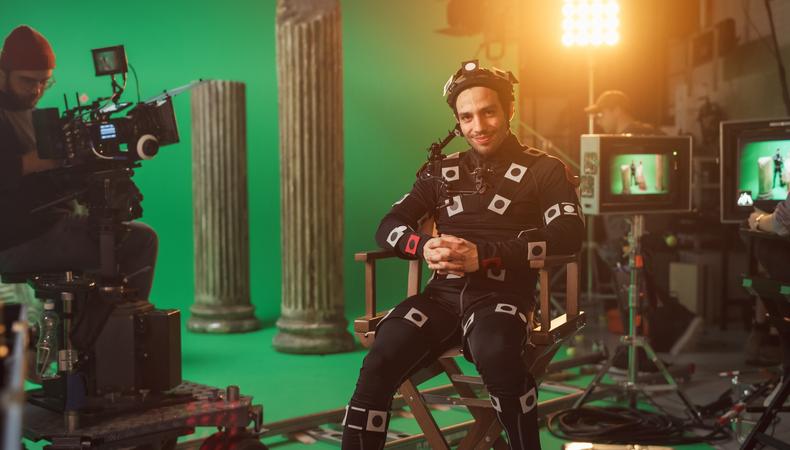
From blockbuster films to prestige video games, motion capture is one of the entertainment industry’s fastest-growing performance specialisations. Once viewed as a niche technical process, mo-cap is now central to some of the world’s biggest screen productions, allowing actors to bring digitally created characters to life through movement, voice, and physical performance.
Australia is increasingly becoming part of that conversation. The local film, television, and games industries are investing in virtual production and performance capture, while Australian actors are beginning to receive international recognition for their work in the space.
History was made at the 2025 AACTA Awards when English actor Jonno Davies earned recognition for his compelling motion-capture performance as an anthropomorphic chimpanzee in the Australian-made Robbie Williams biopic Better Man. The landmark moment highlighted just how emotionally rich and technically sophisticated motion-capture acting has become.
For emerging performers interested in combining screen acting, physical performance, and cutting-edge technology, there’s never been a better time to learn how to become a motion-capture actor.
JUMP TO
“Motion capture” (also referred to as “mo-cap” or “mocap”) refers to the technology-driven process of capturing an actor’s physical performance and translating it onto a CGI character. Mo-cap can be used to develop fully animated films, but it’s most popular for creating CGI characters in live-action movies and television shows. The method is also popular in video game development.
Mo-cap typically involves a performer wearing a skin-tight bodysuit marked with sensors or symbols. Specialised cameras detect the performer’s body and translate the symbols, generating a digital skeleton that animators can overlay with a digital skin or model.
You may also hear the terms “performance capture” or “full performance capture.” Traditional motion capture records only the actor’s body movements, while performance capture is an advanced evolution that also captures the actor’s voice and subtle facial expressions, allowing the creation of highly realistic, emotionally resonant CGI characters.
Outside of the film industry, motion-capture technology is also used in robotics, sports, medical analytics, and military training.
“I like to think performance capture is a bit of a blend between theatre acting and screen acting,” British actor, motion-capture artist, and voiceover artist Gemma Wallace says in a video she created on getting into mo-cap.
“You might need something a bit more theatrical and a bit more emphasis on the physicality if it’s certain walk cycles, or they need the physicality of the performance to come through in the skeleton of the mo-cap,” she says.
The subtlety of the screen acting style may be required for close-up scenes though. “It’s a bit more specific between certain movements and gestures,” Wallace says. “This comes across a lot better – [more] natural and authentic, essentially – onscreen.”
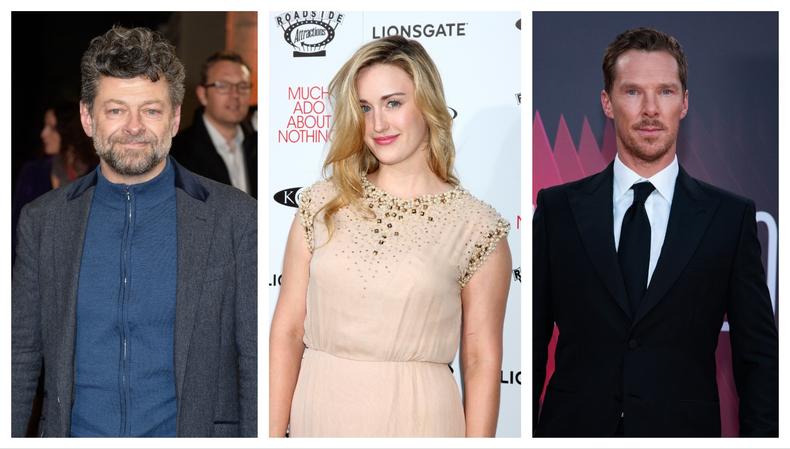
Credit: Euan Cherry/Kathy Hutchins/Loredana Sangiuliano/Shutterstock
English actor Andy Serkis is broadly considered the top of the list for the best motion-capture actors. His most famous work includes his pioneering role as the impish Gollum in The Lord of the Rings films, as well as his work on Godzilla and the Planet of the Apes series.
Another momentous mo-cap performance also leads back to Middle Earth, and that’s Benedict Cumberbatch’s performance as the evil dragon Smaug in The Hobbit films.
American actress and voice performer Ashley Johnson has also built a strong niche in mo-cap. She is best known for her role as Ellie in The Last of Us games.
1. Start with a strong acting foundation.
What do the best motion-capture actors have in common? They’re all great actors, full stop.
Mo-cap performances often involve CGI characters, creatures, or avatars, but the heart of the work is still truthful performance. A background in physical skills such as dance, stage combat, gymnastics, or puppetry can be an asset for motion-capture work, but many of the best mo-cap actors come from traditional acting backgrounds in theatre, screen acting, and performance training.
Whether you’re portraying a fantasy warrior, an alien, or a digital version of a real person, studios are looking for actors who can communicate emotion, intention, and character through movement and voice.
Formal training can help build those core skills. For aspiring actors in Australia, institutions such as the National Institute of Dramatic Art (NIDA), the Australian College of the Arts (Collarts), the University of Melbourne, and JMC Academy all offer respected acting courses and performance programmes that focus on character work, physicality, and on-camera technique.
Even if your ultimate goal is to become a mo-cap actor, grounding yourself in acting fundamentals first will make you far more adaptable in the studio.
2. Seek out specialised mo-cap training.
Once you’ve built your acting skills, the next step is to learn the technical and physical demands of motion capture itself. Unlike a traditional film set, there may be minimal costumes, props, or scenery to help you immerse yourself in the world of the story. That means mo-cap actors need strong imaginations, spatial awareness, and an ability to create believable performances in highly technical environments.
Specialised mo-cap training can help bridge the gap between traditional acting and performance capture. In Australia, Captivate Action offers expert-taught courses – either an intensive two-day Mocap Weekender Workshop or the more extensive five-day Performance Capture Intensive Courses – that give emerging performers hands-on experience with motion-capture workflows, stunt integration, and performance techniques.
Importantly, courses like this give you practical experience that you can later reference in auditions and on your resume, which is something that can help you stand out in a competitive niche.
3. Prepare your body.
Motion-capture acting can be very physically demanding. A mo-cap actor may spend long days performing repeated movements, action choreography, or physically exaggerated performances while wearing restrictive equipment. The acting style also often calls for bigger, more theatrical movements than a lot of typical onscreen roles.
Depending on the role, you may be crawling on all fours, performing fight sequences, miming interactions with invisible objects, or embodying nonhuman creatures through movement alone. Physical endurance, coordination, and body awareness are essential.
That’s why many motion-capture actors supplement their acting training with movement-based disciplines. Dance, stage combat, martial arts, yoga, gymnastics, and even circus or clown training can all help improve flexibility, stamina, and physical storytelling skills.
Actors interested in the performance-capture industries may also benefit from stunt or movement workshops, particularly as action-heavy video game performances continue to grow in popularity.
Even voice and breath work matter. A full performance capture (as opposed to a role that’s mo-cap only) is often recorded simultaneously with dialogue, which means actors need to maintain vocal control while performing physically intense scenes.
4. Create a mo-cap showreel.
Like any acting niche, having a strong showreel is key when trying to break into motion-capture work. A mo-cap showreel should demonstrate not only your acting ability, but also your physical performance skills and comfort working in performance-capture environments.
If you’ve completed mo-cap workshops, movement training, or student projects involving virtual production, include footage that highlights those experiences. Casting teams want to see how well you communicate character through movement, posture, and physical expression.
If you don’t yet have professional mo-cap footage, you can still create material that showcases relevant skills. Fight choreography, creature movement exercises, physical theatre scenes, and expressive body performance can all help demonstrate your suitability for mo-cap work.
Keep your reel concise and tailored to the type of work you want to pursue, whether it’s video games, film, or animation. It’s also worth maintaining an online presence on casting platforms through platforms such as StarNow, where Australian casting professionals often search for emerging talent.
5. Build your network.
As with any creative field, breaking into motion capture often comes down to relationships and industry visibility. Because the Australian mo-cap industry is still relatively niche compared to traditional film and television acting, many opportunities come through referrals, workshops, indie game projects, and professional connections. Networking with filmmakers, game developers, animators, stunt performers, and casting directors can help you discover opportunities that may never appear on mainstream casting boards.
Film festivals, games industry events, acting workshops, and screen industry conferences can all be valuable places to meet collaborators. Emerging actors should also keep an eye on Australia’s growing gaming and virtual production sectors, particularly in cities such as Melbourne and Sydney, where creative technology industries continue to expand.
Joining communities connected to performance capture, gaming, or screen production can open doors to student projects, indie productions, and collaborative opportunities that help build both credits and experience over time.
The path to becoming a mo-cap actor may not be traditional, but, for performers who love storytelling, movement, and technology, it can be one of the most exciting corners of the entertainment industry to work in.