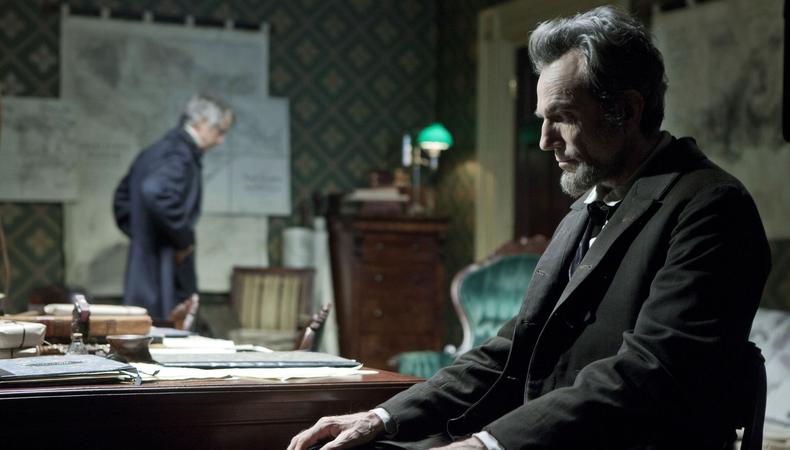
Method acting has long held an almost mythic status in the film and theatre industry, with tall tales of actors “going Method” – usually referring to highly committed practices in which the actor stays in character even while not shooting or masters a new skill to more authentically inhabit a part. Think of the most famous proponent of Method acting, Daniel Day Lewis, insisting he be carried everywhere on the set of My Left Foot, eating only animals he’d hunted himself while shooting Last of the Mohicans, or speaking only in an American accent while playing Abraham Lincoln. Understandably, Method acting can also be a controversial approach, with some criticising the lengths to which performers go – and what they demand of those working with them – as being damaging or unhelpful.
But the enduring allure of Method lies in its promise: that this technique can help actors access truthful, emotionally charged performances that feel lived in rather than put on, which, in turn, could help them bag their dream role.
Method acting is grounded in the work of Russian actor and director Konstantin Stanislavsky, who pioneered naturalism in theatre in the late 1800s. It was later developed by Lee Strasberg, an American actor, at the Group Theatre in the 1930s. In 1948, Strasberg joined the Actors Studio, teaching many great American movie stars, including Dustin Hoffman, Marilyn Monroe, Marlon Brando, and Al Pacino, and establishing the link between the silver screen and Method.
Method involves fully inhabiting a character. From script work to fleshing out a backstory to improvisation exercises, an actor comes to essentially live the part and is able to respond more authentically, in character, in the moment. At the more extreme end, Method actors fully immerse themselves in their character’s world – altering their routines, lifestyles, or physicality to match.
Method also involves a technique called “emotional recall,” in which actors draw on their own emotional memories and personal experiences. Instead of simply imagining what a character feels, the actor tries to connect those feelings to something real in their own life and access complex emotional states.
“You only ever see people do the Method when they’re playing assholes,” Robert Pattinson told Variety. He’s just one of many actors who have observed thespian types using the Method as an excuse for bad behaviour.
Despite its benefits, Method acting has earned a reputation as unsafe if taken too far. Some actors may bring up past trauma or push themselves into emotional territory that’s difficult to step back from. Many drama schools now emphasise boundaries to prevent psychological strain. Meanwhile, the myth that Method acting requires staying in character at all times has led to dubious on-set behaviour from actors, placing unfair demands and stresses on fellow cast and crew members. (When playing the Joker, Jared Leto reportedly sent cast members charming gifts such as live rats and dead pigs – not conducive to a happy working environment.)
Of course, Method is far from the only approach to finding a character or giving a vital performance. Here’s how it compares to other techniques.
1. Method acting vs. Stanislavsky system
Stanislavsky is the father of modern acting – and without this influential Russian master, there would be no Method school.
The Stanislavsky system includes both textual work and psychological exercises to help actors become vessels for their characters, to feel what they feel. Work begins by analysing the character on the page: What are their given circumstances (what do we know about them and their situation), and what are their objectives (what they want to achieve in each scene) and their super-objective (the thing they want most of all)?
Stanislavsky encouraged actors to draw on their own memories and emotions to develop a deeper understanding of their character – an element that was seized upon and expanded by Strasberg for his Method, which can go much further than Stanislavsky’s rehearsal-room exercises.
2. Method acting vs. the Meisner Technique
“Living truthfully under imaginary circumstances” was the key motto for Sanford Meisner, an American acting teacher who developed his own technique to help actors be more present. Rather than focusing on the character or even your own performance, the Meisner technique puts the emphasis on the energy among actors in the space, responding truthfully to one another in the moment.
Meisner training involves a lot of repetition exercises, in which actors learn to be more aware and reactive toward their scene partners. The aim is to build trust and chemistry within a cast, but also to foster a sense of liveness, spontaneity, and authentic reaction within a performance. Meisner was also inspired by Stanislavsky’s naturalism, but he took his teachings in a very different direction than Method’s individualised and character-focused approach.
3. Method acting vs. classical acting
There’s a well-known anecdote told by Dustin Hoffman about the gulf between his Method approach and that of a classical actor. On the set of Marathon Man, Hoffman told his co-star, the theatre legend Laurence Olivier, that he’d kept himself awake for 72 hours to give a more strung-out performance. “My dear boy, why don’t you just try acting?” came Olivier’s impeccable reply.
Classical acting is a tradition based in British theatre, in which the play is primary and actors are taught to “honour the text.” In Shakespeare, that may mean textual analysis to understand the language or working with the rhythm of verse to make sense of its meaning. In more contemporary work, it may be about taking your character cues from the script rather than mining your own inner experience as in Method acting. Emotion is vital, of course, but it’s accessed via craft, not by drawing on personal experience.
4. Method acting vs. natural acting
Natural acting involves an actor attempting to portray a character as if the character were a real person. Method acting is one way to attempt to ensure that a performance feels natural, but it’s not the only way.
Defining how to achieve natural acting can be tricky. Some actors are blessed with good instincts; we watch them drop into a character and it just seems real. Natural acting can also come down to smart casting choices, like when directors such as Andrea Arnold or Shane Meadows cast nonprofessional actors who can bring a tang of authenticity. Another approach is to get to know the character inside out, and then embrace improvisation within a performance rather than being tied to the artificiality of a script, as in Mike Leigh’s work.
5. Method acting vs. character acting
Character actors are those who give memorably distinct, often larger-than-life performances in quirky or unusual supporting roles. They’re also chameleons: Rather than being bound by type, they can deliver a heightened performance that serves the needs of the role and is often wildly different from their real-life persona.
Character acting often relies on key performance choices that typify or unlock a part. That may mean adopting a certain voice or accent, or a certain kind of body language or way of moving. Unlike Method, in which an actor feels fully immersed in the role, a character actor has tricks and techniques they use to help get them into it. The great character actor Toby Jones has said that it is a mistake for actors to try to find a part of themselves in a character.
6. Method acting vs. technical acting
Technical acting can be defined as almost in opposition to Method acting: It is about meticulous preparation and craft, where a performance is something an actor gives rather than lives.
Technical acting involves expressing what your fictional character feels in a way that is convincing to an audience, rather than about feeling the feels yourself. A technical actor analyses scripts, develops a detailed picture of their character’s background and intentions, and plans their performance with great detail. “Breaking scripts down means you don’t just do what you’re feeling; you do what the character would be doing and feeling,” says acting coach Joanne Baron.
A performance will be preplanned, not improvisational or loose. Character qualities such as mannerisms, tics, and speech patterns will be figured out and nailed down to create a performance that’s both highly specific and consistent.