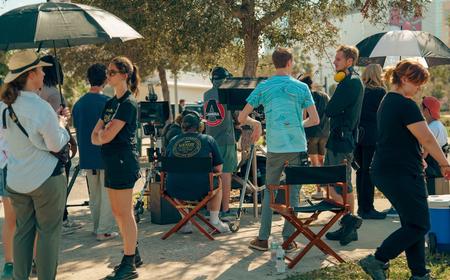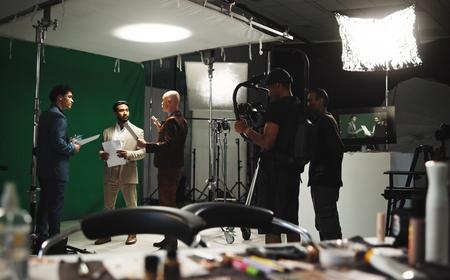
If you want to get up close to the film and television industry in Australia and experience the buzz of being on set without formal training, become an extra. Many extras have industry experience, but plenty do not. Many trainee actors also enjoy gaining hands-on experience (and a bit of additional cash) by becoming an extra in a movie or TV show. Some even consider it part of their training. You may be surprised to learn that Hollywood actors Matt Damon, Ben Affleck, and Renée Zellweger all worked as extras before becoming principal actors.
An extra is someone who appears in a film or TV show in a non-speaking role. They help create a realistic environment in scenes such as bustling streets, crowded restaurants, or busy offices. Extras are essential to the production, but they are not the focus of the scene.
Extras, also known as background actors or background artists, play a crucial role in creating realistic scenes for the screen – and they’re often needed in large numbers. Wayne Blair’s 2012 movie The Sapphires, based on the true story of an Aboriginal girl band that travels to Vietnam to perform for the troops during the Vietnam War, had large ensemble scenes that were made up of hundreds of extras. As did Baz Luhrmann’s 2008 film Australia: an epic historical romance drama that featured expansive scenes set against the backdrop of World War II, requiring hundreds of extras to depict soldiers, townspeople, and various other roles.
If you’re curious about finding work as an extra in Australia, here’s what you need to know and how to approach it.
1. Understand the role of an extra
Before you start, it's important to understand what being an extra entails. Extras do not have lines. Some extras might become more involved in a scene to the point where their face might be recognised in the final edit, and these are called featured extras (they still don’t have lines).
Extras work in all sorts of environments and locations, depending on where the movie or TV show is being filmed. Be prepared for long days and for working in all weather conditions. Think about the extras in the 1998 film Titanic, who had to spend hours submerged in water to portray the sinking of the ship, or those in 2015's The Revenant, who endured sub-zero temperatures in the Canadian wilderness to authentically depict the harsh conditions faced by frontiersmen. Meanwhile, the extras portraying Uruk-hai, orcs, and other creatures in the Lord of the Rings trilogy not only faced extreme weather but also had to wear extensive makeup and uncomfortable prosthetics.
Understand that you are responsible for getting yourself to the filming location. Call times are often early in the morning, so it helps if you have your own mode of transport. You will be expected to behave professionally, arrive punctually, follow directions, and avoid interrupting the filming in any way.
2. Create a profile on casting websites
One of the best ways to find work as an extra in Australia is by creating a profile on casting websites such as StarNow. Upload a headshot, list any relevant skills and experience, and request to receive casting alerts via email. Keep your profile updated with recent photos and new skills to increase your chances of being selected.
3. Join casting agencies
Casting agencies often have the latest information on extra opportunities for movies and TV, so it’s worth joining an agency to hear about more parts. Start by researching agencies in your area (or outside your area if you’re prepared to travel). Several agencies in Australia specialise in representing extras for film and television productions. They include Real People in Melbourne, MCTV Management (McGregor Casting Talent & Voice) in Sydney, and the Movie Extras Club, which has bases in Sydney and Brisbane. To join, complete a profile detailing your characteristics, including height and hair colour, and upload a headshot. Some agencies may call you in for an interview. Beware of agencies trying to sell you professional headshots. Unlike professional actors, extras don’t need a professional headshot: a clear, well-lit image taken on a phone should suffice. Make sure the image is not overly retouched and bears a true resemblance to you.
4. Build your network
Networking is an essential part of the entertainment industry. Building connections can help you find more opportunities. Consider joining online forums on social media. Facebook has active casting forums where work for extras is sometimes advertised. You could try Melbourne Actors (Cast, Crew & Extras), Audition Notices Australia, Diversity Casting Australia, and Adelaide Actors and Extras. By connecting with other extras, you can get tips on finding work and might get early notice of a film scheduled to shoot close to home.
5. Gain experience to build your CV
As with any industry, experience is valuable. The more you work as an extra, the more attractive you become to casting directors, since prior experience suggests you’re someone they can trust. Keep track of all the projects you have worked on, including the production name, date, and your role. You’ll need this information to join a new agency or self-submit to a casting notice. However, if you are also working as an actor in speaking roles, it is best to keep your extra credits off your main acting CV; maintain a separate CV for your credits as an extra.
6. Know your rights
As an extra, you have certain rights, outlined by the Media, Entertainment & Arts Alliance (MEAA). Insisting on them doesn’t make you a troublemaker. It just shows that you’re working according to the agreements negotiated by the union or stipulated by law. These include:
Holds: Being placed on hold means blocking off time and availability for a potential shoot. You can be placed on hold for not more than 36 hours (or, if placed on a Friday or a day preceding a public holiday, to the end of the next working day). If the producer has not told you that you are needed by the end of that perthen the hold will be dehave lapsed.
Wardrobe: If you are asked to provide your own formalwear wardrobe (for example, a tuxedo or a full-length gown), or if you are asked to supply your own uniform (as a nurse, police officer, or army officer, for example) you must be paid extra (AU$67.28 as of April 2023).
Agent fees: In both New South Wales and Queensland, a talent agent may only charge a 10% fee unless they are providing managerial services as well. It’s worth noting that NSW and QLD are the only states where the agent relationship is legislatively regulated and has specific legal requirements.
Pay: According to the MEAA Screen Agreement of 2022, extras should be paid at least AU$30.86 per hour for a minimum four-hour call, or AU$225.82 for a full day.
You may not become rich by being an extra in Australia, but you will gain fascinating insights into the entertainment industry, not to mention anecdotes to entertain your friends. Remember, persistence and professionalism are key. Keep pursuing opportunities and you'll be well on your way to becoming a successful extra in the Australian film and TV industry.