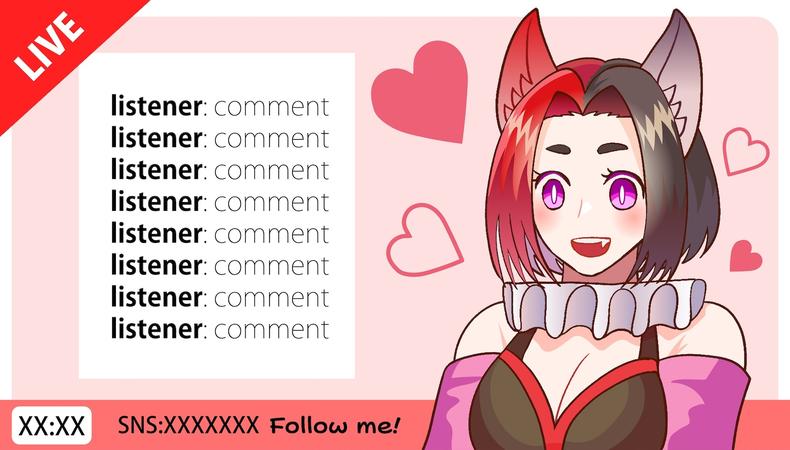
You may assume that successful YouTubers must make their appearance a key part of their brand, or that they must at least be recognisable. Not so. Many faceless YouTube channels flourish without creators showing themselves.
You might:
- Never show your face at all, like the helmet-clad SwaggerSouls.
- Reveal your face but not use it in your content, like Daily Dose of Internet.
- Become a Vtuber like Ironmouse, who uses a digital avatar that tracks her facial expressions.
“These faceless influencers make up a fast-rising category of the creator economy,” Taylor Lorenz writes for The Hollywood Reporter. “They are forging major brand partnerships and, in some cases, generating hundreds of thousands of dollars a year in revenue.”
If you think that may be the right direction for your new YouTube channel, here’s what you need to know.
JUMP TO
Anonymity
A faceless content creator has few privacy concerns. Issues associated with being recognised – in real life or through personal online accounts – are practically eliminated. Plus there’s a cleaner work/life divide.
For SwaggerSouls, who has over 4 million subscribers, anonymity means nobody treats him differently.
“I can take off the helmet and just walk around and have a good time, and the people that I meet are genuine in their interactions all the time,” he says.
Less judgement
“I feel like a lot of content creators who show their face have this pressure and judgment over their looks or identity,” Victoria, of faceless channel Elysian.living, tells The Hollywood Reporter.
Going faceless makes your looks irrelevant. Whether positive or negative, attention that revolves around your appearance won’t impact content.
It puts content first
Many creators appreciate that staying faceless puts their content front and centre.
“Seeing my face really wouldn’t add to the content,” says LockPickingLawyer. “It would, if anything, distract from it.”
It’s why Saruei turned off her webcam and became a Vtuber. “People would judge more about the way I was looking, like the way I was dressed, rather than the content.”
According to faceless creator Monica Brady, even viewers benefit. “It’s a way to enjoy content without feeling like you have to invest in someone’s personality,” she told The Hollywood Reporter.
Global appeal
Faceless creators who don’t speak already boast worldwide appeal. Someone like Bangladeshi Tonni of @Tonniartandcraft can attract viewers and followers of any language.
Auto-dubbing technology takes accessibility further by automatically translating audio using a synthetic voice. That’s ideal for faceless channels, since different narrations can use the same visuals.
Kurzgesagt – In a Nutshell, for example, already has channels in nine languages. With YouTube increasing auto-dubbing availability, more faceless channels can realistically achieve such reach.
Earning potential
Perhaps because faceless content centres on products rather than people, creators are proving a valuable asset to brands and marketers that offer paid user-generated content (UGC) work and partnerships.
Palette MGMT director Kai Watson dubs faceless creators “the modern-day QVC” and notes their ability to “generate significant revenue.”
Media buyers at Dentsu and Publicis report faceless creators “represent an increasing share of their clients’ influencer marketing budgets,” while AffiliateNetwork.com founder Roman Khaves said top faceless creators made $30,000 (about £22,000) to $40,000 (£30,000) per month from brand deals in 2025.
Accessibility
Becoming a YouTube influencer already boasts a low barrier to entry, but faceless content drops it even lower.
Very little equipment is required (as you’ll see below), there’s typically less setup, and you’ll certainly spend less time making yourself camera-ready.
Resources able to streamline the process further are also becoming more easily available. AffiliateNetwork.com created a bot to help make “texting stories” – a popular faceless style with a text conversation going back and forth – while Tomorrow’s Publisher reports an increasing use of AI tools to streamline workflows.
Ability to scale
Content not tied to your likeness or personality is much easier to scale, and many creators take advantage by creating multiple faceless accounts with different YouTube channel names and identities.
“I personally have several YouTube channels,” says online business expert Greg Gottfried. “[Even] once you stop posting, all of this just continues getting views long into the future, generating you passive income.”
Microphone
Dedicated mics are important for capturing crisp audio. If you won’t be moving around, a simple desk-mounted USB plug-and-play should be fine. If you’ll be moving, consider a wireless clip-on system.
Anti-vibration shock mounts are also recommended. Lifestyle creator ThisIsMy’s uses one to “eliminate any handling noise and vibrations.… This way, the audio will be crisper.”
Camera
Even your smartphone can work if the camera is good enough. In general, look for:
- Ability to shoot in 4K
- Built-in stabilisation
- Larger sensors that can work in low-light environments
Something small, like the DJI Osmo Pocket 3, is ideal for capturing B-roll and other on-the-go footage. You’ll also need a tripod to hold it – ideally one with plenty of adjustability.
Lighting
The best lighting for YouTube is the three-point system, which consists of:
- Key light
- Fill light
- Rim/back light
You can simply use a ring light, however, or rely on nothing more than natural light. Experiment to discover what’s best.
B-roll
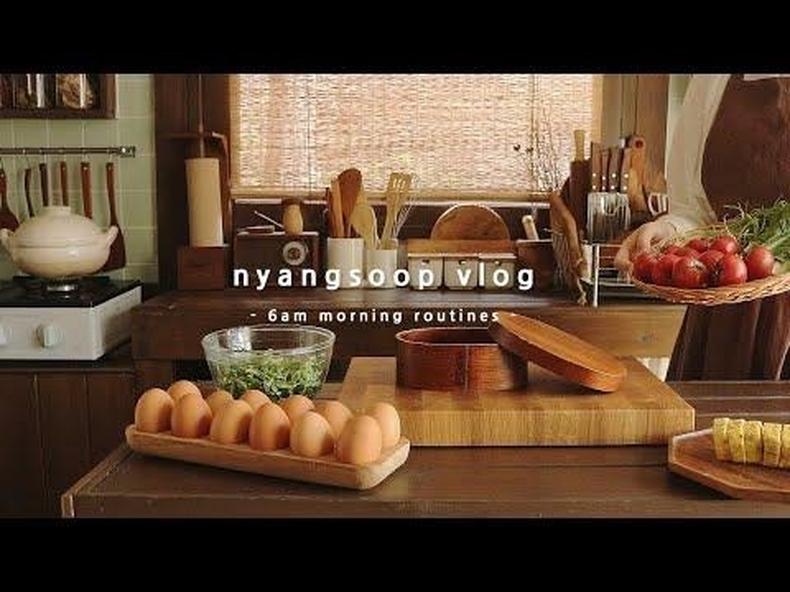
In the context of YouTube videos, this is the footage played over your audio to keep viewers engaged and provide context.
Some creators shoot all B-roll themselves as a central part of their content, as Nyangsoop does here.
Others must make use of preexisting footage, as Internet Historian does at the start of this video about the curse of the Olympic Flame.

Free sources include:
Paid options include:
Editing
Kozwin Studios estimates that 100 five- to six-second shots are required for each 10-minute food-prep video. Maybe you won’t use that many, but expect plenty of editing when making your YouTube videos.
Beginners can try CapCut or Movavi. Once you’ve mastered the basics, consider Adobe Premiere Pro or Final Cut Pro (if you’re a Mac user).
Some niches, such as fitness instructions that need the whole body in-frame and makeup content that revolves around your face, don’t gel with faceless creators.
Still, it can work with most niches. Don’t feel compelled to find the best simply to maximise your chances of going viral on YouTube or attracting a strong following of YouTube subscribers.
“Rather than going and watching the videos on what are the best niches, or the most profitable, [consider] topics that you like that you could see yourself giving value to people in videos,” Gottfried says.
With that in mind, here are a few faceless YouTube channel niches that have already proven popular.
Tutorials
The “original nail art tutorial channel on YouTube,” Cutepolish focuses on the process and has amassed nearly 3.4 million subscribers in the process.

Others share their screen and talk through their process, including:
- @AndyTellsThings, which teaches Adobe Photoshop and Illustrator
- @Coreyms, which offers walkthroughs for software developers, programmers, and engineers
- @AlphonsoDunn, which helps improve art skills and techniques
Educational
Educational creators translate larger stories and concepts into engaging content without needing a face reveal.
OverSimplified’s history videos are a great example:

Others include:
- @BehindTheMasterpiece’s engaging discussions of art
- @WallStreetMillennial’s business and finance videos
- @BrickImmortar’s in-depth coverage of marine and industrial disasters
Cooking
Plenty of YouTube chefs make themselves part of the content, while others, like FutureCanoe, focus on the food.

You could also look at:
- @TheFacelessCook4514’s recipe walkthroughs
- @Gesundundschnell’s dessert-focused channel
- @HowToBasic’s slightly more comedic take
Background/ambience
Abao in Tokyo attracted nearly 1.3 million subscribers with long, ambient “study with me” videos. Some are pure background noise. Others feature calming music.

Others include:
- @MerveStudyCorner’s ambient study sessions without music
- @NomadicAmbience’s recorded sounds, ranging from cafes to waterfalls
- @AmbientWorlds’ music and ambience inspired by fictional worlds
ASMR
ASMR (autonomous sensory meridian response) describes a pleasant response to pleasing sounds. It’s a well-represented niche, thanks to creators like ASMR Whale.

Similar channels include:
- @MauveASMR’s softly spoken content
- @ASMRSurge’s woodcarving and everyday objects
- @ASMR_Alice’s content focused around certain body parts
Gaming
Gaming content can take off whether or not your face is shown. Creators such as Iron Pineapple use mostly gameplay and shared screen footage.

Other standouts include:
- @ZullietheWitch, who only recently started speaking
- @MoriCalliope, who streams games under her Vtuber persona
- @LetsGameItOut, who plays in the most hilariously broken way
Lifestyle
Lifestyle broadly covers everyday life. Faceless lifestyle creator ThisIsMy’s turns daily moments and routines into relaxing content.

Other creators include:
- @NamiNokurashi, whose faceless vlogs document living alone in Tokyo
- @Heejoheejo, noted for their clean, minimalist aesthetic
- @Byshin, whose “aesthetic videos and vlogs” cover everything from travel to unboxings