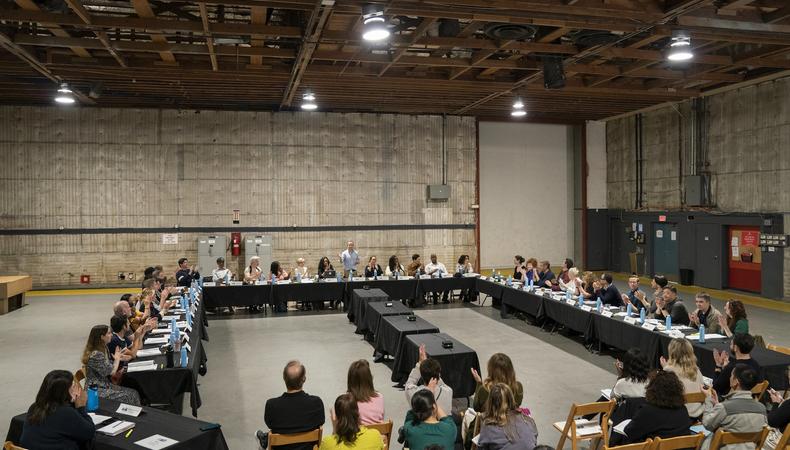
Landing a role is exciting, but the real work starts when you receive the script. You’ve been sent a copy and a date has been pencilled in for a table read. What does that mean? You shouldn’t go into a job without prep, so we’re giving you the lowdown on what to expect and what you should do before, during, and after a read-through. Whether you’re in theatre, film, or television, table reads are an essential part of your work as an actor and a creative.
JUMP TO
As the name suggests, reading around a table is involved. This is the stage in a production during which the team gathers together to hear the script they’ve been developing being read out loud. It will probably be the first time everybody meets in person in the same place.
- The cast
- The director
- The producers
- The heads of departments
- The investors
- The executives
Table reads normally take place toward the end of preproduction for films and TV, and mark the beginning of rehearsals for theatre. Episodic projects will have one table read per installment, while features and short films are usually read over the course of a single day.

Credit: New Africa/Shutterstock
Table reads have a crucial function: to understand if the written word translates into spoken language. It’s how writers and directors identify any potential faults in the script, as well as any pacing issues in the narrative. Every department has been set up separately up to now, so the table read is also a chance for everyone to break the ice and meet the people they’re working with. It’s also a chance for the cast to build their chemistry.
Every production is different, but table reads typically have a tried-and-tested formula that opens with individual introductions. Once everybody has shared their name and role, the director takes the lead. They will present the project, explaining their vision and taking the group through a broad timeline of the process. The cast will read their sides, while another member of the production (it could be the director themselves or someone else entirely) will give the directions. Each scene will be followed by a small feedback session, with a longer discussion planned at the very end. It’s important to know that what was read out may not be the final version of the script. The writers will take in all the comments or lines that falter when spoken out loud and go through another rewrite after the table read.
Yes, you should definitely act your part during a read-through. It is an early shot at sharing your choices for the character and getting instant feedback. Refrain from being too attached to your decisions, though, because once rehearsals begin the director will be channeling their vision through you too. Nothing is set in stone, and dialogue can be cut or reduced even at this stage. You shouldn’t feel threatened by the thought of your role being cut, but it’s not a bad idea to bring the same energy you brought during your audition. You’ll also be meeting other people from the production. First impressions are essential, so be positive and lean into the excitement of it all! This video of the Stranger Things cast at their table read for Season 5, Episode 4 should give you an idea.

Credit: Atsushi Nishijima/Netflix
1. Read the script. You don’t need to learn your lines by heart in advance, but the more familiar you are with them, the more you’ll be able to focus on your acting choices. You may also be asked to give your own feedback on the characters and their plot lines, which will be easier to do if you’ve commenced your prep work.
2. Pack your essentials. Water and snacks will likely be available throughout the day, but it’s better to overprepare. A physical copy of the script will be provided, which may be different from the one you received. Bring your notes regardless, as well as highlighters, pens, and paper.
3. Dress comfortably. You will want to dress to impress, but keep in mind that you will most likely be sitting down a lot. Layering will allow you to adapt to the temperature of the room.
4. Arrive early. If you’re on time, you’re already late. Showing up before the scheduled start will leave you plenty of time to introduce yourself, find your seat, and set up your position with the script, your notes, and any other items you want to have to hand. You don’t want to be the one who’s holding up a room of busy industry professionals.
5. Take notes. A lot of information will be given during the table read. You may receive further background intel on the story and the characters, and that knowledge may inform your own take on the role. Write down everything.
6. Ask for feedback. This is your chance to ask questions and learn more about the production and your character. A lot will be covered naturally in conversation, but don’t be afraid to pose specific queries or raise any doubts you have with the director. It may be an angle nobody has considered yet.
Being invited to your first table read can be intimidating. Rest assured that it’s normal to feel a little nervous; starting a new job can feel like the first day of school. Think of it as an exciting opportunity to mingle with like-minded professionals. Table reads also offer the perfect networking prospects, since each person in attendance represents the possibility of a new venture. It’s also the kick-off of a potentially life-changing experience for you and all artists involved. Cherish the momentum and try to get the most out of it.