A perfectly timed comeback, a spontaneous reaction, or a line that makes the entire cast crack up – sometimes the moments audiences remember most are the ones that weren’t scripted.
From Hollywood classics like Casablanca to beloved Australian comedies like Kath & Kim, ad-libbing has helped create some of screen entertainment’s most enduring moments.
But although a well-placed improvisation can bring a performance to life, knowing when to stick to the script is just as important as knowing when to stray from it.
For aspiring actors, learning how to ad-lib is less about showing off your comedic instincts and more about listening, responding, and understanding what a scene needs.
JUMP TO
An ad-lib is a line, gesture, reaction, or other performance element delivered spontaneously rather than exactly as written or rehearsed. Actors may ad-lib to respond to something unexpected, make a moment feel more natural, or find an authentic reaction that works better than a scripted one.
Ad-libbing can be as simple as adding a throwaway remark or changing a word to suit the character’s voice. It may also mean reacting to a costar’s unexpected behaviour, incorporating an accident into a scene, or finding a new way to deliver a line without changing its meaning.
What’s the difference between ad-libbing and improvisation?
The terms overlap, but there’s a useful distinction: Ad-libbing often involves making spontaneous additions or adjustments within an established scene, while improvisation (or improv) can involve creating dialogue, characters, and entire scenes without a predetermined script.
Think of it this way: An actor who adds an unexpected sarcastic aside to a scripted exchange is ad-libbing. Two performers who build a scene together without knowing what the other will say next are improvising.
Sometimes the opportunity arises naturally. A costar delivers a line differently, a prop misbehaves, or an unexpected noise interrupts a take. An actor who stays present can incorporate the moment into their performance rather than fighting against it.
Some productions actively encourage improvisation. Directors may invite performers to explore different versions of a scene, experiment with dialogue, or find character details that aren’t on the page. It can be particularly useful in comedy, where chemistry, timing, and the unexpected can produce something a writer couldn’t have planned.
Ad-libbing, however, isn’t automatically better than scripted dialogue. A carefully constructed line may be essential to a story’s rhythm, a character’s development, or a later plot point. The goal is not to prove that you can improvise; it’s to serve the scene.
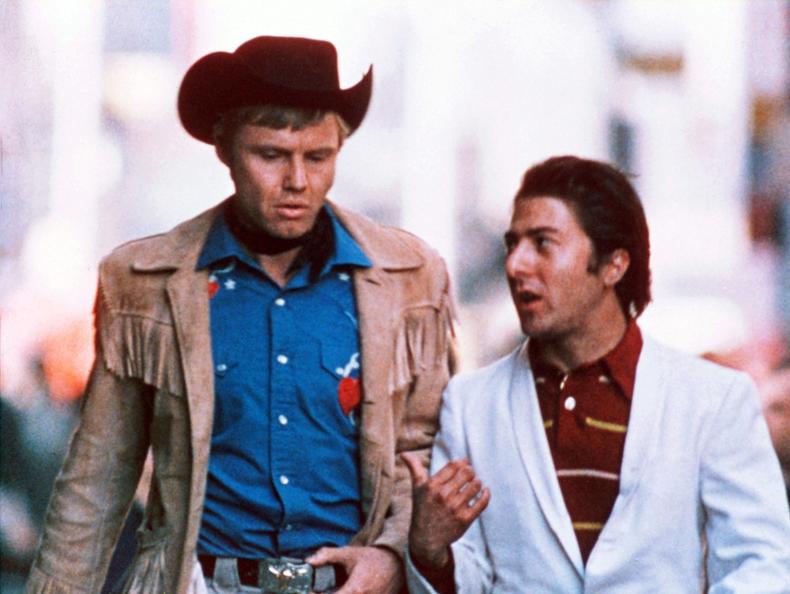
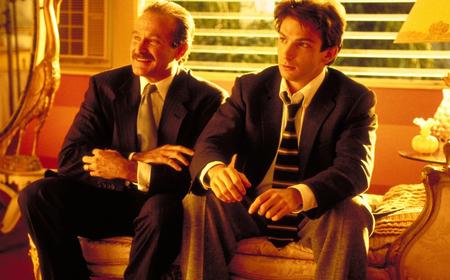
“Midnight Cowboy” Courtesy MovieStillsDB
Some of cinema’s most famous lines have become part of popular culture, whether they originated in spontaneous performance or were refined through collaboration among actors and writers.
In Casablanca (1942), Humphrey Bogart’s delivery of “Here's looking at you, kid” in the film’s closing scene became one of Hollywood’s most enduring expressions of affection.
The line is widely attributed to Bogart, who reportedly used it while teaching costar Ingrid Bergman to play poker between takes, and it was subsequently incorporated into the screenplay. The story is a reminder that an actor’s spontaneous discovery can sometimes become a lasting part of a production’s language.
In Midnight Cowboy (1969), the (hotly debated) legend goes that Dustin Hoffman and Jon Voight were improvising as their characters crossed a New York street when a taxi nearly hit Hoffman’s character, Ratso Rizzo. Hoffman’s indignant response – “Hey, I’m walkin' here!” – was captured on camera and became one of the film’s signature moments.
These examples demonstrate how spontaneity can create a moment of genuine surprise. Australian film and television offer equally compelling lessons in how performers can find memorable moments within a production’s particular style – from the relaxed, quick-fire delivery of The Castle (1997) to mockumentary-style comedies like Kenny (2006), which hinged on largely improvised dialogue.
The cult-hit Muriel’s Wedding (1994) is renowned for originating some of the most memorable quotes in Aussie cinema, including the totally improvised opening line.
Nathan Kaye is now better known as a musician, but he’s also remembered as Chook, the no-good husband of one of the “popular girls” who taunt Muriel. Writer-director P.J. Hogan asked Kaye to improvise a line during the opening wedding scene, as Muriel (Toni Collette) catches the bouquet, prompting him to hold up his ring finger and sarcastically yell, “I’m already taken, love!”
As Kaye recounted in an interview with the Ballina Times, Hogan immediately recognised the moment’s potential, and the spontaneous line helped establish the film’s comic tone from the very first moment.
It’s a useful lesson for emerging actors: Sometimes the best ad-lib isn’t one you impose on a scene, but one you discover when a director invites you to play.
On the small screen, Kath & Kim (2002–2007) built its comedy around exaggerated suburban characters and the tiny social humiliations of everyday life. Its dialogue can feel gloriously spontaneous, and a lot of that is owed to ad-libbing – just check out the bloopers.
But the show’s distinctive comic rhythms also demonstrate the importance of precise writing and performance, with creators and stars Jane Turner and Gina Riley producing tightly written scripts. A seemingly throwaway line can land because the actors understand exactly who their characters are and how they relate to each other.
More recently, break-out Australian comedy series No Activity (2015–2018) built its success on giving its actors the space to be spontaneous. Its loose scripting and premise – following two detectives stuck on a boring stake-out – gives performers room to make seemingly insignificant moments entertaining, as in this behind-the-scenes video.
The series’ simple comic brilliance led to successful adaptations in the US, Japan, Italy, Belgium, and the Middle East.
Together these examples illustrate a broader lesson: The most convincing performances often depend on actors responding truthfully to what is happening around them.
1. Know the scene before you change it.
You can’t make an informed creative choice if you don’t understand what the scene is doing. Learn your lines, identify your character's objectives, and understand how the exchange fits into the wider story. The better prepared you are, the more confidently you can respond when something unexpected happens.
2. Listen to your scene partner.
Good ad-libbing begins with listening, not waiting for your turn to speak. Pay attention to what your scene partner is actually doing, including their timing, body language, and emotional responses. If they offer something unexpected, respond to it as your character would.
Crucially, don’t treat your scene partner as an audience for your best material. A clever improvised joke is not worth much if it leaves the other actor stranded or undermines the emotional stakes of the scene.
3. Follow the director’s lead.
Every director has a different approach. Some encourage actors to experiment, try alternative lines, and explore multiple versions of a scene. Others expect the script to be followed closely, particularly when dialogue needs to match an edit, maintain continuity, or deliver specific information.
Take your cues from the director and ask questions if you’re unsure. If you’re invited to improvise, explore the possibilities. If you’re asked to stick to the page, respect that direction. Being adaptable means understanding the creative environment you’re working in, not assuming every set welcomes spontaneous additions.
4. Keep your ad-libs in character.
An improvised line should feel like something your character would genuinely say or do. Avoid inserting a joke simply because it makes you laugh, or adding a flourish that draws attention to you at the expense of the story.
A useful test is to ask yourself whether your choice reveals something about the character, moves the scene forward, or helps your scene partner. If the answer is no, it may be better left out.
5. Know when not to ad-lib.
Making film and television is a collaborative, technically complex process. A small change to dialogue can create problems with continuity, editing, timing, or a costar’s next line. It may also disrupt sound recording, camera movement, or a carefully choreographed action.
If a scene involves precise blocking, a stunt, technical cues, or dialogue that must match another take, spontaneity may be unwelcome. And if a director has specifically asked you not to change the script, don’t use an improvised performance to test that boundary.
When in doubt, save the idea for a conversation with the director rather than springing it on your fellow cast and crew members midtake.