
Have you ever been in the middle of a serious scene when your scene partner does something so unexpectedly funny that you can’t stop yourself from laughing?
Or perhaps you’ve watched a fellow actor completely lose their composure during a performance, leaving the rest of the cast desperately trying to keep a straight face.
In acting circles, there's a name for this: corpsing.
Audiences may find these moments hilarious, but corpsing can be a genuine headache for actors – particularly when they’re performing live or trying to get a scene in the can on camera.
Where did the term come from, why does it happen, and what can you do to stop yourself from corpsing?
JUMP TO
The term “corpsing” comes from 19th century British theatrical slang, and it’s also widely used in the Australian theatre and film industries, as our language and theatrical traditions are heavily rooted in British English.
A specific form of breaking character, corpsing happens when an actor unintentionally bursts into laughter, giggles, or otherwise loses their composure during a scene. It can happen onstage, in front of a camera, or even during rehearsals – and it can catch out even the most experienced performers.
You may also hear the same phenomenon described as “breaking character” or simply “breaking,” which is much more common in the U.S.
The precise origins of the word are debated, but there are a couple of popular theories.
The first is that it refers to the worst possible scenario for an actor to break character and start giggling: when playing a corpse.
Another theory connects the term to the idea of “killing” your character. When an actor breaks the illusion of the performance, they effectively bring their character to an untimely end.
Importantly, corpsing isn't necessarily the same as an actor deliberately improvising or making a creative choice to laugh in character. It's about the performer losing control of their reaction, rather than making a conscious acting decision.
In psychological terms, corpsing can be understood as a moment when an actor's attention shifts away from the fictional world of the scene and toward their own reaction to what’s happening. Rather than responding as their character, they're suddenly responding as themselves.
There are plenty of reasons an actor may break character, and not all of them involve something particularly funny.
An unexpected moment from a scene partner
Perhaps your costar delivers a line with an unusual inflection, makes an unexpected facial expression, or does something completely out of left field. Even if they’re playing the scene straight, the surprise can be enough to set you off.
Anticipation
Sometimes knowing something funny is coming can be just as dangerous as the joke itself. If you've struggled to keep a straight face during a particular moment in rehearsal, you may find yourself anticipating it – and fighting back laughter – every time you approach that point in the scene.
Nerves and self-consciousness
Acting requires you to be vulnerable in front of other people. When you’re feeling anxious, exposed, or overly aware of yourself, laughter can sometimes become a nervous response. It can also be a subconscious way to release tension during an emotionally demanding scene.
The contagious effect
Laughter is notoriously infectious. Once one actor starts giggling, it can become increasingly difficult for everyone else to maintain their composure. Eye contact, shared glances, and the knowledge that everyone is trying not to laugh can make the situation even worse.
Fatigue and repetition
Long filming days, late-night performances, and repeated takes can wear down an actor’s concentration. Something that barely registered as funny during the first take may become increasingly hilarious by take 15.
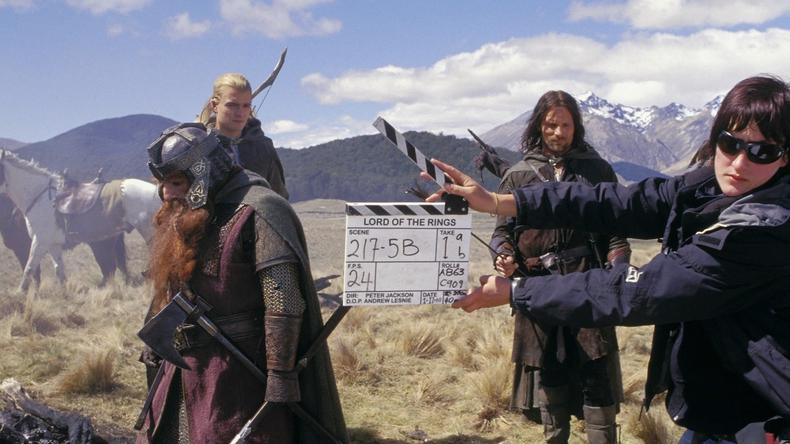
The Lord of the Rings: The Two Towers behind the scenes Courtesy MovieStillsDB/New Line Cinema
Some of the most entertaining examples of corpsing have become legendary among film and television fans.
Take Robin Williams, for instance. The highly improvisational American actor and comedian was renowned for his lightning-fast wit and ability to catch fellow performers off guard. His spontaneity was part of what made him such a brilliant screen presence, but it could also make life difficult for costars trying to keep a straight face.
One particularly memorable example comes from the 1996 comedy The Birdcage, starring Williams and Nathan Lane as a gay couple who run a drag club, and Hank Azaria as their housekeeper.
During the film’s frantic kitchen scene, Williams and his costars are surrounded by chaos as their characters attempt to pull off an important dinner party. At one point, Williams genuinely slipped on the wet floor, jumped back up, and improvised what became one of the film’s most iconic lines: “Fuck the shrimp!”
In a conversation about the scene with Lane, Azaria recalls how he was struggling to contain his laughter, and why the moment made it into the finished film.
Of course, not every memorable moment of an actor losing their composure involves laughter.
During the filming of The Lord of the Rings: The Two Towers, Viggo Mortensen famously broke two toes when he kicked a metal helmet while playing Aragorn. His agonised scream was genuine, but rather than immediately abandoning the scene, he channelled the pain into his character’s grief and frustration – much to the delight of director Peter Jackson.
It’s not technically an example of corpsing, but it’s a useful reminder of the importance of staying present and responding to what’s happening in the moment – even when things don’t go according to plan.
Australia has a particularly rich relationship with performers breaking character, especially when it comes to television comedy.
There’s a psychological concept that explains why audiences can find corpsing and bloopers so amusing: benign violation theory, or the idea that something is funny because it violates some kind of norm or expectation while also being perceived as nonthreatening.
Australia’s long history of live-to-air broadcasting, combined with a cultural fondness for irreverence, improvisation, and a healthy dose of larrikinism has arguably turned corpsing into something of an art form.
Think of the unmistakable style of Working Dog Productions, the studio behind classic Aussie films such as The Castle and The Dish and television series such as Utopia and the improv phenomenon Thank God You're Here.
In Working Dog’s comedy, quick-fire dialogue, deadpan delivery, awkward silences, and barely concealed amusement are often part of the appeal, making brilliant use of the tension between straight-faced performances and the absurdity of the situations unfolding around them.
In an experience he recalled on The Castle’s 25th anniversary, veteran television host Larry Emdur can be seen smirking through his cameo in the film, where he played himself hosting The Price Is Right.
Then there’s the beloved comedy of Kath & Kim, in which the combination of exaggerated suburban characters, awkward exchanges, and sometimes-improvised dialogue produced countless moments that feel as though the actors may be on the verge of breaking. Watching behind-the-scenes bloopers, you sense that the cast are constantly trying to crack each other up.
Australia’s onscreen sketch and satire have also long embraced the unpredictable energy of live performance, in which a spontaneous reaction can become part of the entertainment.
There’s an important distinction here, however. Although audiences may love watching performers struggle to keep a straight face, deliberately trying to make a fellow actor corpse isn’t necessarily a welcome contribution to a production.
What works in a comedy sketch or an intentionally loose television format takes a certain degree of trust and skill, and it may be disruptive and unprofessional in a tightly rehearsed theatre production or a film shoot.
What happens when you’re the actor struggling to keep a straight face? Fortunately, there are several techniques you can practise to help maintain your composure.
1. Know your triggers. If you know a particular line, gesture, or scene partner tends to make you laugh, identify it before you get into performance. Practise that section of the scene repeatedly so it becomes familiar rather than surprising. The more predictable the moment becomes, the less likely it is to catch you off guard.
2. Refocus on your character’s objectives. Rather than thinking about how funny something is, bring your attention back to what your character wants in the scene. What are they trying to achieve? How do they feel about the person they’re speaking to? What is at stake? Giving yourself something specific to concentrate on can help pull you back into the fictional world.
3. Use your breath. When you feel laughter bubbling up, take a slow, controlled breath. Relax your jaw and shoulders, and avoid holding your breath in an attempt to suppress the giggles. Physical tension can make it harder to regain control, whereas steady breathing can help you settle.
4. Stay present and listen. Don’t get so caught up in anticipating the next funny moment that you stop responding to your scene partner. Active listening is one of the most important skills an actor can develop, and staying engaged with what’s happening in the scene can help prevent your mind from wandering towards your own amusement.
5. Find an appropriate recovery. Don’t panic if you break character. During a live performance, take a breath, refocus, and continue as soon as you can. If the laughter genuinely suits the character and the moment, it may be possible to incorporate it naturally. During filming, the director may simply call cut and give everyone a moment to reset before trying again.
Ultimately, the ability to recover from a moment of corpsing is just as important as learning how to avoid it in the first place. Even seasoned actors occasionally lose their composure – what matters is how professionally you respond.
If you’re an aspiring performer, practising these techniques during rehearsals can help you build concentration, resilience, and confidence.