Wales may be tiny, but it has produced some pretty mighty acting talent. From Hollywood heavyweights to TV favourites, Welsh actors have carved out some seriously impressive careers. The best part? There isn’t just one formula for making it big. Here’s how a handful of famous Welsh actors found their way to the spotlight, and what aspiring performers can replicate from their climbs to the top.
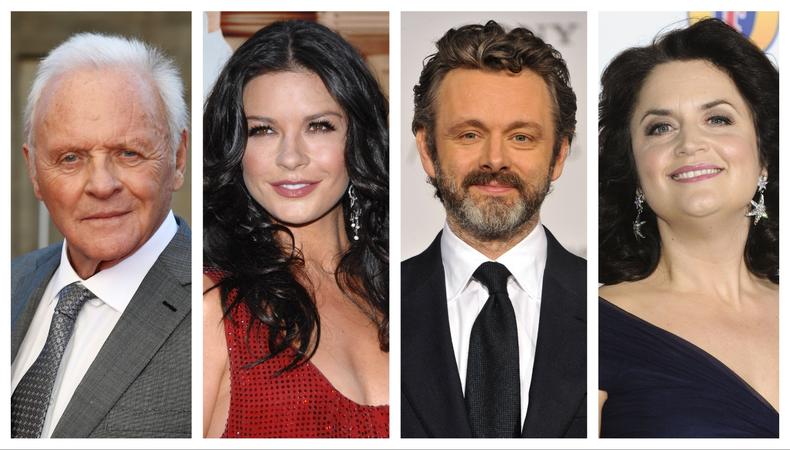
1. Anthony Hopkins
Sir Anthony Hopkins is always high on the list of legendary Welsh actors. Born in Port Talbot, he didn’t storm onto screens overnight. He caught the acting bug when he joined a YMCA at age 18, and then trained at the Royal Welsh College of Music and Drama before bagging a place at RADA. He cut his teeth in theatre; his first London show was Lindsay Anderson’s production of Julius Caesar in 1964. Then he joined Laurence Olivier’s National Theatre company in 1965. “I had nonspeaking parts, messengers and God knows what, and I was very disgruntled, because I wanted to be bigger. So I went to the casting director and said, ‘Who do you have to sleep with to get a part around here?’ I’d only been there three weeks!” Hopkins told the Guardian.
But his keenness paid off. “He understudied Olivier in several productions before attracting critical attention with his performances as Edgar in August Strindberg’s The Dance of Death and as Andrei Prozorov in Anton Chekhov’s Three Sisters (both 1967),” according to Britannica. “At last attracting the attention of the critics, he soon found himself being promoted as the ‘new Olivier’.”
His theatre work taught him discipline, and in 1968, he got his screen break as Richard the Lionheart in The Lion in Winter. But it took him over 20 years to become a recognisable name. In 1991, he starred in The Silence of the Lambs, for which he won an Oscar (he considered it “one of the best parts [he’s] ever read”). Now he has another Academy Award, four BAFTA Awards, a Critics’ Choice Movie Award, two Primetime Emmy Awards, and a Laurence Olivier Award to his name. If Hopkins’ story proves anything, it is that resilience can pay off.
2. Catherine Zeta-Jones
“There was never any question that I was going to be in show business,” Catherine Zeta-Jones told the Times. And her route to fame shows that believing in yourself can change everything. Born in Swansea in 1969, she grew up in a working-class family; her mother was a seamstress and her father ran a sweet factory. She was performing almost as soon as she could walk. By the age of 9, she’d left Wales to star in the West End production of Annie. “I forfeited a huge chunk of my adolescence for a passion,” Zeta-Jones told the Times. “I didn’t go to college. I wasn’t at Oxford or RADA, but I knew that I could do it.”
After attending the Arts Educational Schools for a three-year course in musical theatre, her big break came in the early 1990s with the TV hit The Darling Buds of May, through which she became a household name in the UK. She then moved to Los Angeles, where her Hollywood career took off with The Mask of Zorro (1998) and Entrapment (1999), both of which cemented her as a bankable star.
Critical acclaim followed. In Steven Soderbergh’s Traffic (2000), she showed her dramatic range as the wife of a drug lord. And in 2003, she won an Oscar for her turn as Velma Kelly in the musical Chicago. Later, she returned to her stage roots, winning a Tony for A Little Night Music on Broadway in 2009. “Bewitching, confident, and utterly natural, she breathes a refreshing earthiness and warm-blooded sensuality into the part,” Variety wrote of her performance.
In recent years, Zeta-Jones has continued to reinvent herself, with roles in Feud: Bette and Joan (2017), Queen America (2018), and Netflix’s Wednesday (2022), showing her ability to adapt across genres and generations.
3. Michael Sheen
Michael Sheen, another of Port Talbot’s most famous sons, has built a career on versatility. Born in 1969, he grew up with parents who always encouraged him to follow his acting dreams. Sheen turned down a place on Arsenal Football Club’s youth team because it would have meant a move to London, but eventually headed that way as a young adult, earning a spot at RADA. He arrived at drama school dreaming of becoming “the greatest actor in the world.”
He first made his name on stage, gaining acclaim for his work in classical theatre and new plays, including a celebrated turn as Mozart in Amadeus at the Old Vic in 1998. But Sheen was never content to stay in one lane. Onscreen, he became internationally known for his uncanny portrayals of real-life figures from broadcaster David Frost in Frost/Nixon to Chris Tarrant in Quiz to Tony Blair in The Deal, The Queen, and The Special Relationship. His ability to morph into recognisable figures earned him a reputation as one of Britain’s finest actors.
Sheen has embraced every medium: stage, television, and film. He’s brought Shakespeare to life, starred in Hollywood blockbusters such as Tron: Legacy and the Twilight series, and charmed audiences in hits such as Good Omens alongside David Tennant.
Beyond his performances, he’s also become known for his activism, describing himself as a “not-for-profit actor” after redirecting much of his wealth to fund charitable projects. In 2025, he formed the Welsh National Theatre after the Cardiff-based theatre company and charity National Theatre Wales was forced to close following funding cuts. The new theatre is based in Swansea, which Sheen described as a full-circle moment. “Swansea is a place of creativity, resilience, and inspiration, and I’m excited by the possibilities this presents not just for artists, but for the people of Wales,” he told the Guardian.
Sheen’s career shows that range is a superpower for emerging actors. Every role, whether on a big screen, small screen, or stage, adds another layer to a performer’s craft.
4. Ruth Jones
Ruth Jones is proof that success can come from creating your own opportunities. Born in Bridgend in 1966, Jones caught the acting bug young, playing an angel in a Nativity play. “I was an angel who had to kneel next to the crib for the duration of the performance,” Jones told the Times. “I remember thinking that the stage was such a marvellous place to be, even though I didn’t say anything. I just loved performing.” She also starred in musicals at school, including a production of Guys and Dolls with her future co-star Rob Brydon, who was a year above her.
It definitely stuck. She studied English and drama at the University of Warwick before training at the Royal Welsh College of Music and Drama in Cardiff. Early on, she picked up roles in theatre (her first was The Marriage of Figaro, directed by Dominic Cooke in 1989) and on TV shows such as Little Britain and Fat Friends. But it was her instinct to write and act that changed everything.
With James Corden, she co-created Gavin & Stacey, the BAFTA-winning sitcom that has become one of the most beloved British comedies of all time. Playing the outrageous Nessa Jenkins, Jones served up one of TV’s most quotable characters; “What’s occurring?” entered the national lexicon almost overnight. The show made her a household name and proved the power of writing stories rooted in real places and voices. “Since breaking through in Gavin & Stacey two years ago, the actress has landed an impressive array of parts, from Joan, the heroine’s grasping mother, in Tess of the D’Urbervilles, to Flora, Arthur Clennam’s lovelorn ex, in Little Dorrit,” wrote the Independent wrote about Jones.
Jones has since built a career that moves easily among acting, writing, and producing. She starred in the drama Stella, which she also created. She’s written novels that have become Sunday Times bestsellers, and continues to be a strong advocate for telling authentic Welsh stories on screen.
Her trajectory shows that waiting around for the right role may not always be the way to climb to fame, and maybe coming up with a character or story yourself could be more useful!
The takeaway for aspiring actors is simple: There’s no single path to success. Your journey may look like Anthony Hopkins’ methodical climb, Catherine Zeta-Jones’ decision to start young, Michael Sheen’s chameleon-like versatility, or Ruth Jones’ choice to develop her own roles. Or it may be something entirely different. The trick is to remain dedicated, be adaptable, and keep going.