
The UGC market is booming. It’s reportedly worth over £4 billion and expected to hit £25 billion by 2030.
So it’s an exceptionally good time to start looking for UGC (user-generated content) jobs as a professional content creator. Assuming you’re willing to build a portfolio, refine your content-creation skills, and commit to client outreach, a sliver of that projected £25 billion could be yours.
However, actually finding UGC creator jobs is where most newbies stumble. If you’re not sure where to start, here are some key tips to smooth out the job hunting ahead.
JUMP TO
Dedicated UGC platforms
Platforms such as Twirl, Billo, and Insense are specifically built for UGC. The journey looks like this: Brands post job briefs, creators apply, brands ship a product, creators produce the content, brands check and request any necessary edits, and payment is released once they’re happy.
It’s all very straightforward, but competition can be fierce and you’ll need to pass each platform’s application process.
Inbound marketplaces
These work similarly to the dedicated platforms, but they cover content-creation work beyond UGC. You create a profile that showcases your previous work, niches, rates, and a short bio, allowing brands to seek you out and get in touch directly. Look to platforms like StarNow, Influee, and Collabstr.
Gig marketplaces
UGC is among the many gigs advertised through sites such as Upwork and Fiverr. List UGC as your service, set your rates, then either wait for clients to approach you or bid on posted jobs. It can be a grind, but creators retain control over pricing and have the potential to develop repeat work over time.
Job boards
Filter for UGC roles, browse available jobs, then apply to those that fit. Options include StarNow, Indeed, and ZipRecruiter. There’s usually no shortage of jobs, but you’ll need to comb through them yourself.
Social media search engines
UGC pro Sydney Mohni suggests creators can find “100 UGC opportunities in one hour” by searching sites such as X, Reddit, and LinkedIn with strategic terms, including “UGC opportunities,” “UGC creators needed,” “UGC content creator,” and “[niche] UGC.”
“As you start applying to these, the algorithm will actually start showing them to you,” Mohni says.
Brand social platforms
This one’s more about creating work than finding it.
Head to platforms such as Instagram, TikTok, Facebook, and YouTube – anywhere target brands or industries are present. Spot brands that are either already working with UGC creators or with output your own content could improve, then pitch to them. Approach brands in your niche with products you understand and genuinely like. If you can, follow and engage with the brand before pitching.
Know who to contact
Pitches sent via DM or to a generic support@[brandname].com email address won’t always land in the right person’s lap.
UGC creator Sarah J recommends tracking down contact details for employees directly involved in hiring UGC creators by using:
- Brand websites: Find the name and contact details of UGC decision-makers by looking for pages such as Press, Marketing, Directory, and Our Team.
- Googling: Search [brand name] + phrases such as “PR contact,” “content creator contact,” or “social media contact.”
- LinkedIn: Search the brand on LinkedIn, then look for employees in roles such as marketing manager and PR coordinator.
- Email finder tools: Use sites such as Snov.io and Rocket Reach to find lists of employees and their email addresses.
If all else fails, a friendly DM simply asking for the best email address to send partnership pitches may get a response.
Write strong subject lines
“You want the brand marketing representative to get a spike of dopamine when they read your subject line,” says UGC creator Linda Lin.
Ditch the generic “UGC collaboration enquiry” or “UGC partnership opportunity” in favour of subject lines that prioritise value, specificity, and relevance, while piquing curiosity.
- Product specific, such as “two angles for the [product] page”
- Campaign specific, such as “UGC for the [product] refill campaign”
- Proof-led, such as “[niche] UGC samples for [brand]”
Make it about their needs
“I think the main thing is to personalise your pitch and not just say the same thing over and over again,” says Izarbe Puertolas, the content and community manager at Twirl.
Brands can spot copy-and-paste pitches a mile away. Research each one and write pitches specifically around their needs.
Puertolas suggests:
- Including experience: Preferably relevant. “Even if it’s not in the same niche, how does it apply to the specific campaign?” Puertolas says.
- Including measurable numbers: “Let’s say you made a dog niche video that got a million views.… If you say this in the pitch, the client’s going to be like, ‘Wow, this creator knows what they’re doing’.”
- Matching their content and audience: “I think that’s what they value the most. Rather than you being a great creator, it has to be a creator who matches their audience and their style.”
Keep it short
“The brands will be looking through a lot of applications,” Puertolas says. “Two short paragraphs, three lines in each paragraph.… First maybe your experience or how you love the product, and then the next one maybe the vision you have.”
Success on gig marketplaces and UGC platforms depends almost entirely on the strength of your profile. Here’s how to turn yours from standard get-to-know-you into a magnet for UGC content-creator jobs.
Profile picture
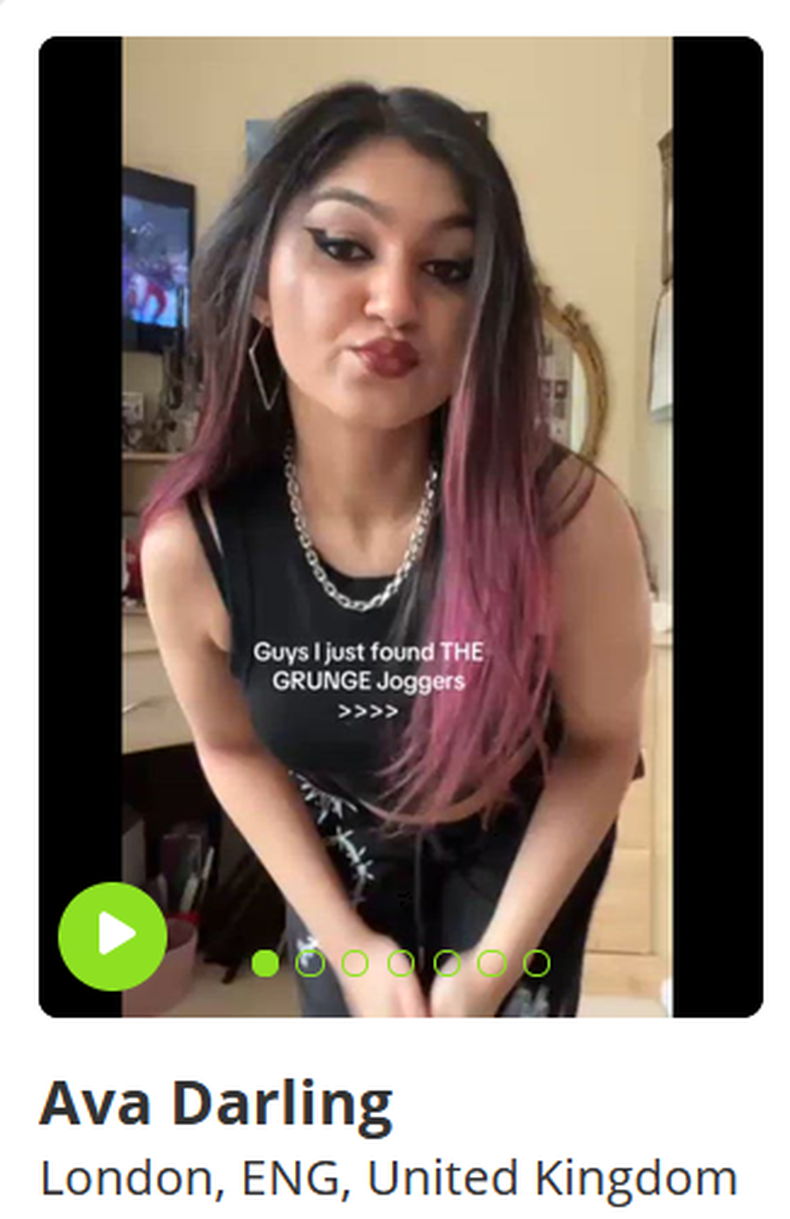
Reflect your professionalism and personality with a high-quality shot that could easily fit right into paid UGC. Gemma, for example, ably captures her lifestyle, beauty, and wellness niches.

Ava Darling, meanwhile, reflects her “creative, passionate, relatable, [and] nerdy” attributes alongside an ambition to “encourage my audience to use fashion and style to find their confidence.”
Bio/about me
This is your elevator pitch – a clear, concise overview of who you are, what you do, and what makes you good at it. No need to list too many details; think professional but personable.
UGC creator Brenton Hamilton offers a great example.
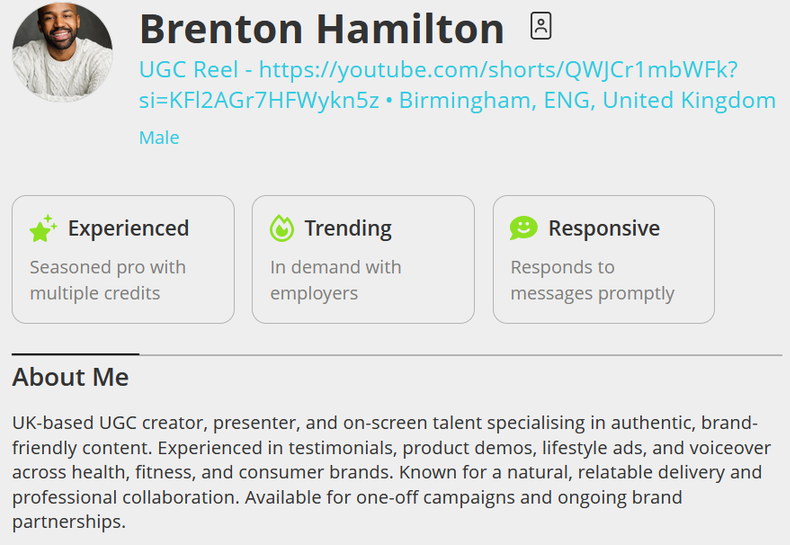
Just four sentences tell brands everything they need to know. Most platforms supplement bios with a section where you can tag relevant skills and other abilities, so go ahead and fill those out also.
Portfolio
Whether incorporated into your profile or hosted on a private site, your portfolio should highlight three or four examples of your best work.
You’ll ideally update samples regularly, match them to brands you’re pitching, and cover various formats and styles, including:
- Talking to camera
- Showing products from various angles with voiceover
- Featuring relevant B-roll
- Adding effects and captions
It’s also worth linking personal sites or social media accounts relevant to your UGC work.
Knowing how to get a job as a content creator is one thing – knowing how to keep getting hired for UGC creation is quite another. That repeat business means a steady income stream, less time prospecting and pitching, and a testament to your UGC skills and professionalism.
That (obviously) mostly comes down to how well your UGC performs, but that’s not all brands and agents value.
“If you’re a creator who wants to get hired and rehired, focus on being easy to work with, adaptable, and confident on camera,” says UGC creator and creative strategist Olivia Larsen.
That means:
- Responding promptly to all communications
- Meeting deadlines
- Listening to and acting upon revision notes
- Meeting technical specs and sending the right file types
- Understanding usage rights and ad disclosure rules
- Being flexible with shooting dates, content format, and style
Larsen says an “ability to improvise and go off-script” is particularly helpful for getting rehired. “That’s actually something both brands and agencies consistently tell me they love about working with me: being able to take a concept [and] make it feel natural and not overly scripted,” she says. “That’s why I value the same skills so much in the creators that I hire.”