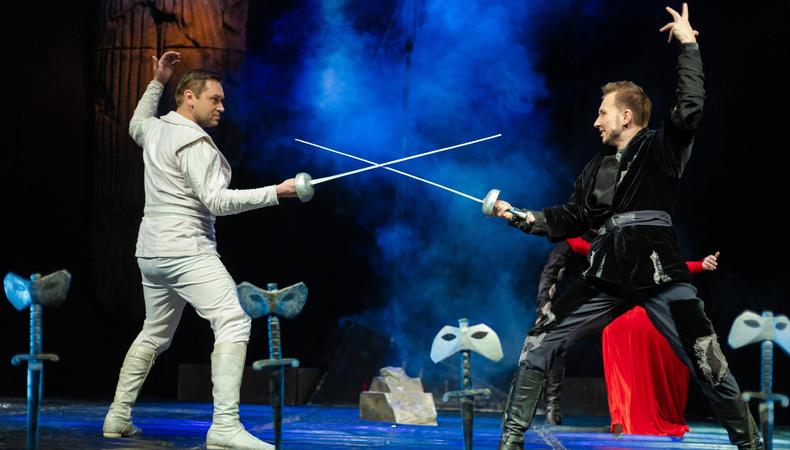
Whether you’re auditioning for an action movie, filming a television drama, staging a Shakespearean play, or performing in a contemporary theatre production, there’s a good chance you’ll eventually be asked to throw a punch, take a fall, or react to violence onstage or onscreen. That’s where stage combat comes in.
Far more than simply pretending to fight, stage combat (also called theatre combat) is a highly skilled discipline that combines acting, movement, timing, and safety. It allows performers to create the illusion of violence while protecting everyone involved.
Importantly, these skills aren’t useful only for actors chasing action roles. Understanding combat choreography can help performers feel more confident with physical storytelling, improve their body awareness, and make them more employable across theatre, film, and television.
Here’s everything aspiring actors need to know about stage combat basics, from the techniques you’ll employ to why professional training matters.
JUMP TO
The simplest answer is: It’s the art of creating believable violence safely.
Unlike real fighting, every movement is carefully planned and rehearsed. A fight sequence is essentially another piece of choreography, much like a dance routine.
Professional fight scenes are created by experienced fight directors or choreographers who design every movement, reaction, and pause to ensure that performers remain safe while the audience believes the conflict is real.
Stage combat can include:
- Unarmed combat (punches, slaps, kicks, grabs, and throws)
- Sword fighting
- Knife combat
- Quarterstaff and other historical weapons
- Falls and rolls
- Strangulation and restraint sequences
- Firearm choreography
- Creature or fantasy combat
Many productions employ certified fight directors to oversee rehearsals, maintain safety standards, and adapt choreography to suit different performers and performance spaces.
You don’t have to dream of starring in an action blockbuster to benefit from stage combat training. Many productions – onstage and onscreen – include moments of physical conflict, even if they’re brief.
Examples include:
- A contemporary drama that features a domestic argument that becomes physical
- A Shakespeare production that involves swordplay
- A musical with stylised fight scenes
- A crime television series that features an arrest
- A historical drama with battle sequences
- A fantasy film that involves weapon combat
- A comedy that requires exaggerated falls or slapstick violence
Even productions without traditional fight scenes often involve physical storytelling that draws on the same principles of balance, timing, and partner awareness.
Training also develops skills that directors value, such as:
- Physical confidence
- Body control
- Spatial awareness
- Precision under pressure
- Ensemble collaboration
- Trust between performers
- Discipline during rehearsals
Many actors discover that stage combat improves their overall movement and acting because it encourages them to tell stories physically, not just through dialogue.
Every discipline has its own techniques, but beginners usually start with a few core skills before progressing to more advanced fight choreography.
Stance and movement
Everything begins with balance. Actors learn how to stand in stable fighting positions, move efficiently around a performance space, and remain connected to scene partners. Good footwork makes every punch, dodge, or weapon movement look more convincing, while also helping to prevent injuries.
Distance and targeting
One of the biggest misconceptions about stage combat is that performers make actual physical contact. In reality, most strikes intentionally miss. Actors learn exactly where to aim, how much distance to maintain, and how to create convincing illusions using audience sightlines or camera angles. Precision is far more important than force.
Selling the reaction
The person receiving the punch often does more acting than the person giving it. Reacting convincingly requires timing, facial expression, breath control, body movement, and emotional commitment. Without a believable reaction, even perfectly executed choreography can look fake.
Stage falls
Learning how to fall safely is one of the most valuable skills in stage combat. Rather than collapsing naturally, performers use techniques that distribute impact across the body while protecting vulnerable joints, the head, and the spine. These skills frequently appear outside combat scenes, making them useful for many different productions.
Slaps, punches, and kicks
These are usually introduced only after performers understand spacing and control. Students learn how to create the illusion of impact using carefully rehearsed movement, sound, and acting rather than actual contact. Every strike follows agreed choreography that should never be improvised during rehearsal or performance.
Weapon work
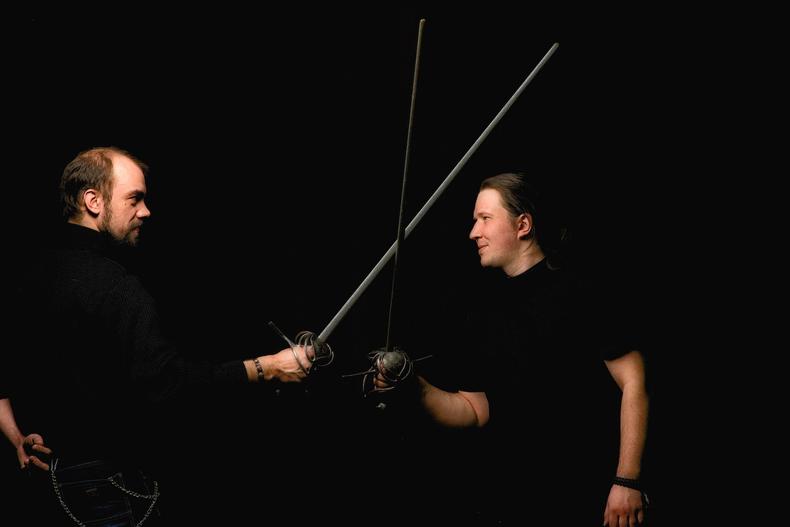
Many training providers also introduce historical weapons such as rapier, broadsword, dagger, and quarterstaff. Weapon work places an even greater emphasis on precision, communication, and rehearsal. Beginners generally master unarmed techniques before progressing to armed combat.
Credit: NikitaPetrov/Shutterstock
If you’re wondering where to start with stage combat, one thing is clear: Never teach yourself from social media.
Professional organisations including the Society of Australian Fight Directors Incorporated (SAFDi) and international bodies such as the British Academy of Dramatic Combat all stress that stage combat should be learned with qualified supervision.
Safety principles include:
- Never improvise choreography
- Always rehearse slowly before increasing speed
- Communicate with your scene partner
- Stop immediately if something feels unsafe
- Warm up before rehearsals
- Check props and weapons before every session
- Stay focused throughout every performance
Professional fight choreography is built on consistency. Every movement should happen the same way every time.
Australia has several respected organisations that offer stage combat training. Captivate Action is a leading business organisation that provides workshops and training for performers across stage, screen, and motion capture that covers screen combat, stunt fundamentals, and performance skills.
SAFDi promotes professional standards in fight direction and certification, with accredited instructors and affiliates that deliver structured training across Australia.
Acting schools such as NIDA and university courses also include introductory stage combat as part of broader movement training, particularly for students interested in classical theatre or screen acting.
If you’re interested in learning stage combat, keep these tips in mind.
Treat it like dance. Fight scenes rely on rhythm, timing, and repetition just as much as athletic ability.
Prioritise safety over realism. Looking convincing must never come at the expense of your or your scene partner’s well-being.
Build physical fitness gradually. Strength, flexibility, and stamina all contribute to cleaner movement, but technical precision matters more than brute force.
Stay present. Fight choreography requires complete concentration. Missing cues or rushing ahead can create unnecessary risks.
Practise your acting too. Remember that every fight tells a story. Character, emotion, and intention make combat believable – not flashy techniques alone.
Learning stage combat isn’t about becoming a martial artist – it’s about becoming a more versatile performer. Understanding the principles of theatre combat will make you a safer, more confident actor. Whether you’re trained in stage combat or not, however, any production that involves a fight scene must bring in a qualified fight director or movement director to guide the action and make sure everything happens safely.