Already have an audience on Instagram, TikTok, or YouTube? Starting a podcast can be a way to take that relationship somewhere deeper.
Unlike a short-form social video, a podcast gives you much more time to explore a subject, develop your personality, and build a sense of connection with your audience. For content creators, it can also become another source of material. A single podcast conversation can be turned into short-form video clips, quotes, graphics, and social posts.
But podcasting is also a significant commitment. Before investing in microphones, branding, and editing software, it’s worth working out exactly what you want your podcast to achieve – and whether you have a sustainable way to make it.
Here’s how to start a podcast if you’re a content creator or influencer.
JUMP TO
- 1. Work out why you’re starting a podcast.
- 2. Choose a format you can actually sustain.
- 3. Pick a name and identity.
- 4. Get the right podcast equipment for beginners.
- 5. Decide where you’ll host it.
- 6. Distribute your podcast.
- 7. Think carefully about video.
- 8. Build your audience beyond your existing followers.
- 9. Decide how you might monetise it.
- 10. Remember that podcasting is a lot of work.
Before coming up with podcast name ideas, ask yourself a more important question: Why does this need to be a podcast?
For Melbourne-based theatremaker, critic, and content creator Ryan Hamilton, who co-hosts news and pop culture podcast Broadly Relevant, that was the starting point.
“I think you need to be really specific about why you’re doing it and what you want to get out of it,” Hamilton says. “Be clear to yourself about your goals, and also about the value that you’re offering your audience.”
A podcast can be particularly useful for creators who want to establish themselves as an authority in a particular field. It can also give followers a more personal, long-form way to engage with you.
“A podcast is a really big ask,” Hamilton says. “Even though you might not get as much reach [as creating social media content], you are being listened to for an hour or 30 minutes or whatever, and it/s an incredible way to build authority with an audience.”
That means your existing social media audience is an advantage, but it isn’t necessarily enough on its own. Think about what you can offer that listeners can’t get from your existing content.
Interview show? Co-hosted chat? Solo commentary? Narrative series? News roundup? Comedy? Educational content?
There are plenty of podcast formats to choose from, but the most important consideration is whether you can realistically keep up the momentum.
Hamilton says sustainability was something he and his Broadly Relevant co-host Simran Pasricha considered before launching.
“For me and Simran, what it came down to was it’s like a weekly friendship hang for us,” he says. “It’s what we like doing already, but structured.”
Your format should fit your strengths and your existing content rather than forcing you into an entirely new persona.
Also consider how much preparation each episode requires. Some podcasts are heavily researched and scripted, while others take a more improvisational approach.
Comedian and content creator AJ Lamarque has another practical suggestion: Make more episodes than you think you’ll need before launching.
“I think the best advice is bulking up a bunch of episodes (or even a full series) before you launch,” Lamarque says. “The editing and marketing process for an episode – even if it’s only a short podcast – can be incredibly time-taxing.”
Creating a backlog gives you breathing room when other work gets busy.
Your podcast name needs to be memorable, searchable, and relevant to what you’re actually making.
If you’re already a creator, you may decide to use your own name. Alternatively, choose something that communicates the show’s premise or personality.
Before settling on a name, search podcast platforms and social media to make sure it isn’t already being used. Check whether the corresponding social media handles and website domain are available too. You’ll also need cover artwork and a short description explaining what listeners can expect.
Think of this as an extension of your existing creator brand rather than a completely separate identity. Your podcast should make sense alongside your TikTok, Instagram, YouTube, or other content.
You don’t need a professional studio to start a podcast.
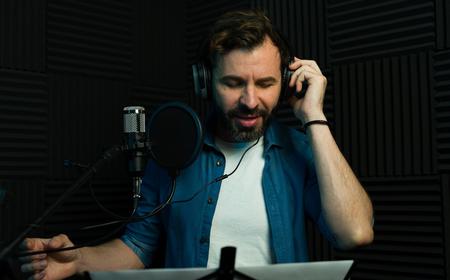
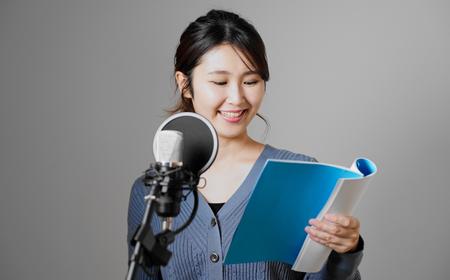
For beginners, the essentials are relatively simple: a microphone, headphones, and a computer or phone capable of recording and editing your episodes. A lot of public libraries also hire out podcasting studios for free or cheap.
A decent USB microphone can be a practical starting point, because it plugs directly into a computer without requiring additional audio hardware. If you’re recording with a co-host or multiple guests in person, however, your equipment requirements will become more complicated.
You also need somewhere quiet to record. Good acoustics can make as much difference as an expensive microphone, so don’t underestimate the value of a room with soft furnishings and minimal background noise.
Hamilton recommends learning some audio editing yourself rather than immediately paying someone else.
“Podcasting can be really expensive if you outsource it, because professional audio editors can get really expensive,” he says. “I would encourage you to learn that skill yourself. I taught myself how to do it.”
Free or inexpensive software such as GarageBand can be enough to learn the basics, along with YouTube tutorials.
Your podcast needs a hosting platform. This is where your audio files are uploaded and where your podcast’s RSS feed is generated.
That feed is what allows your show to be distributed to different podcast apps.
There are numerous hosting options with varying features and pricing. Spotify for Creators currently offers free podcast hosting and RSS distribution, while other providers offer different combinations of storage, analytics, monetisation, and production tools.
If you’re researching the best podcast-hosting platforms, compare:
- Hosting and storage limits
- Distribution options
- Analytics
- Monetisation tools
- Whether you can redirect your RSS feed if you change providers
- Whether video podcasts are supported
Hamilton particularly recommends making sure you can redirect your RSS feed if you ever change your hosting provider. “That way you’re not stuck with them or you don’t lose your subscribers,” he says.
Your hosting platform is not necessarily the same thing as the apps where people listen.
Once you’ve created your RSS feed, you can submit your show to podcast directories and services including Apple Podcasts and Spotify. Apple Podcasts, for example, allows creators to submit a show using an RSS feed hosted by a third-party provider. Your feed needs to meet Apple’s technical requirements and contain at least one episode and artwork.
YouTube is increasingly relevant too. Audio-first podcasts can be distributed to YouTube using an RSS feed in eligible regions, with YouTube creating videos from the podcast artwork.
This is where being a social media creator can give you an advantage. You already have places where you can tell people your podcast exists.
Video podcasts – in which there’s a video of the hosts recording the episode – are a growing trend. A video recording can create additional material for TikTok, Instagram Reels, and YouTube Shorts, but it also involves substantially more work.
Hamilton says Broadly Relevant ultimately decided not to produce video episodes because of the additional production requirements.
“Video is a lot of work,” he says. “Finding the clips, editing the clips, and also juggling the microphone audio and syncing into the video...for us that was just too much work.”
That’s an important consideration for creators. Don’t start making a video podcast simply because you think you should. Instead, ask whether video genuinely improves the format – and whether you have the time and resources to produce it well.
Having followers doesn’t automatically mean they’ll become podcast listeners.
Make the launch part of your broader content strategy. Share clips, quotes, behind-the-scenes footage, and episode highlights across your existing platforms.
You could also create a trailer introducing the concept and telling potential listeners why they should subscribe. Apple recommends a one- to two-minute trailer as an option for new shows.
Hamilton recommends making it easy for followers to choose their preferred listening platform. Rather than posting a Spotify link everywhere, consider using a platform like pod.link, with a single landing page that directs people to Apple Podcasts, Spotify, and other services.
Don’t assume the platform with your biggest following will necessarily become your most engaged podcast audience. Hamilton says Broadly Relevant has more subscribers on Spotify, but Apple Podcasts has generated its most engaged listeners.
The key to learning how to grow a podcast audience is therefore to experiment, look at your analytics and work out where your listeners are actually coming from.
You don’t have to monetise your podcast immediately.
For a content creator, the podcast itself can be part of a broader business strategy. It can promote your other work, strengthen your personal brand, attract collaborations, or demonstrate expertise to potential clients.
If you want to learn how to monetise a podcast, options include sponsorships, host-read advertisements, subscriptions, listener support, affiliate marketing, and paid bonus content.
Host-read advertising can work similarly to a social media collaboration, with a brand reaching out directly to the creator. Podcast advertising can also be dynamically inserted by some hosting platforms and ad networks. Spotify currently offers monetisation options including subscriptions and advertising for eligible creators in Australia.
But don’t build a business model around sponsorship before you have a show people want to listen to.
The recording is only one part of making a podcast. There’s research, preparation, recording, editing, writing show notes, creating social assets, publishing, marketing, and responding to listeners.
Lamarque says the workload after recording is something new podcasters can underestimate.
“The post-conversation workload is where most podcasts fail before they’ve even begun,” he says.
That’s why planning a sustainable production schedule matters. If weekly episodes aren’t realistic, don’t promise them. A fortnightly or seasonal format may be more manageable.
Ultimately, starting a podcast as a content creator isn’t about adding another platform to your list for the sake of it. It’s about creating a format that gives your existing audience a reason to spend more time with your work – while giving you another way to demonstrate your voice, personality, and expertise.
And, Hamilton adds, don’t forget the most important part: “Have fun. Be curious. Learn about all the different technologies [and] the platforms. They’re getting updated constantly.”
Podcasting may be a new medium, but you don’t have to start your creator career from scratch.