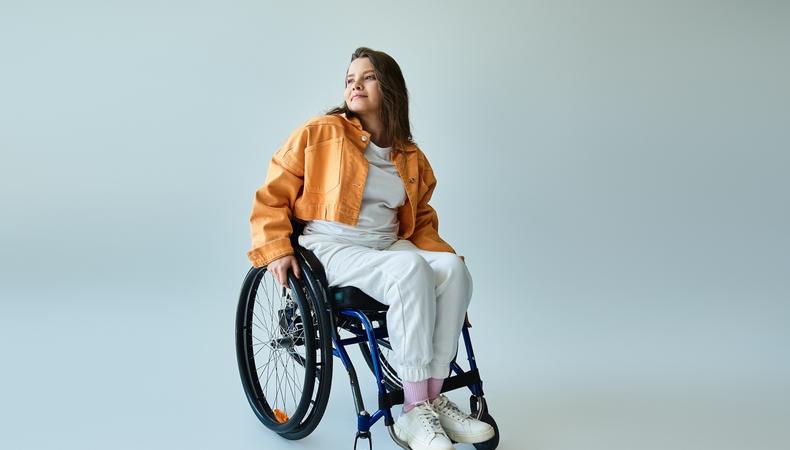
Modelling has never been an easy industry to break into, which can make disabled modelling feel like an impossible dream.
Today, however, there is greater inclusion of disabilities than ever before. One in four people in the UK reported having a disability in 2025, and with disabled spending power valued at £274 billion, it makes sense for brands to connect with that portion of the population.
The market has become too large to ignore, and big brands are changing with the times. Brands that are actively running adaptive lines and casting disabled models include Kohl’s, Tommy Hilfiger Adaptive, Zappos, Target, JCPenney, No Limbits, Stride Rite, and Victoria’s Secret.
If you’re hoping to start your modelling career and you’re living with a disability, read on to uncover the obstacles, the real opportunities, and the mindset that’ll help you tackle how to become a disabled model in the UK.
JUMP TO
Disabled modelling, or disability modelling, is when people with visible or physical disabilities appear in e-commerce, editorial, runway, or any other type of modelling campaign.
It often includes:
- Wheelchair users
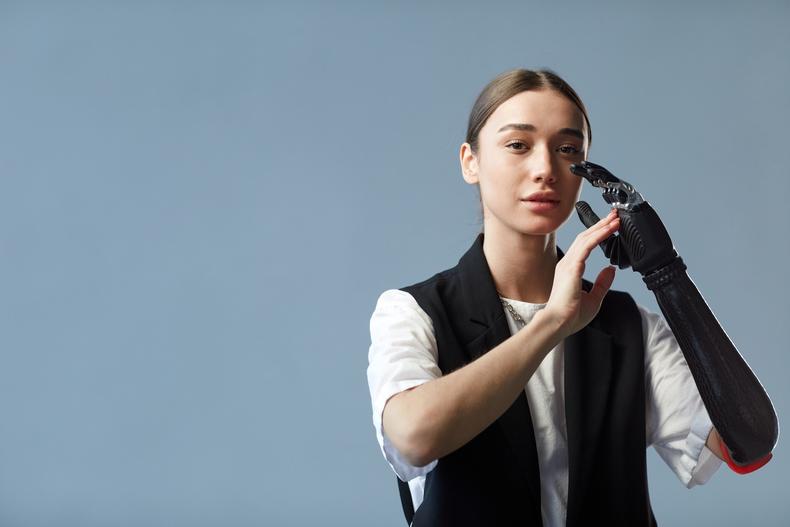
- Amputees and people with limb differences
- People with dwarfism
Some of the work is booked specifically because a brand wants disability represented. Increasingly, though, disabled models are cast as part of a diverse lineup, with no reference to disability in the brief at all.
A disability model still has to hold a pose, take direction, and work a set. Disabled models, however, often have more barriers to overcome. Sample clothes are typically cut for one standard body shape, and shoot locations aren’t always physically accessible.
Casting briefs rarely specify a disability unless a brand is actively seeking it, so disabled models often have to find opportunities through specialist channels rather than open casting calls.
On the flip side, because representation is still pretty rare, individual bookings can carry more weight than an equivalent job might for a nondisabled model. For example, Ellie Goldstein, a model with Down syndrome, did a Gucci campaign that featured an Instagram post that was liked more than 863,000 times.
It’s also a younger corner of the industry. ZBD Talent (formerly known as Zebedee), the UK’s first agency built exclusively around disabled, visibly different, and trans talent, only launched in 2017.
Credit: SeventyFour/Shutterstock
Commercial, catalogue, and campaign work: This is the most accessible entry point into disabled modelling. High-end and mainstream brands, from Moschino to Adidas, have increasingly featured models with visible disabilities, often finding talent through inclusive agencies like ZBD rather than mainstream ones. The work tends to be image-led (stills, e-commerce, and social content) rather than runway, which makes it more logistically straightforward for brands to shoot and more manageable for models with mobility, access, or energy considerations.
Runway: This is probably the hardest niche to break into. It has the most rigid physical conventions of any modelling category and accessible casting is still largely event-specific rather than a fixture across a season.
Adaptive fashion shows: These are becoming a recurring, semi-institutionalised entry point specifically for disabled and adaptive clothing models. Take Double Take in partnership with IMG or the Victoria’s Secret Runway of Dreams as examples.
Beauty and cosmetics campaigns: These are seemingly more likely to cast disabled talent than fashion houses. Examples include Gucci Beauty’s campaign with Ellie Goldstein and brand ambassador roles such as Lucy Edwards for Pantene.
Lingerie: Victoria’s Secret and Savage X Fenty have increasingly cast disabled models for their regular collections, rather than specialist adaptive lines.
Adaptive and specialist product modelling: This is an undersupplied but growing niche – particularly adaptive clothing – in both the UK and Australia, as more mainstream retailers like Primark and Schuh launch adaptive lines.
Disabled inclusion is being taken more seriously by luxury fashion as brands recognise the size of the market, and London Fashion Week has begun including designers focused on accessible designers, such as Victoria Jenkins’s brand Unhidden.
Accessibility at castings is a problem
Top model and wheelchair user Aariana Rose Philip no longer attends castings in person because the accessibility is so poor. “Whether physically, structurally, or socially, accommodation of disabled talents and models by the fashion industry has a long way to go,” she told Vogue in 2023. Raising the issue yourself, rather than assuming a client has already thought of it, is often sadly part of the job for disability models.
Be ready to be labelled
Model Kelly Knox has spoken about only starting to think of herself as “disabled” once the industry began framing her that way, having grown up never using the word at home. You’ll have to decide before a casting how much of the conversation you want to be about your body versus your work, and be ready to redirect it.
Look after yourself
Modelling is a physically demanding job, so anyone with a disability thinking about going into the industry should seriously consider their energy levels and pain threshold. “There are obviously issues – when I’m doing catwalk shows the adrenaline kicks in, and the excitement helps to numb the pain – but as soon as I’m backstage I need to sit down and have a break because my back’s playing up,” Mary, a model who lives with achondroplasia (also known as dwarfism), said in an interview with the Sun.
Specialist agencies are the way forward
Mainstream agencies still often don’t know what to do with a disabled model on their books, which is why specialist agencies exist. Signing with an inclusive agency, like ZBD or VisABLE People – at least until you are more established – will likely get you in front of more opportunities than mainstream agencies alone.
Never give up
Being a disability model can be an uphill battle, but you shouldn’t let that stop you. “My disability has taught me to be ‘me’ – and not to be scared of doing things louder in the world,” says Goldstein, the first model with Down syndrome to appear on the cover of Vogue and in a Gucci campaign. “[It’s about] following your hopes and dreams. Never give up, be who you are, and smile all the way.”